

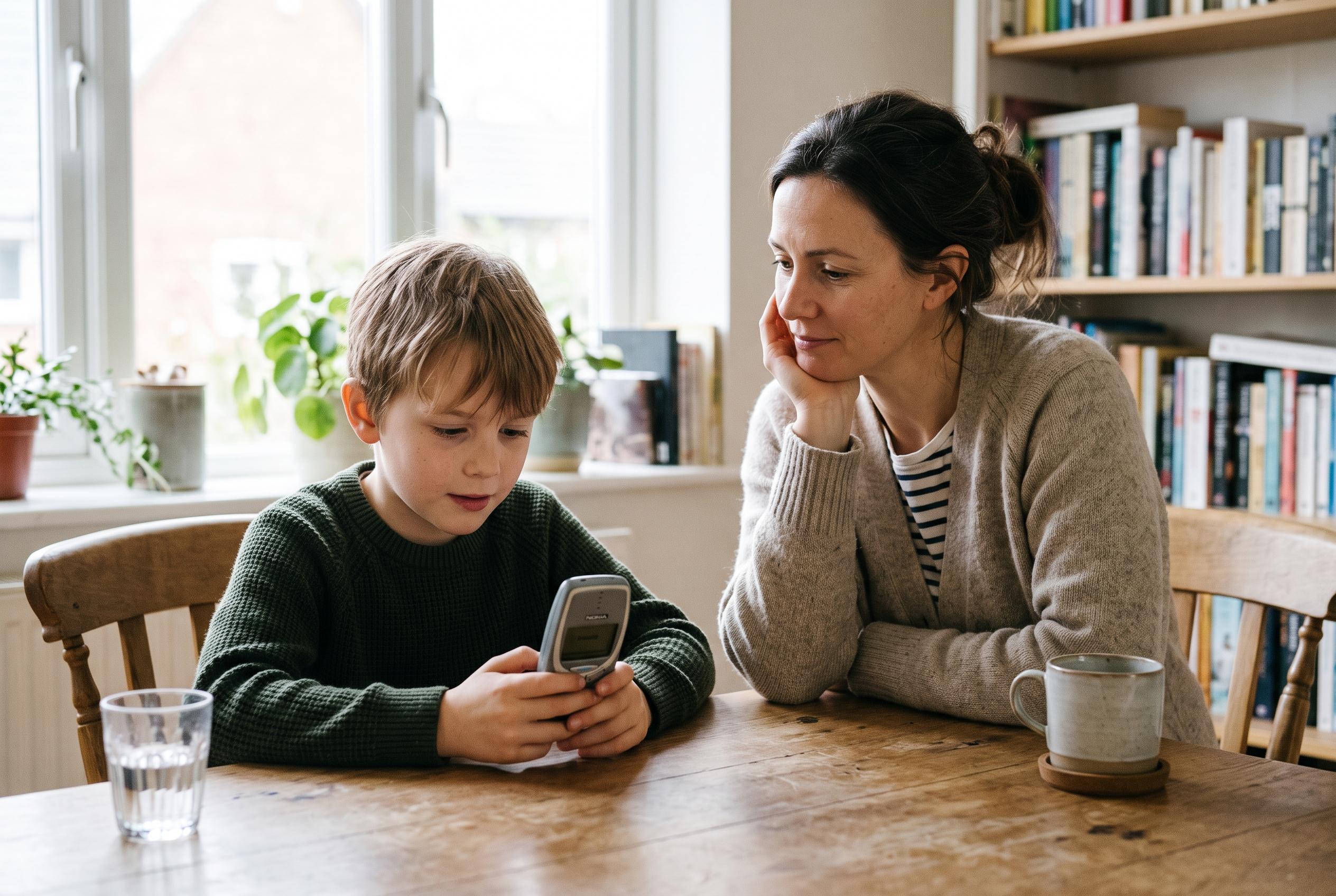

As concerns grow over sleep, attention and problematic use, families are weighing basic handsets, smartwatches and firm boundaries before giving children unrestricted digital access.
For many parents, the request arrives with a mix of pride and dread: the first smartphone. By the time children are nearing middle school, the question is no longer abstract. It becomes a practical decision about safety, independence, learning and the pace at which childhood is giving way to digital life. In families where a phone also doubles as a tool for coordination, reassurance and connection, the choice can feel especially pressing.
There is also a clear cultural dimension. Pew Research Centre has found that Black smartphone owners are more likely than white smartphone owners to depend on their phones for internet access, a reminder that devices can serve as much more than entertainment. In many households, that makes a child’s first phone feel less like a luxury than a necessity. Yet there remains a crucial distinction between giving a child a way to call home and handing over unrestricted access to the internet, social media and constant messaging.
That concern is not just theoretical. Research published in Frontiers in Child and Adolescent Psychiatry found that adolescents who received a smartphone around age 12 were more likely to report internalising symptoms, attention problems, greater screen time, social media use and shorter sleep. A separate systematic review in the Journal of Behavioural Addictions concluded that about one in four children and young people show signs of problematic smartphone use, which is linked with poorer mental health. Taken together, the findings support what many parents already suspect: timing matters, and so do boundaries.
School routines add another layer. Children in the late primary years are still learning impulse control, self-regulation and how to step away from stimulation that is designed to keep them engaged. Once a phone enters the picture, notifications, group chats and short-form videos can compete with homework, reading, rest and the unstructured play that still matters at this age. That is why many families are choosing not to jump straight to a fully featured smartphone, even if they do want a reliable way to stay in touch.
There are several middle-ground options. A basic call-and-text handset can provide contact without web access or app stores. A child-focused smartwatch can allow approved calls and location sharing without opening the door to social media. Some families prefer to keep a shared tablet in a common room, where use is visible and easier to supervise. The American Academy of Pediatrics also offers a Family Media Plan that can help parents and children agree on rules before the device ever comes home.
For families who do decide that a smartphone before middle school is the right choice, structure matters more than good intentions alone. Clear expectations about where phones can be used, when they must be put away and who holds the password can turn a source of conflict into a teachable moment. In the end, the goal is not simply to delay technology for its own sake. It is to make sure that when children do step into the digital world, they do so with support, limits and the habits they will need to use technology well.
Disclaimer: This content is for informational purposes only and is not intended to be a substitute for professional medical judgment, advice, diagnosis, or treatment.



