

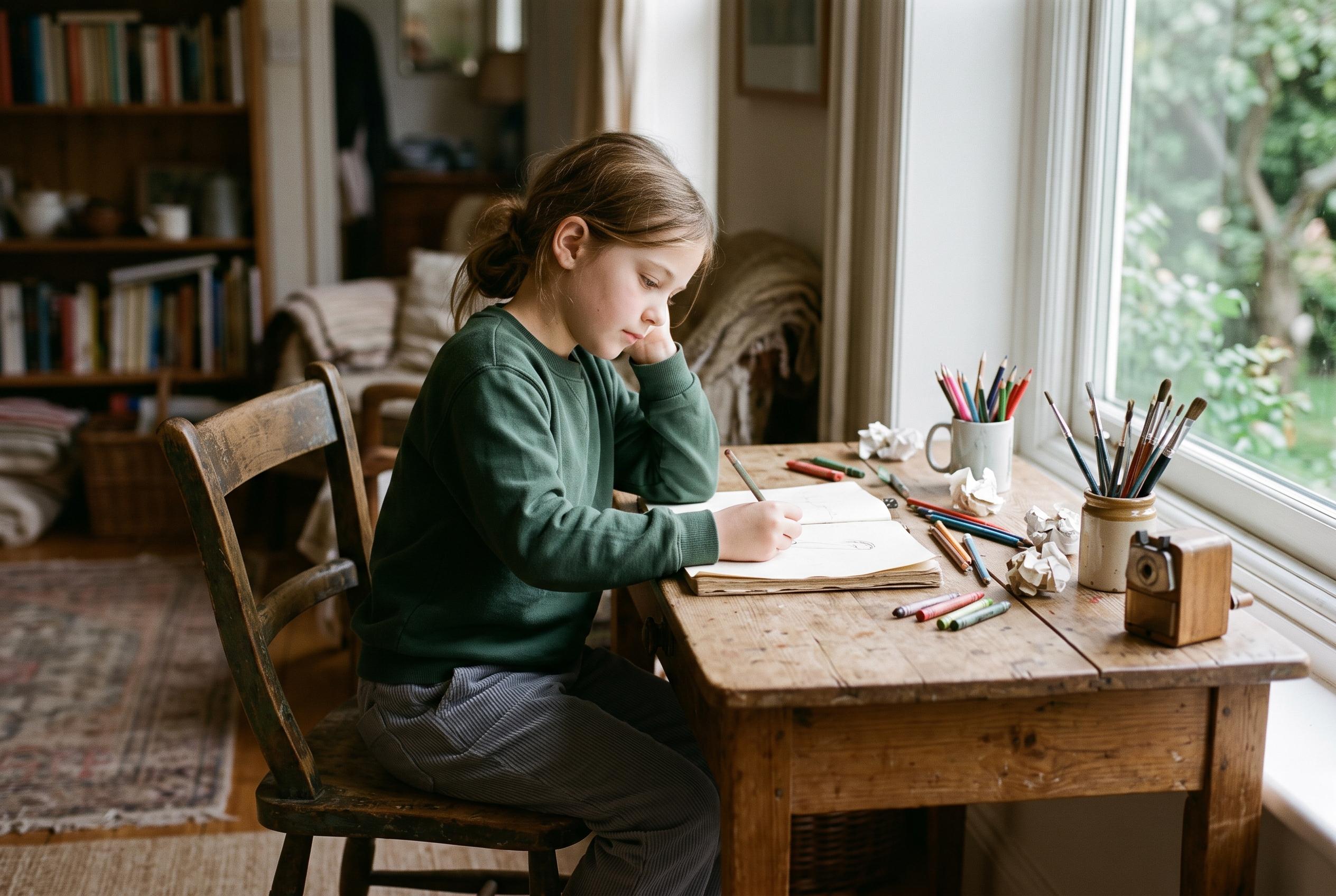

Research suggests that time away from organised activities may help children develop self-direction, creativity and problem-solving skills.
A growing body of child-development advice is nudging parents to think twice before packing every after-school hour with lessons, teams and clubs. In the article that prompted this rethink, Amy Webb argues that the real value may lie in the unstructured time children get to decide what to do for themselves. Research from the University of Colorado Boulder found that children aged six and seven who spent more time in less structured activities tended to do better on a measure of self-directed executive function, the mental skills that help children plan, solve problems and work towards a goal without constant adult guidance.
That does not mean organised activities are harmful. The American Psychological Association says unstructured play can build resilience, creativity and social skills, while Children’s Health notes that free play also supports confidence and emotional development. The point, rather, is that child-led time offers a different set of benefits from coached sport or adult-directed enrichment, and those benefits can be easy to overlook in families that feel pressure to keep children busy.
The Colorado researchers’ findings are best read as a correlation rather than proof of cause and effect. Their study was relatively small, with 70 children, so it cannot establish that free play directly improves executive function. But it does add to a wider pattern of expert opinion. PBS KIDS for Parents has said that unstructured play can strengthen organisation, focus and self-regulation, while the Canadian Public Health Association has linked it to better attention, memory and social competence.
Webb’s own example is a telling one: children turning cardboard boxes into a makeshift arcade, making rules as they go and persuading younger children to take part for a fee. That sort of improvised play, the kind that is not organised by an adult, gives children a chance to practise negotiation, flexibility and problem-solving. It also gives them ownership, which may be part of why it can feel so satisfying. Child-development specialists describe this as open-ended play, where children choose the game, shape the story and deal with whatever comes next.
For parents, the practical lesson is not to abandon organised sport or music lessons altogether, but to protect some unscheduled time in the week. A few empty afternoons, simple materials at home and time to play with friends can create room for children to invent, test boundaries and recover from the demands of school. In an era when family calendars often resemble work schedules, that may be the most useful enrichment of all.
Disclaimer: This content is for informational purposes only and is not intended to be a substitute for professional medical judgment, advice, diagnosis, or treatment.



