

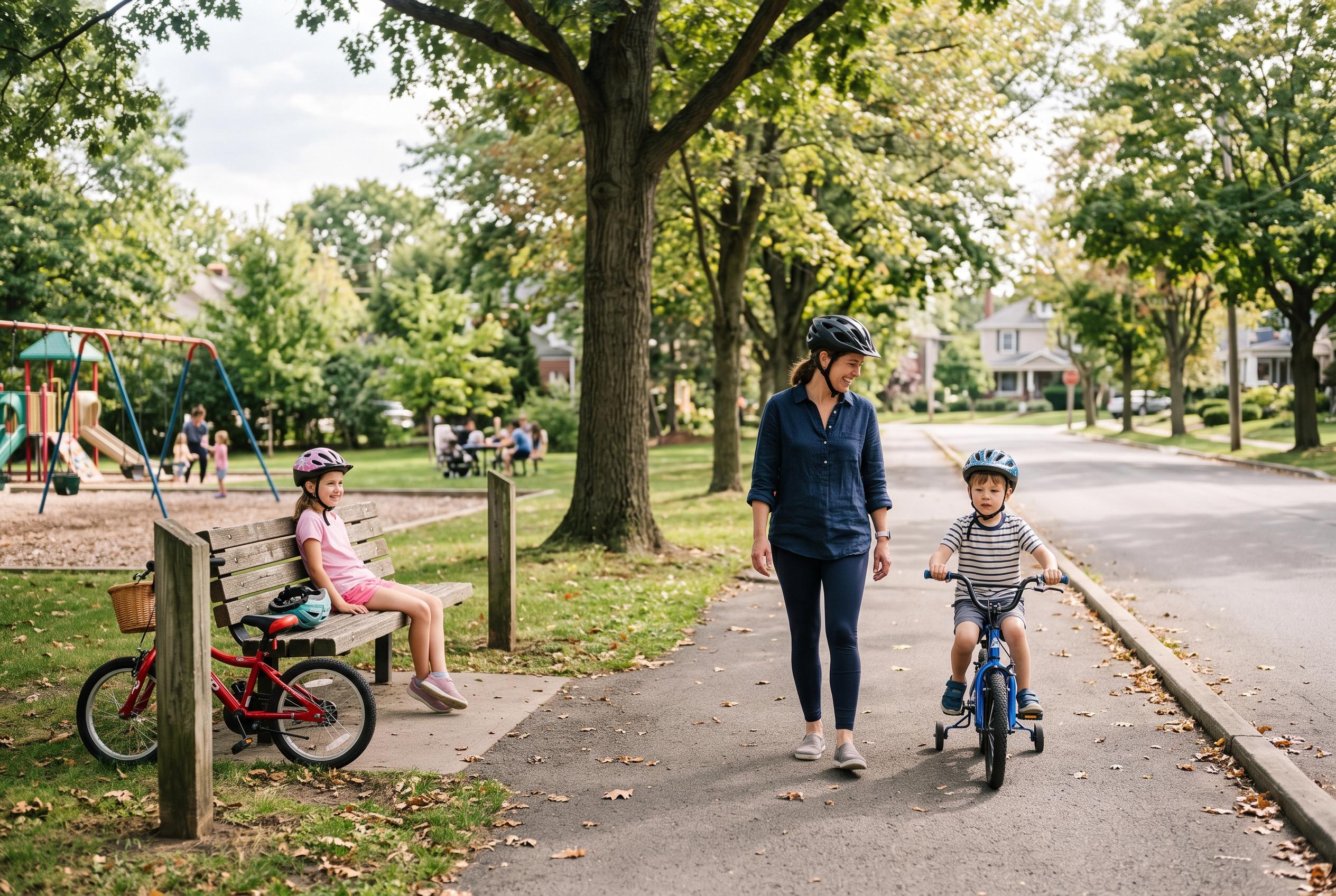

Safe routes, realistic expectations and plenty of stops can turn a family bike ride into an adventure children are eager to do again.
Family cycling can be one of the easiest ways to turn an ordinary afternoon into something memorable, but it works best when the ride is planned around the youngest or least experienced rider. That means keeping expectations realistic, choosing a pace that suits children rather than adults, and remembering that a short, simple route can often feel like a much bigger achievement to a child. According to Counting to Ten, the point is not to cover distance quickly but to create an outing that everyone is keen to repeat.
Route choice matters more than mileage. Brake, the road safety charity, advises that children under 10 should only ride on safe cycle paths away from motor traffic, while Children’s Health stresses the value of mapping out the safest possible journey in advance. That might mean using traffic-free paths, segregated cycleways, quiet residential streets or family-friendly trails rather than the most direct road route. REI also recommends starting in a child’s comfort zone, with flat and predictable surfaces, before gradually increasing difficulty as confidence grows.
A quick bike check before setting off can prevent a lot of hassle later. Counting to Ten suggests a simple M-check, moving visually from the front wheel through the frame and controls to the rear wheel, to make sure tyres, brakes, chain, handlebars and saddle are all secure. Children’s Health likewise advises checking that the bike is in good working order, and REI recommends making sure helmets fit properly and that riders are dressed appropriately for the weather. For families carrying very young children, Everyday Cycling says parents should only use child-carrying setups once a child is old enough to sit up unaided and keep their head steady while wearing a helmet.
Once the ride begins, children usually do best with short, clear instructions. REI advises keeping directions brief and positive, while Counting to Ten suggests explaining what will happen before reaching junctions or busy sections, rather than giving a string of commands at the last moment. It also helps to give family members clear roles, with one adult leading and another staying at the back if the group is riding on roads. On shared paths, children should be told to expect pedestrians to change direction suddenly and to leave enough room when passing. Children’s Health adds that children also need practice with traffic signs, road rules and visibility, all of which become more important as journeys get longer or more complicated.
Visibility and preparation for problems can make the difference between a smooth outing and an early end. Bright clothing, reflective details and working lights all help other road users spot a family more easily, especially if the ride runs into the evening. Counting to Ten recommends carrying a phone or battery pack, along with a basic puncture kit, and thinking ahead about how to get home if a child becomes tired or the weather turns. REI and other family cycling guides also encourage building in treats, playground stops or other rewards so the ride feels like an adventure rather than a test of endurance. The broader lesson is simple: if cycling stays fun, children are far more likely to want to do it again.
Disclaimer: This content is for informational purposes only and is not intended to be a substitute for professional medical judgment, advice, diagnosis, or treatment.



