

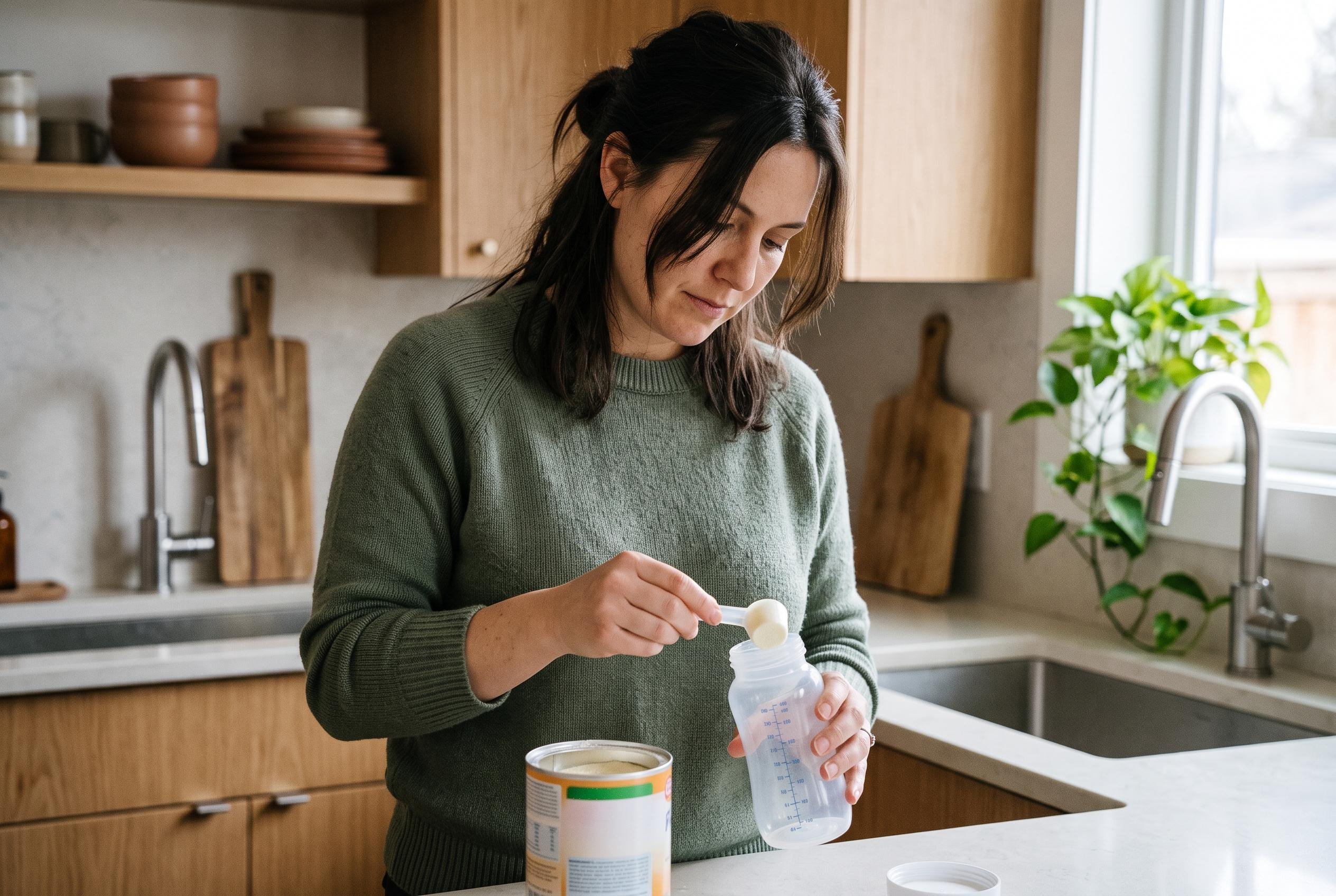

A review of 27 studies finds evidence of microplastics and potentially hormone-disrupting chemicals across bottles, formula and other infant-feeding products, while researchers call for stronger monitoring and regulation.
A new scientific review has added to concerns that infants can be exposed to microplastics and hormone-disrupting chemicals through formula, plastic bottles and other feeding products. Published in Environmental Science and Pollution Research, the review examined 27 studies from the past decade and found evidence of plastic particles, as well as chemicals such as phthalates, bisphenols, PFAS and flame-retardant byproducts, in products and materials used in infant feeding. Researchers said one study estimated that polypropylene bottles can release as many as 16.2 million microplastic particles per litre of formula during standard preparation.
The findings do not prove that these exposures cause illness, but the authors said the scale and frequency of contact raise questions about products intended for babies. They pointed to two main pathways: particles shed from bottles, utensils and packaging, and chemicals that can migrate from food-contact materials into formula. Evidence cited in the review also suggests that exposure may begin before birth, with studies detecting plastic particles or related substances in the placenta, breast milk and other biological samples.
The review also drew together studies suggesting possible effects on gut health, immunity and hormone function. Some reported lower bacterial diversity in the infant gut, while others found changes in vitamins, minerals and short-chain fatty acids linked to intestinal health. Animal experiments described changes in hormone levels, ovarian function and reproduction across generations, although the authors stressed that results from laboratory and animal studies cannot be assumed to translate directly to humans.
A separate study published in 2020 helped establish how much microplastic can be shed from polypropylene feeding bottles, showing that heat and sterilisation can sharply increase particle release. More recent research has also found microplastic contamination in infant formula itself, along with BPA and phthalate byproducts in tested products, reinforcing the view that exposure is not limited to bottles alone. Together, the studies suggest a wider supply-chain problem, from manufacturing and packaging through to preparation at home.
The review authors called for stronger monitoring, more consistent testing and tighter controls on chemicals that can migrate from packaging into food. They also noted an important regulatory gap: no internationally accepted limits currently exist for microplastics in food, and earlier this year the US Food and Drug Administration said infant formula remained safe after its largest-ever contaminant testing programme, which looked at heavy metals, pesticides, phthalates and PFAS but did not test for microplastics. For parents and caregivers, the practical message is not panic, but caution: the evidence is still incomplete, yet the possibility of repeated early-life exposure is hard to dismiss.
Disclaimer: This content is for informational purposes only and is not intended to be a substitute for professional medical judgment, advice, diagnosis, or treatment.



