

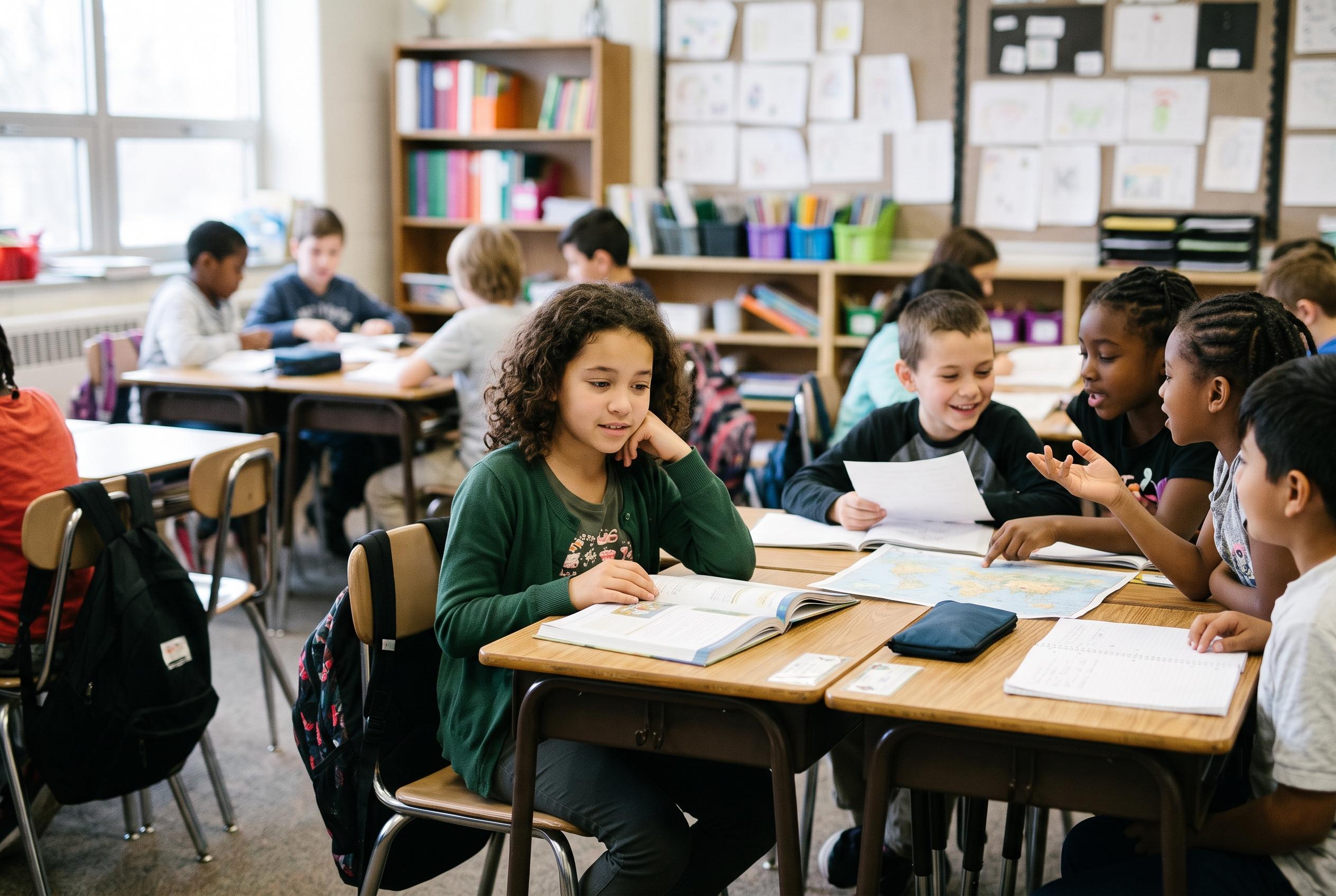

The move into fourth grade brings tougher reading demands, greater independence and more complex friendships , changes that can leave children anxious or withdrawn before they say they are struggling.
For many families, the jump from third to fourth grade can feel unexpectedly bumpy. A child who seemed cheerful and eager about school may suddenly become irritable, anxious or hard to rouse in the morning. Dr Shilpa Dass, a New Jersey paediatric neurologist and mother of three, told TODAY.com that this shift is often less a sign of failure than a sign that school expectations have started to rise faster than some children can comfortably absorb. She said parents should watch for subtle changes rather than waiting for a child to say they are struggling.
One reason the transition can be so difficult is that fourth grade often marks the point at which schools stop focusing mainly on teaching children how to read and start assuming they can read to learn. According to education experts cited by the American Federation of Teachers and other school resources, this is when reading comprehension becomes central across subjects, not just in English lessons. Dass said pupils are expected to use reading skills to access science, history and even maths, which can expose gaps that were easier to hide in earlier years.
Vocabulary also becomes more demanding. Dass explained that younger children can often rely on pictures, familiar topics and context to get by, but fourth-grade work more often uses abstract language that requires a stronger grasp of meaning. She pointed to classroom questions that hinge on a single word, such as “inconclusive”, where guessing is no longer enough. Educational guidance from parents’ groups and literacy specialists similarly warns that students who have not fully mastered decoding and language comprehension may find this stage especially challenging.
The social and organisational expectations change as well. Dass said children are expected to be more independent, with fewer reminders from teachers and parents and greater responsibility for remembering assignments, managing materials and keeping track of routines. That shift in executive functioning, the set of mental skills used to plan, organise and carry out tasks, can be difficult for children who are still developing those abilities. School transitions can also heighten anxiety, and Johns Hopkins Medicine advises families to prepare children with predictable routines, previews of what is coming next and praise for independent behaviour.
Friendships can become more complicated too. Dass said fourth-graders often move from loose, mixed-age play into smaller, more defined friend groups, which can make peer approval feel more important and social missteps more painful. If a child appears to be losing interest in school, she suggested parents talk with the teacher to compare notes and identify whether the problem is academic, social or both. She also recommended slowing down at home and reading together, both to build richer vocabulary and to give children a calmer setting in which to talk through what they do not understand. Child Mind Institute experts say routines, warnings before transitions and occasional rewards can also help children adapt more smoothly.
Disclaimer: This content is for informational purposes only and is not intended to be a substitute for professional medical judgment, advice, diagnosis, or treatment.



