

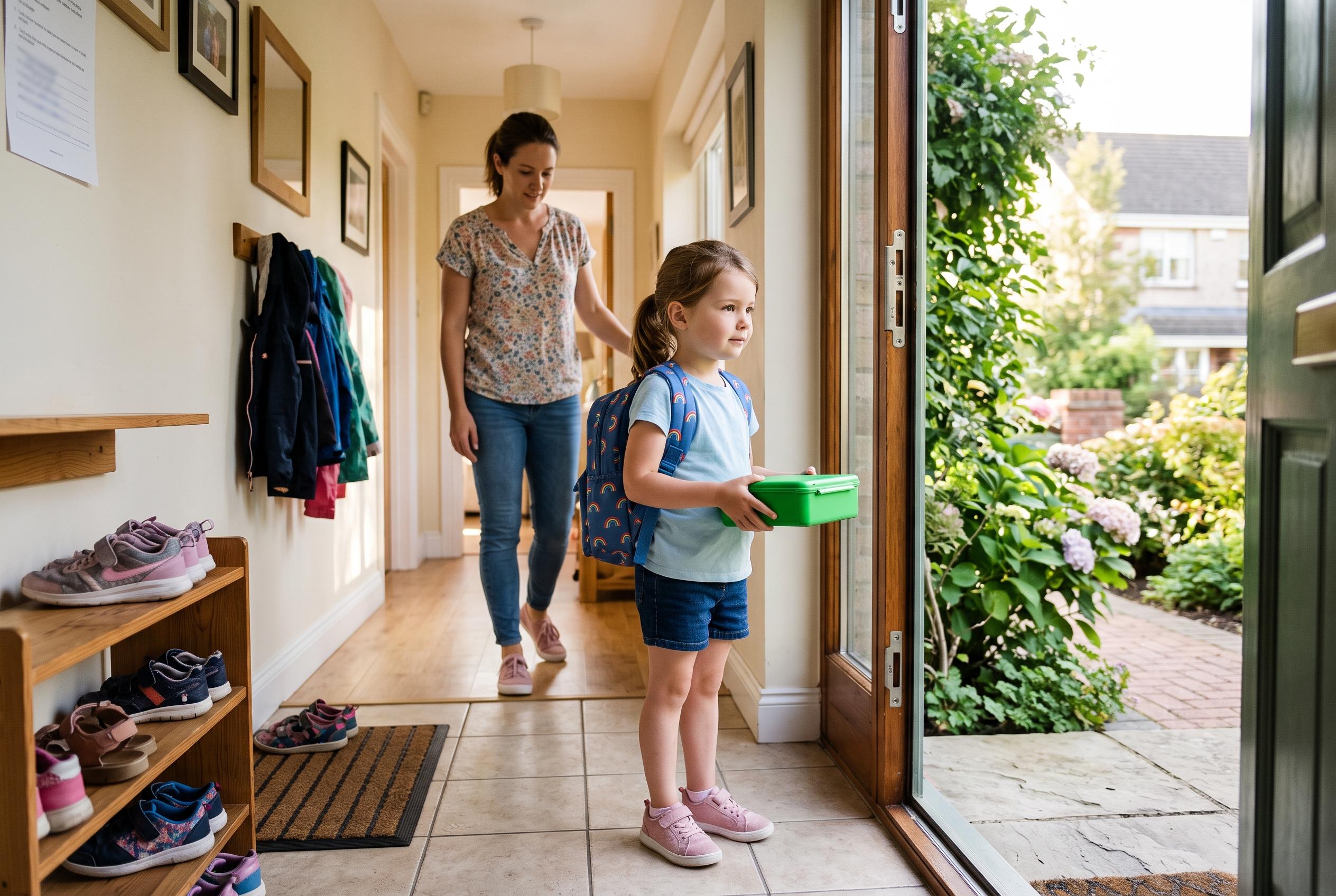

From practising school-day routines to opening lunchboxes independently, simple preparations over the summer can help children approach their first term with greater confidence.
The first morning of Junior Infants can feel momentous for the whole household. For children, it marks the start of a new routine, new relationships and a more independent daily life. For parents, it can bring pride, nerves and a fair amount of planning. The encouraging news, according to guidance from several primary school and parenting sources, is that the move is usually smoother when families begin preparing in small, practical ways over the summer rather than waiting for September itself.
One of the most useful steps is to bring school mornings into the child’s routine before term starts. Primary School.ie and Headstart.ie both advise parents to adjust bedtimes and wake-up times in advance, then rehearse the same sequence a school day will require: getting dressed, eating breakfast, brushing teeth and heading out on time. The point is not perfection, but familiarity. When the pace no longer feels completely new, the first week can be less overwhelming.
Independence skills matter just as much as academic ones at this stage. Several schools and parent guides say children should practise putting on coats and shoes, opening lunchboxes and drinks bottles, recognising their own name, tidying up, and managing the toilet and handwashing without help. Kinsale National School adds that children who can button and unbutton coats, open their school bags and handle lunch independently are often better placed to settle quickly. The broader message is that readiness is less about reading or writing and more about managing everyday tasks with growing confidence.
Play can also do a great deal of the preparation work. Rollercoaster.ie suggests reading together, talking through feelings, playing at school at home and visiting or walking past the school in advance. These low-pressure conversations help children picture what to expect and give adults a chance to answer questions honestly without making the experience seem frightening. Keeping the tone calm and upbeat is important, because children often pick up their emotional cues from the adults around them.
The practical details are worth sorting early, too. Headstart.ie and Muinefliuch NS both recommend labelling uniforms, bags and lunch items, involving children in packing their own school bag, and choosing shoes they can manage themselves, such as ones with Velcro fastenings if needed. It is also sensible to keep lunches simple and familiar at first, so children can open and eat them without stress. Small preparations like these can save time, reduce frustration and help a child feel more ownership over the move.
Parents should also watch for signs that a child needs extra reassurance once school begins. Some children settle quickly, while others need a few weeks to feel secure, and both responses are normal. Changes in sleep, appetite or mood can be a sign that a child is finding the adjustment hard. In that case, a predictable home routine and a brief conversation with the class teacher can often help. As guidance from Bodhí and other school readiness checklists notes, the aim is not to force a child into instant confidence, but to support them as they learn to cope with a bigger, busier day.
Disclaimer: This content is for informational purposes only and is not intended to be a substitute for professional medical judgment, advice, diagnosis, or treatment.



