

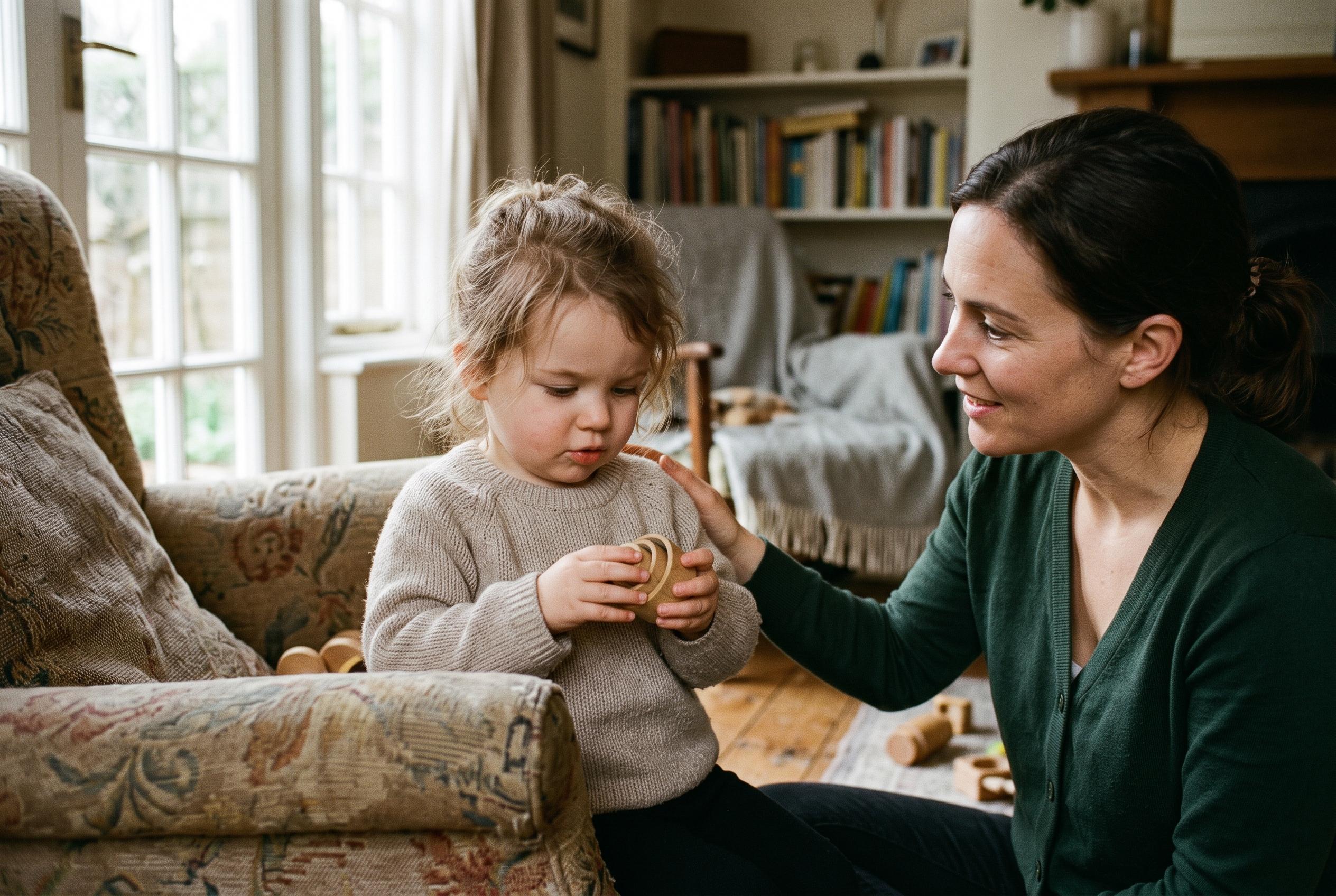

Children’s inborn responses to novelty, change and stimulation can shape early behaviour, but relationships, caregiving and experience continue to influence who they become.
Parents often notice temperament before they know the word for it. One child greets new people with ease, another clings back, and a third seems upset by every change in routine. Psychologs explains that temperament is the inborn style through which a child responds to the world, while Psychology Today notes that it is distinct from the broader and more complex pattern we call personality. In practice, temperament can shape first reactions, but it does not write the full story of who a child will become. According to both pieces, understanding that difference matters for anyone trying to make sense of children’s behaviour.
The Psychologs article sets out nine well-known dimensions used to describe temperament: activity level, regularity of sleep and appetite, ease of adjustment, approach or withdrawal from novelty, sensitivity to stimulation, intensity of reaction, overall mood, distractibility, and persistence. Taken together, these traits help explain why some children settle quickly into routines while others need more time, quieter surroundings, or extra reassurance. The article argues that temperament is multi-dimensional rather than fixed in a simple good-or-bad category, and that these early differences can be seen in how children manage emotion, attention and self-regulation.
What makes the subject more interesting is the way biology and environment overlap. Psychologs says genetics strongly influence temperament, but parenting style, discipline, attachment and the wider home environment also matter. The article also points out that a child’s early environment begins to shape development even before birth, affecting brain structure and chemistry. That view is broadly consistent with Psychology Today’s distinction between temperament and personality, which describes personality as emerging through experience, relationships and social interaction rather than through inborn tendencies alone.
For parents, the practical message is not to try to remake a child, but to respond in a way that fits the child’s style. Psychologs highlights the importance of attunement, in which a caregiver notices and responds to what a child is feeling, as well as the idea of “goodness of fit”, a term used by Stella Chess and Alexander Thomas to describe how well a child’s temperament matches the surrounding environment. A lively, easily distracted child may need a different approach from a cautious, slow-to-warm-up child. The aim is not sameness, but support that reduces friction and helps strengths emerge.
That matters because early childhood is a period of rapid brain development, and Psychologs says most of that growth takes place in the first five years. During that time, repeated experiences can strengthen some pathways and weaken others, which helps explain why temperament is important without being destiny. The article’s central message is reassuring for parents with more than one child: children may share a household, but they do not experience it in the same way. Temperament influences the starting point, yet caregiving, relationships and daily experience continue to shape the final outcome.
Disclaimer: This content is for informational purposes only and is not intended to be a substitute for professional medical judgment, advice, diagnosis, or treatment.



