

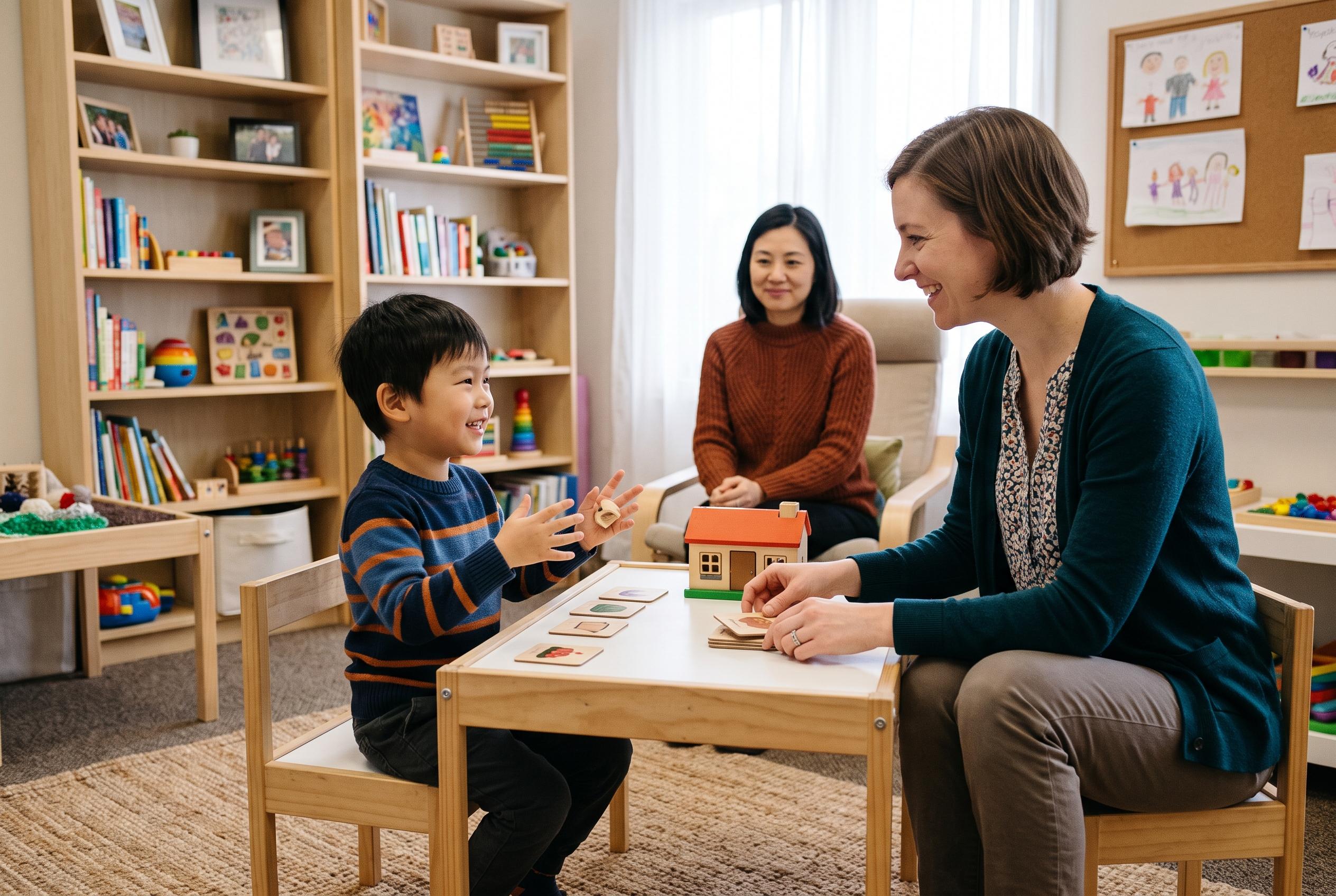

A Taiwanese hospital is urging parents to look beyond speech milestones after therapy helped a boy move from isolated play and limited words to confident communication and starting primary school.
A Taiwanese hospital is urging parents not to dismiss developmental delay as simply “late talking”, after a boy who once struggled to use more than a few words is now able to speak in full sentences, play with classmates and start primary school.
The child, identified as Xiao Xing to protect his privacy, was diagnosed when he was little more than two years old after his speech remained limited and he showed little initiative in social interaction. According to the report from Changhua Christian Hospital’s Taichung branch, he began early intervention therapy and was followed over several years. That process, clinicians said, helped him move from isolated play and sparse vocabulary to more confident communication and group activity.
Occupational therapist Tu An-yi said Xiao Xing was initially absorbed in his own world of toy dinosaurs and rarely initiated contact with other people. The therapy team used his interests to build engagement, turning play into a way to practise waiting, listening, taking turns, responding and sharing. She recalled an early moment when he picked up a frangipani flower during a session and tried to tell his mother, “Give…teacher!” That kind of small step, clinicians said, marked progress not just in word count but in comprehension, expression and social connection.
Zhang Xian-bo, a doctor in the hospital’s paediatric rehabilitation service, said child development covers gross motor skills, fine motor skills, language, learning, cognition and social-emotional growth. He said developmental delay should not be judged only by whether a child speaks by a certain age, because delays can show up in movement, understanding, play and relationships as well. In Xiao Xing’s case, the goal was never only to add more words, but to strengthen the chain from understanding instructions to expressing needs, waiting, taking turns and interacting with others.
Zhang said the best chance to help comes in early childhood, when the nervous system is developing rapidly. He advised parents to seek screening or a specialist assessment if a child is clearly behind peers in speech, motor development, learning, play or social interaction, or if previously acquired skills begin to slip. The American Academy of Pediatrics also says safe, stable and nurturing relationships are central to healthy development and school readiness, while research in developmental psychology suggests that even early gestures such as showing, giving and pointing can offer important clues about later language growth.
Disclaimer: This content is for informational purposes only and is not intended to be a substitute for professional medical judgment, advice, diagnosis, or treatment.



