

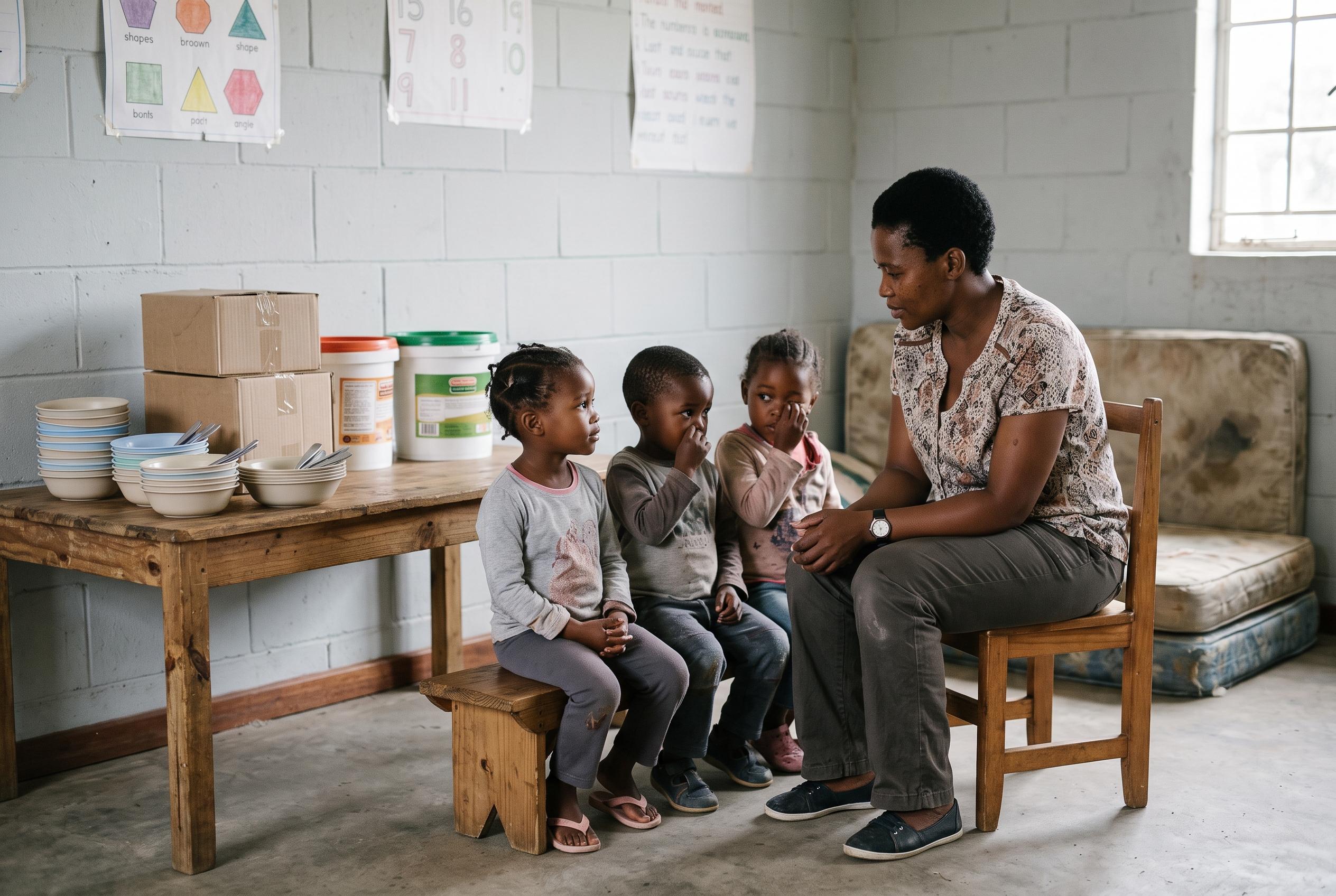

Millions of rand earmarked for early childhood nutrition have gone unspent while a pilot intended to feed 26,620 children in the Eastern Cape faces its eighth tender delay.
On World Food Day, the argument should be beyond dispute: young children need reliable access to safe, nutritious food if they are to grow, learn and avoid the long-term damage caused by undernutrition. Yet in South Africa, the Department of Basic Education is facing criticism for leaving millions of rand unspent while families and early childhood development centres continue to manage hunger on their own.
That concern is sharpened by UNICEF’s estimate that 23% of children under five in South Africa live in severe child food poverty. The agency says this leaves them far more vulnerable to malnutrition, poor growth and developmental harm. Health advocates have also warned that the damage is not only physical: inadequate diets in the early years can undermine brain development and make children more likely to struggle at school later on.
The department’s stalled early childhood development nutrition pilot has become the clearest symbol of that failure. According to reporting by Daily Maverick, the programme was meant to support 26,620 children at 1,035 bronze-registered centres in the Eastern Cape, many of which do not qualify for the existing subsidy. The pilot was first budgeted at R197m in the 2024/25 financial year, but the tender has now been delayed eight times, with the latest closing date set for 23 October 2026.
The repeated postponements matter because they have real consequences in classrooms and community centres where food is often the difference between a child paying attention and going without. In practice, the burden frequently falls on practitioners, some of whom try to stretch their own household resources to feed children in their care. That makes each delay more than an administrative inconvenience; it is a further postponement of meals that were supposed to have reached children already.
The issue has also become a test of whether the state can convert allocated money into practical support. News24 reported that the department surrendered R743m in unused funds to the National Revenue Fund after failing to spend them in the 2025/26 financial year, including R389.3m earmarked for early childhood development nutrition pilots and resource packages. For child rights campaigners, that raises a larger question than procurement alone: if government cannot deliver a funded nutrition programme for some of the country’s youngest children, what confidence can families have that promises on child welfare will be honoured before another financial year slips away?
Disclaimer: This content is for informational purposes only and is not intended to be a substitute for professional medical judgment, advice, diagnosis, or treatment.



