

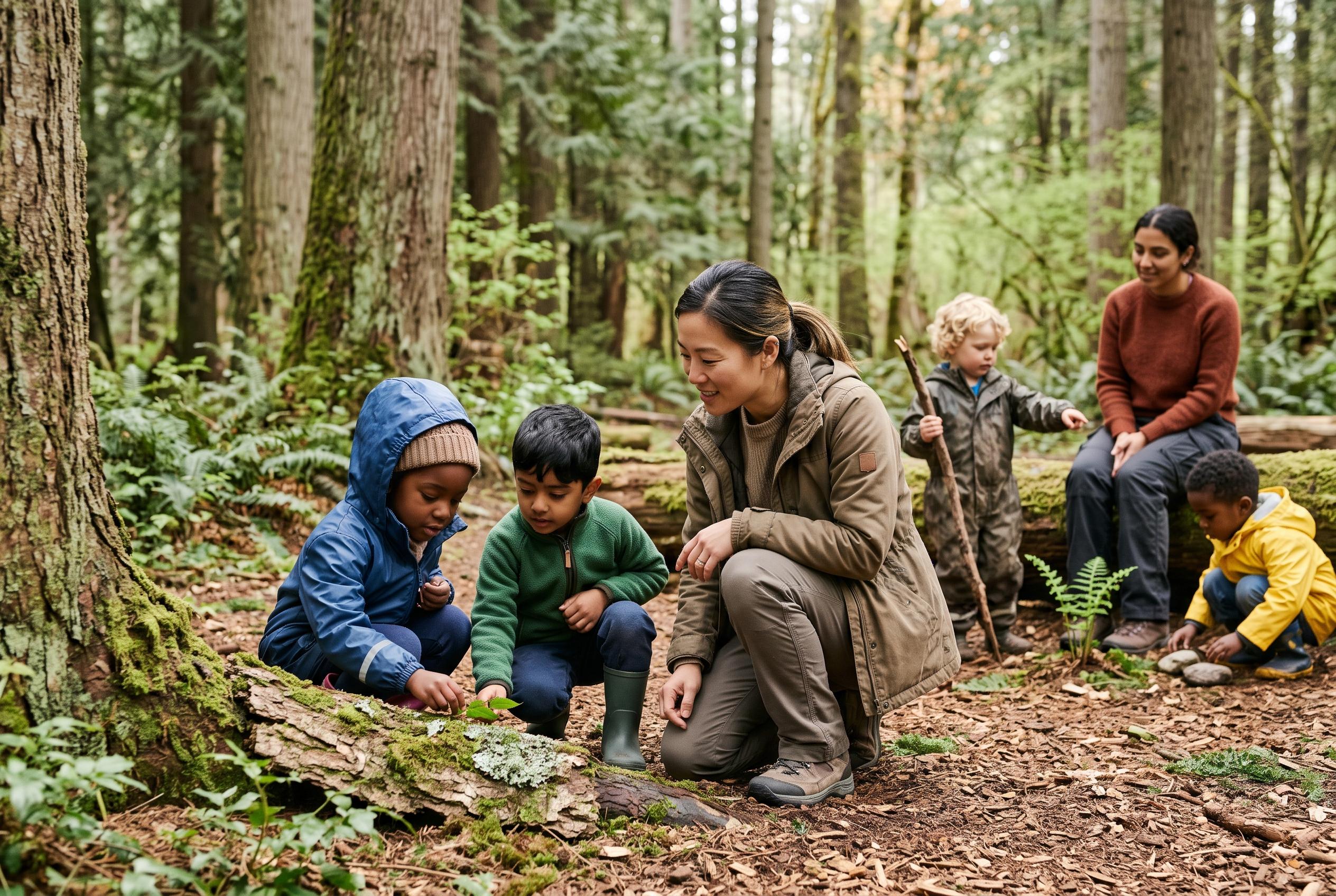

The government will prepare legislation to give outdoor-focused early learning providers clearer licensing rules and a route to expand, while maintaining quality safeguards for families.
New Zealand’s government is moving to create a formal legal pathway for nature-based early childhood education, in a bid to give outdoor-focused providers clearer rules and a route to expansion, according to Associate Education Minister David Seymour. The proposed framework would recognise services that use natural settings as a core part of early learning, rather than treating them as an awkward fit within rules designed for more conventional centres.
Seymour said Cabinet has agreed that legislation should be prepared for introduction early in the next parliamentary term, after the election. He said the aim is to replace uncertainty with a system that allows these services to operate, while still giving families confidence that they meet appropriate standards. The government also plans to develop separate regulations, licensing criteria and funding conditions as the bill moves through Parliament, with public consultation on the detailed rules expected early next year.
The move builds on a wider early learning framework already in place in New Zealand, where providers must work within the Education and Training Act 2020, the Education (Early Childhood Services) Regulations 2008 and the current licensing criteria. The Ministry of Education says providers seeking to open a service must go through a formal licensing process and meet curriculum and compliance requirements, whether they are running a centre-based, home-based, hospital-based or other approved type of service.
Support for the policy also rests on a broader body of research on early childhood education. Education Counts says quality ECE is linked with gains in children’s literacy, numeracy, school readiness and social development, while government data shows about 95% of children attend ECE before starting school. The government’s stated goal is to raise participation further, to 98% of school starters, and ministers argue that allowing more nature-based services could help widen choice without sacrificing educational quality. Research from NZCER’s Ngahere Project has also highlighted how outdoor learning can strengthen children’s connection with the environment, echoing Seymour’s argument that New Zealand’s natural setting should be used more fully in early education.
Disclaimer: This content is for informational purposes only and is not intended to be a substitute for professional medical judgment, advice, diagnosis, or treatment.



