

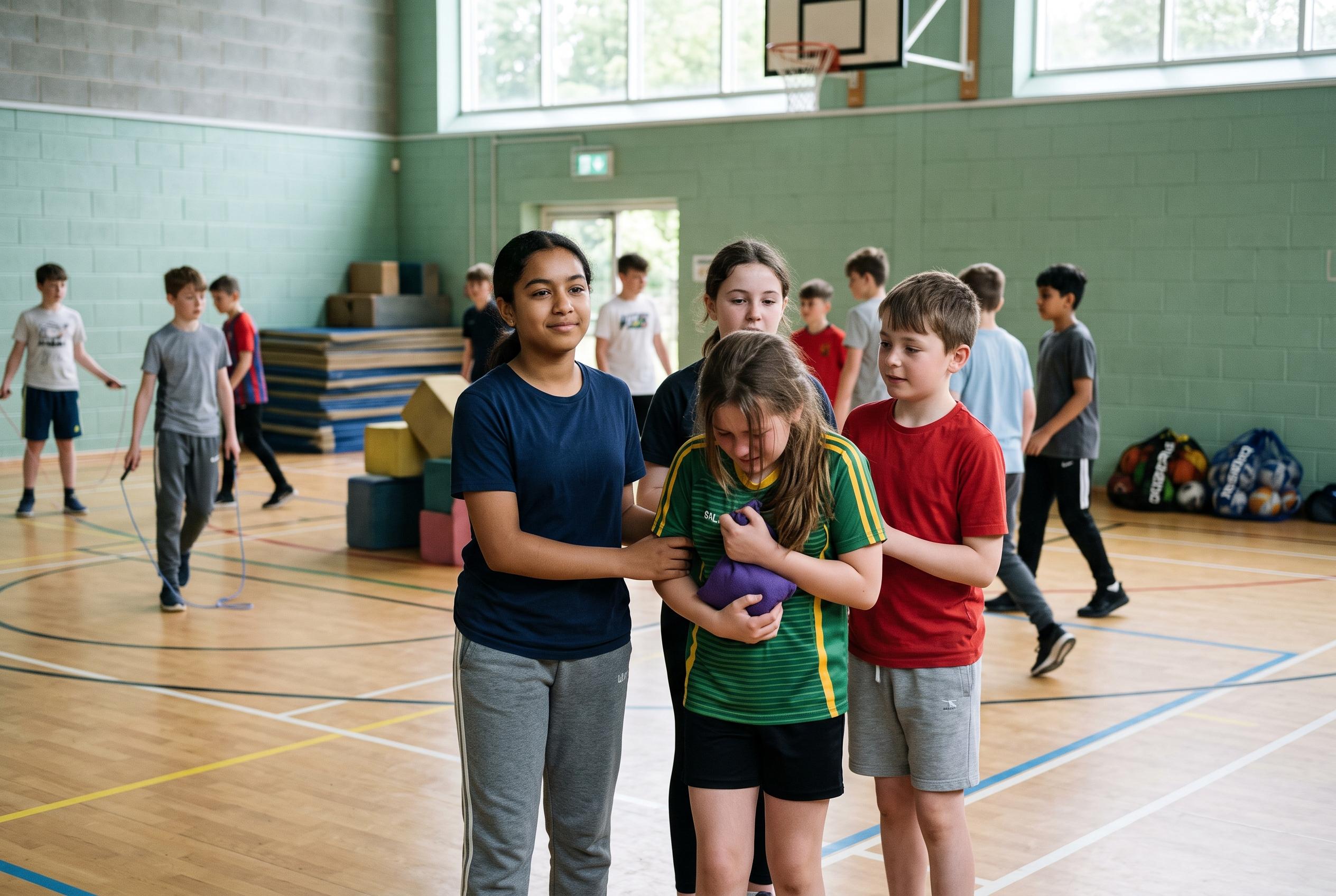

A study of more than 1,300 pupils in Spain suggests that motivation and personal responsibility can determine whether classmates challenge bullying in physical education.
Physical education can be one of the few parts of the school day that draws pupils out of the classroom and into shared activity, but the same setting can also expose tension, comparison and exclusion. A new study from the University of Córdoba suggests that when bullying happens in PE, the response of classmates who witness it can determine whether harm is challenged or allowed to continue.
The research, led by Rafael Clavero Prados with colleagues from the Sport and Physical Education for Personal and Social Development group, surveyed more than 1,300 pupils aged 10 to 18 in Spain. Published in Physical Education and Sport Pedagogy, the study examined how experiences of bullying relate to pupils’ motivation in PE and to their sense of personal and social responsibility.
Its central finding was that pupils who felt more engaged in physical education were also more likely to show a stronger sense of personal responsibility, which in turn made them likelier to act when they saw unfair treatment. By contrast, pupils who had been bullied tended to show lower motivation towards the subject. The authors said that stepping in requires more than goodwill: children need to believe they are capable of intervening and that it is their responsibility to do so.
The study adds to earlier research showing that the classroom climate and the way teachers lead PE can shape behaviour. Previous findings have linked a supportive teaching style and the satisfaction of pupils’ basic psychological needs with lower levels of bullying, while other studies have found that peer support is associated with less victimisation and that weaker social responsibility can be tied to more harmful conduct. Together, the evidence points to the same conclusion: prevention works best when schools build a setting that encourages both belonging and accountability.
The Córdoba team says that is why responsibility should be treated as part of a wider anti-bullying strategy rather than as a stand-alone lesson. The researchers are also using programmes such as PrebullPE, which focuses on recognising bullying, managing emotions and strengthening social skills, to help teachers turn PE and youth sport into safer environments. In their view, those classes should teach far more than teamwork and competition; they should also help pupils learn respect, empathy and how to intervene when someone is being treated unfairly.
Disclaimer: This content is for informational purposes only and is not intended to be a substitute for professional medical judgment, advice, diagnosis, or treatment.



