

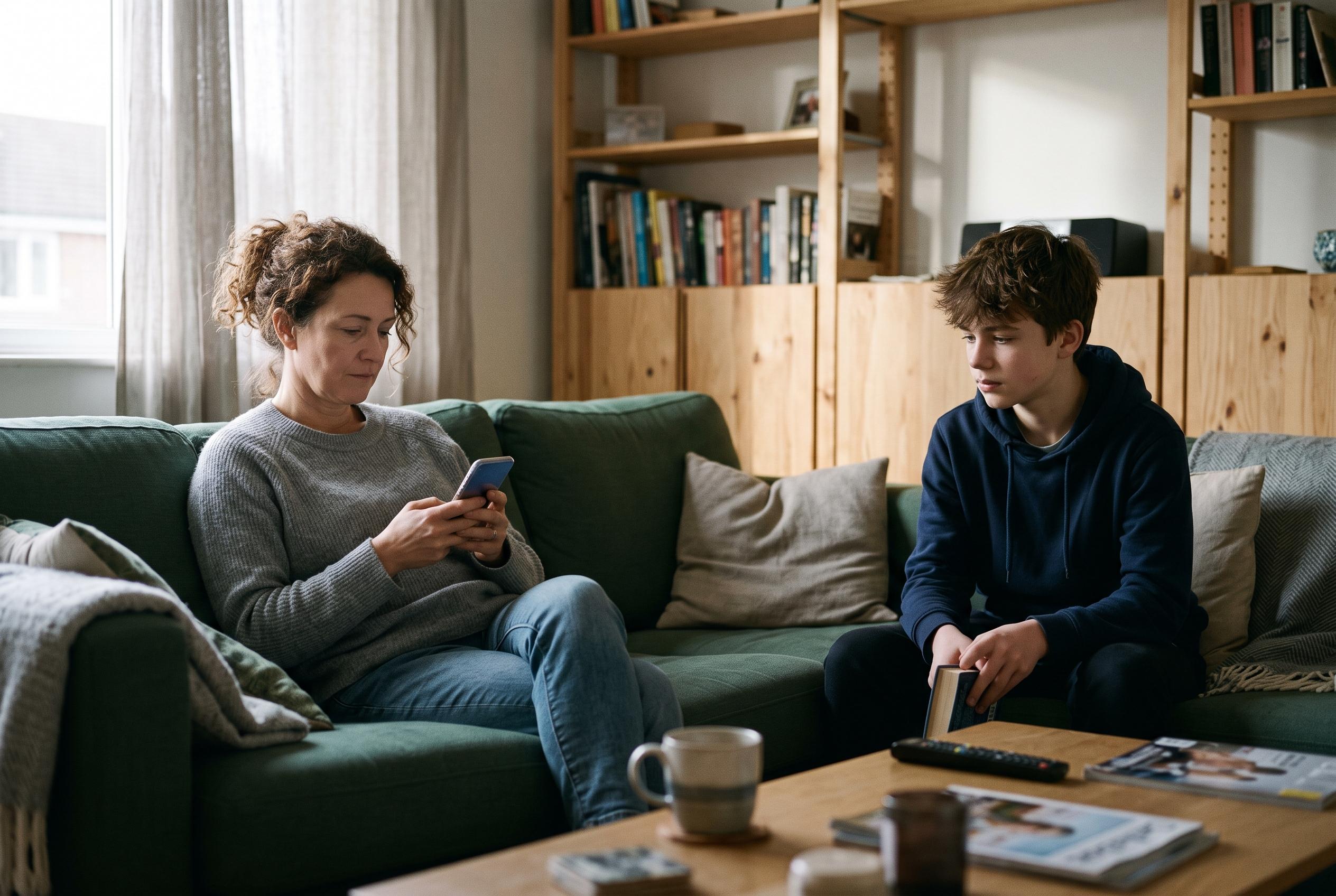

Research suggests that children who regularly feel they are competing with a parent’s phone for attention may face greater anxiety or emotional withdrawal in relationships.
Meta’s recent $18 billion settlement over teen social media harm has brought fresh scrutiny to the ways digital platforms shape family life, but the concern does not stop with adolescents. Research highlighted by The Washington Post suggests that parents’ own phone use may also affect children’s emotional security, especially when children regularly feel competing with a screen for attention.
The discussion centres on work by Don Grant, a psychologist who studies young people’s media habits. Grant said the idea for the research grew out of conversations with teenage patients who complained that their parents were no better than they were with devices. Some said adults banned phones at the dinner table while quietly scrolling themselves, or remained absorbed in screens at games, recitals and other events where children expected attention.
Grant and his colleagues set out to examine whether this kind of device use might shape attachment, the emotional bond between children and caregivers that can influence later relationships. In their survey of 600 adolescents aged 12 to 17, the researchers asked how often teens felt their primary caregiver was distracted by a phone or other device during family interactions. They found that more frequent perceived interference was associated with more insecure attachment patterns, including anxiety in relationships and emotional withdrawal.
The study did not measure parents’ total screen time. Instead, it focused on what researchers call “technoference”, when technology interrupts an interaction, and “phubbing”, or snubbing someone in favour of a phone. Grant also used the phrase “absent presence” to describe adults who are physically there but mentally elsewhere, a pattern he said he sees at playgrounds, restaurants and school events.
Grant does not argue that parents must be unavailable to their phones at all times. Rather, he recommends simple habits that make children feel acknowledged: say when you are busy, explain when you will be able to respond, and then follow through. He also suggests keeping meals and child-focused outings largely device-free. His broader warning is that when young people repeatedly learn that a parent is too distracted to listen, they may look elsewhere for guidance, including to friends, chatbots or strangers online.
Disclaimer: This content is for informational purposes only and is not intended to be a substitute for professional medical judgment, advice, diagnosis, or treatment.



