

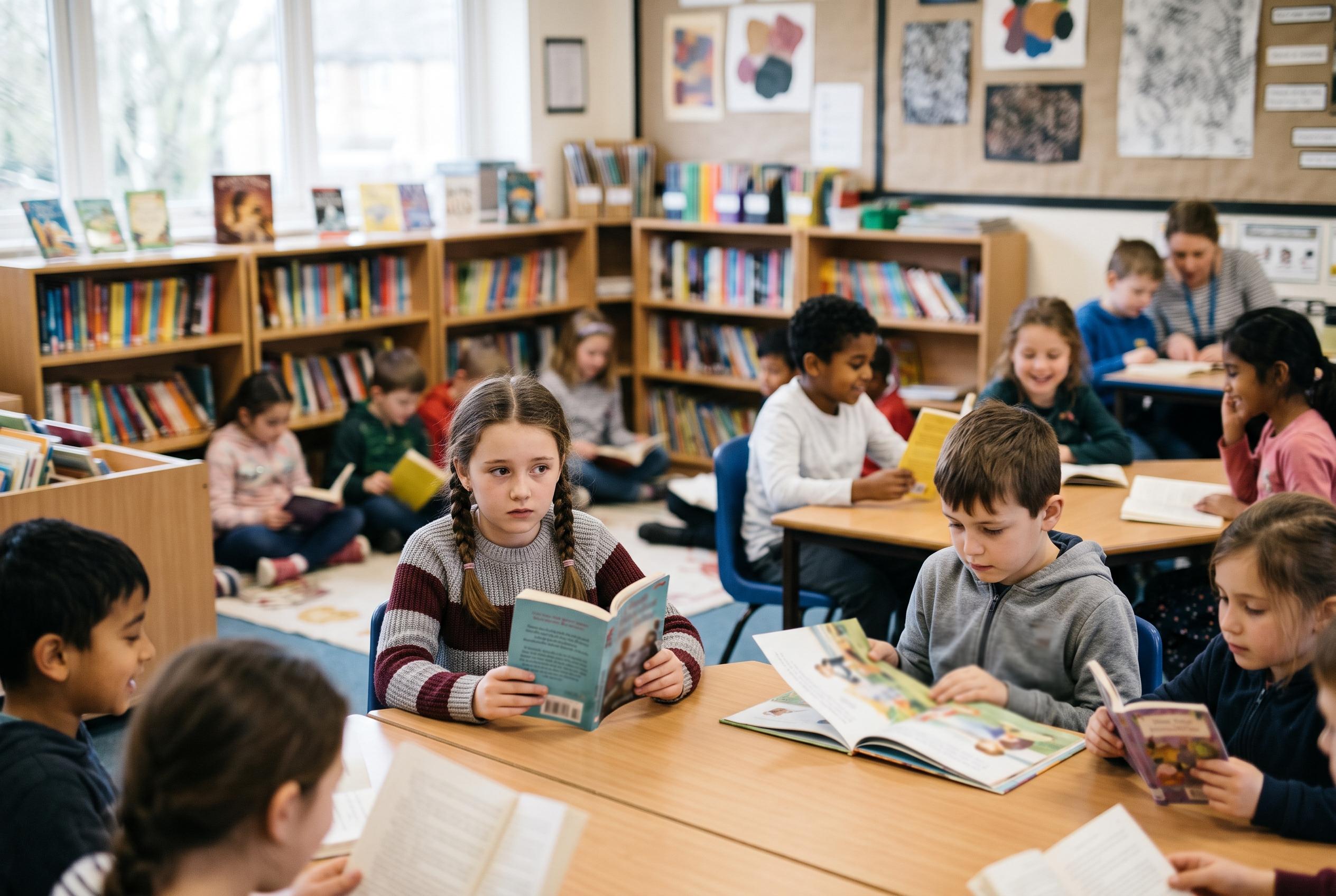

A study tracking 499 children found that weaker reading in the early years, and slower progress later in primary school, was associated with greater reading anxiety by Year 8.
For some children, reading difficulties can become more than an academic hurdle. New research suggests that early problems with reading may feed a lasting sense of worry around books and classwork, with that anxiety carrying into later school years, according to findings reported in the Journal of Educational Psychology and summarised by Phys.org.
The Bulgarian study followed 499 children from Year 1 to Year 8, testing their reading eight times and measuring reading anxiety in later years for most of the group. It found that weaker reading performance in the first year of primary school, as well as gains made between Years 1 and 3 and again between Years 6 and 8, predicted anxiety by Year 8. In other words, difficulties at several points in primary school appeared to be linked with later distress about reading.
That finding supports a pattern researchers have been tracking more closely in recent years. Studies in this area have increased sharply over the past eight years, reflecting growing concern that reading ability and reading anxiety can reinforce each other. Earlier work has also pointed in the same direction. A Finnish study published this year found that poorer reading skills in Year 1 were associated with higher reading anxiety in Year 2, while older research in Child Psychiatry and Human Development suggested the relationship may run both ways, with anxiety making reading harder as well as reading problems making children more anxious.
The practical concern for families and teachers is that a child who feels behind may begin to avoid reading whenever possible. That can mean hesitating to read aloud, disengaging in class or becoming reluctant to practise at home. Over time, avoidance can slow progress further, which may deepen a child’s negative view of themselves as a reader. For struggling readers, that cycle can become self-reinforcing.
Other research suggests there are ways to interrupt it. A 13-week action research project with second-grade pupils, indexed in PubMed, found that interactive read-aloud sessions using picture books reduced reading anxiety and improved attitudes towards reading. Separate research published in Acta Psychologica also found that reading fluency strategies helped lower anxiety and strengthen positive views of reading. For parents and carers, the message is straightforward: praise progress, avoid comparisons with siblings or classmates and build confidence around even small gains. Supportive feedback may not solve every reading difficulty, but it can help children feel safer tackling the task.
Disclaimer: This content is for informational purposes only and is not intended to be a substitute for professional medical judgment, advice, diagnosis, or treatment.



