

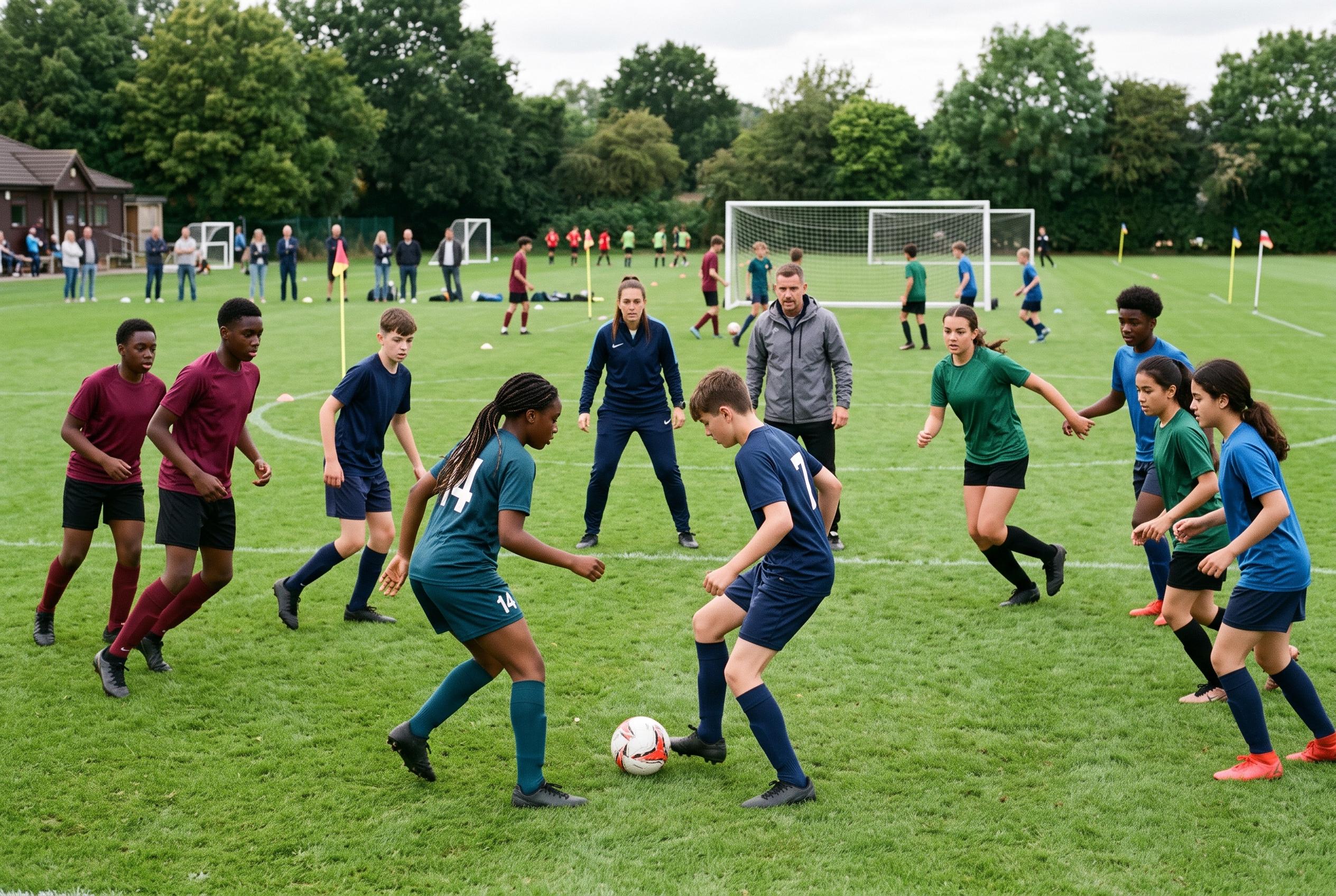

From US university identification camps to European club academies, the best 2026 programme depends on a young player’s ambitions, age and readiness, not simply the fame of the crest.
Families weighing elite soccer camps in 2026 have a wide range of options, from NCAA-style identification events in the United States to club-branded academy experiences in Europe. Dutch Football Club’s guide highlights how the choice often comes down to a child’s longer-term goals: college recruitment, professional-style development, or simply a more immersive summer of high-level training. The American route tends to stress exposure, athletic testing and campus life, while European programmes place more weight on technical precision, tactical understanding and training within a club culture.
That distinction matters because the best fit is not necessarily the most famous badge. College-hosted camps can offer direct contact with coaches who are building future rosters, and programmes such as the Elite Soccer Academy at Virginia Tech are pitched around that environment. The camp is run on Virginia Tech’s campus, with staff drawn from the women’s programme and other college coaches, although the organisers note that the university is not involved in operating or controlling the camp. For players focused on recruitment, that kind of setting can be more valuable than a glossy brand name, especially when coaches want to see how an athlete responds to instruction over multiple sessions.
Several university camps in the United States are aimed at older or more advanced players who are serious about the next stage. The CCU Men’s Soccer Elite 3-Day ID Camp in Denver is open from ninth grade through college seniors and includes six training sessions, an admissions presentation and campus tours, with commuter and residential pricing set at different levels. At UCF in Orlando, the Jr. Elite Camp for boys aged 12 to 16 combines technical work, tactical drills and small-sided and full-field games, while also offering overnight accommodation for those who need it. These programmes reflect a growing trend in American youth soccer: camps are no longer just about summer fitness, but about exposure, evaluation and preparation for the collegiate game.
On the club side, European and club-linked camps promise something different. Chelsea’s elite camps in the United States, for example, are advertised with an international coaching staff, a 15-to-1 camper-to-coach ratio and sessions that mirror the club’s methods, while Manchester City’s camp network in the United States is built around its possession-based philosophy and runs in multiple cities nationwide. In Britain, Chelsea, Manchester City and Arsenal all offer residential-style camps for young players, while Barça Academy in Spain presents a longer immersion into the club’s positional play model. These programmes are typically more expensive than domestic college camps, but they are designed to give players a taste of academy standards and a specific footballing identity.
Italy and France offer another layer of prestige and cost contrast. The AC Milan Academy Experience Élite is presented as a serious development option for children aged eight to 16, with residential and day formats, more than 30 hours of weekly activity and tactical review built into the schedule at Milan’s youth training centre. PSG’s academy camp, by contrast, is positioned as a more accessible entry point, with lower starting prices and a focus on technical development and acceleration. For parents, the difference is not just financial; it is also about whether a camp is trying to imitate elite club culture or to provide a broader developmental pathway.
Beyond the badge and the location, the practical details matter just as much. Families planning for a residential camp should check what bedding, towels and other dorm essentials are required, especially because university housing policies often differ. Proper footwear is another basic but important consideration, since a player may move between grass, artificial turf and indoor surfaces. Hydration, recovery and cancellation policies also deserve attention, particularly at camps that fill quickly or require notice well in advance for refunds. In short, the strongest choice is the one that matches the player’s age, ambition and readiness, rather than simply the most recognisable crest on the brochure.
Disclaimer: This content is for informational purposes only and is not intended to be a substitute for professional medical judgment, advice, diagnosis, or treatment.



