

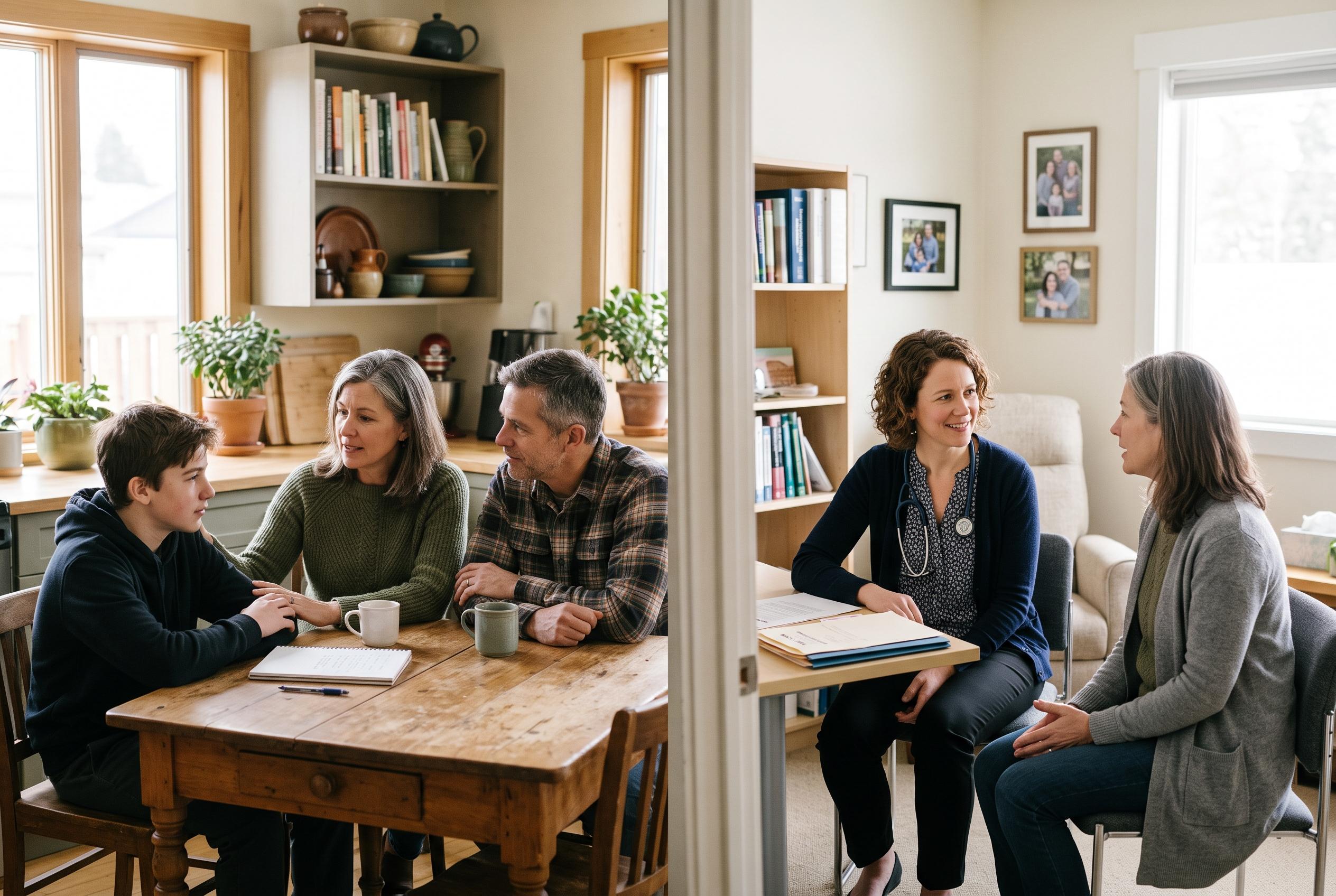

A debate in Luso has highlighted the crucial role of families, GPs and Portugal’s 24-hour 1411 helpline in recognising suicidal distress before it becomes a crisis.
The message coming out of recent suicide behaviour conferences in Luso is stark: prevention begins long before a crisis reaches an emergency department or psychiatry clinic. As the Portuguese daily As Beiras reported, the discussion around “Ideação de Morte nos Cuidados de Saúde Primários” underlined that the earliest and often most effective intervention starts in family medicine, where doctors and nurses know patients over time and can recognise changes in mood, behaviour and circumstance.
That long view matters because suicidal distress is rarely caused by a single factor. According to As Beiras, the pressures that can shape risk often include family strain, isolation, unemployment, chronic illness, violence, bereavement and a loss of hope. Many people who die by suicide have seen health professionals in the months before their deaths, which makes each consultation a possible moment to listen, notice warning signs and act early.
Portugal has also expanded its response network. The Linha Nacional de Prevenção do Suicídio, known as 1411, is a free, confidential telephone service available around the clock and integrated into SNS24, according to Suicidologia.pt and the Portuguese government. Staffed by mental health professionals, including psychologists and psychiatric nurses, the line was launched to provide immediate support, early intervention and guidance in crisis situations. Recent reports from AFP and Saude Online also note that the service now has a clinical coordinator, a further sign that authorities are trying to strengthen specialist support within the public health system.
The need is especially pressing among adolescents. As Beiras cited an estimate that about one in five young people will engage in self-harming behaviour at some point during adolescence. Such behaviour does not always mean a young person intends to die, but it should never be dismissed. It can be an expression of intense emotional pain, particularly when a teenager lacks the words or support to explain what is happening.
Digital life has added another layer of complexity. Social media and constant connectivity can help young people feel seen, yet they can also intensify comparison, loneliness and exposure to harmful content. In that context, families remain one of the most important protective factors. They cannot replace clinicians, but they are often the first to spot shifts in sleep, mood, school performance or social withdrawal, and they can provide the steady presence that helps turn fear into action.
The broader lesson, as the recent debate in Luso made clear, is that suicide prevention is a collective task. It depends on stronger mental health services, better coordination between professionals and a sustained effort to reduce stigma so that people feel able to ask for help. It also depends on something more basic and deeply human: the willingness to listen. In many cases, what comes before a desperate act is not a lack of treatment but the feeling that no one understands the pain. That is why family, primary care and services such as 1411 are not separate parts of the response. Together, they form the first line of hope.
Disclaimer: This content is for informational purposes only and is not intended to be a substitute for professional medical judgment, advice, diagnosis, or treatment.



