

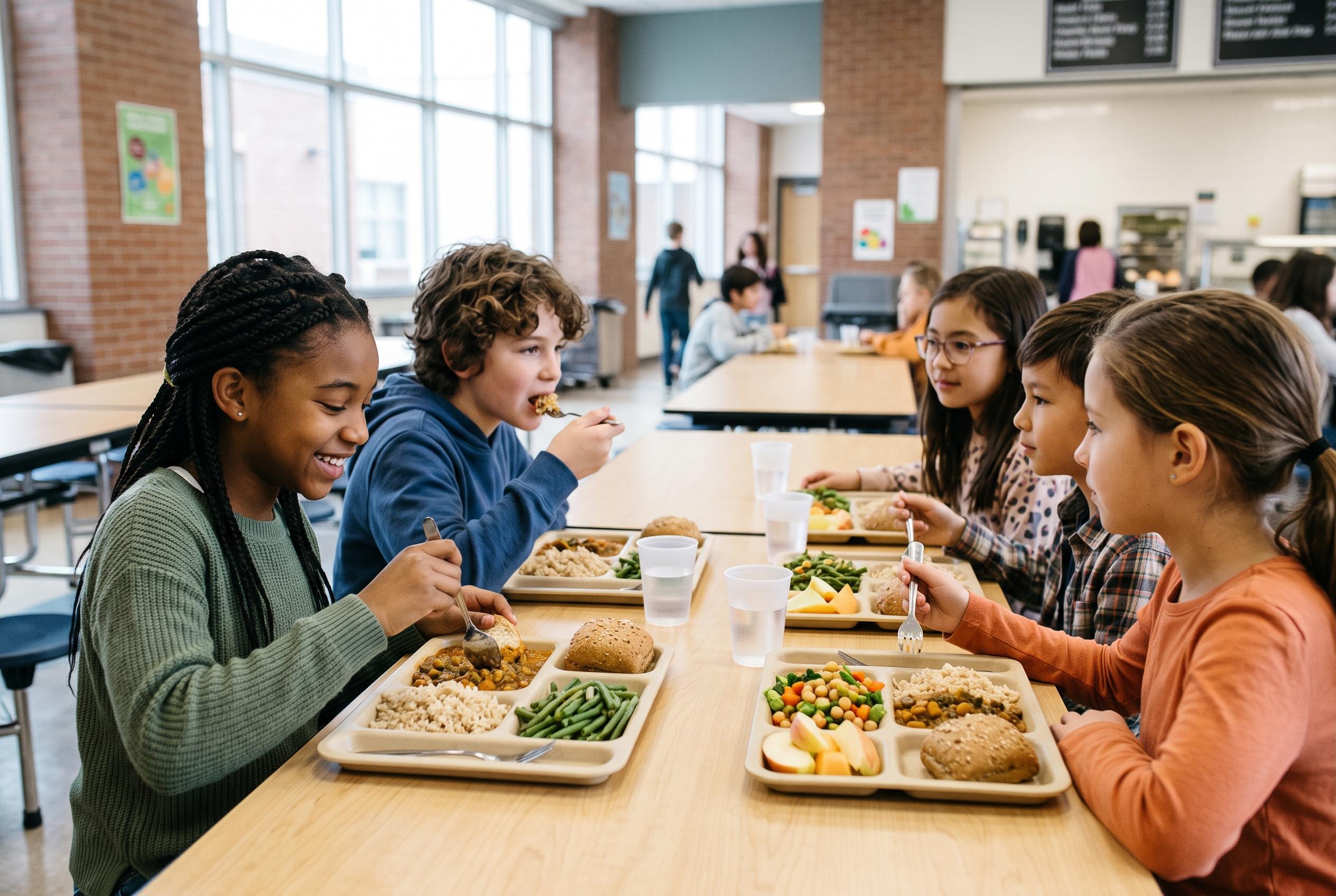

New rules taking effect in September 2026 will require Polish schools to serve a plant-based lunch each week, limit processed food and cut sugar, salt and fat.
Children at one primary school in Rzeszów have offered a first glimpse of how Poland’s new school-meal rules are being received, as the country prepares to shift towards what officials describe as a planetary diet from 1 September 2026. The changes are designed to increase the share of plant-based food in school and nursery menus, while reducing heavily processed products and limiting sugar, salt and fat. According to a report by Rzeczpospolita, the new approach is intended to support both children’s health and the environment.
The rules are broad and specific. Schools will have to serve at least one fully plant-based lunch each week, and if meat or fish appears on the menu that day, a plant-based alternative must also be available. Menus must include fresh fruit or vegetables with every meal, while at least two soups a week must be made on a vegetable stock. Fried dishes will be capped at two servings a week, and school shops will face tighter limits on sugar, salt and fat in snacks, bread rolls and drinks. The Ministry of Health’s final regulation, as reported by ProVeg Polska, confirms that the plant-based meal requirement is part of the formal school nutrition framework taking effect next year.
In a broadcast on Polish Radio Rzeszów, pupils from Primary School No. 12 in Rzeszów gave mixed but largely practical reactions to the revised meals. Some said the food was usually enjoyable, but not every new combination won them over. One child objected to spaghetti served with spinach rather than tomato sauce, arguing that the dish no longer felt like spaghetti at all. At the same time, the pupils said they were happy to see more meat-free dishes on the menu and did not mind simple changes such as replacing sweet compote with water and lemon.
Katarzyna Szczepaniak, a dietitian and psychodietitian, used the programme to explain that the planetary diet is not about cutting out meat, dairy or eggs entirely. Instead, she said, it is a model built around vegetables, fruit, wholegrains, legumes and nuts, with less red meat and less sugar. That definition is consistent with guidance published by school authorities and public-health officials, which frames the policy as a shift in balance rather than a ban on familiar foods. Schools in places such as Rumia and Halemba have already begun warning parents that menus will contain more vegetables, fruit, legumes and wholegrains, and fewer processed items.
Szczepaniak also used a simple demonstration to make a less visible part of children’s diets easier to understand. She measured out 26 grams of sugar, roughly the amount found in a 250ml glass of cola, and showed pupils how much it amounts to in teaspoons. The reaction from the children underscored how easily added sugar can be underestimated. She cautioned that it appears not only in soft drinks, but also in sauces and ketchups, and said water should remain the main everyday drink for children. To help children accept vegetables, she suggested involving them in shopping, menu planning and cooking, rather than forcing them to eat foods they dislike.
Disclaimer: This content is for informational purposes only and is not intended to be a substitute for professional medical judgment, advice, diagnosis, or treatment.



