

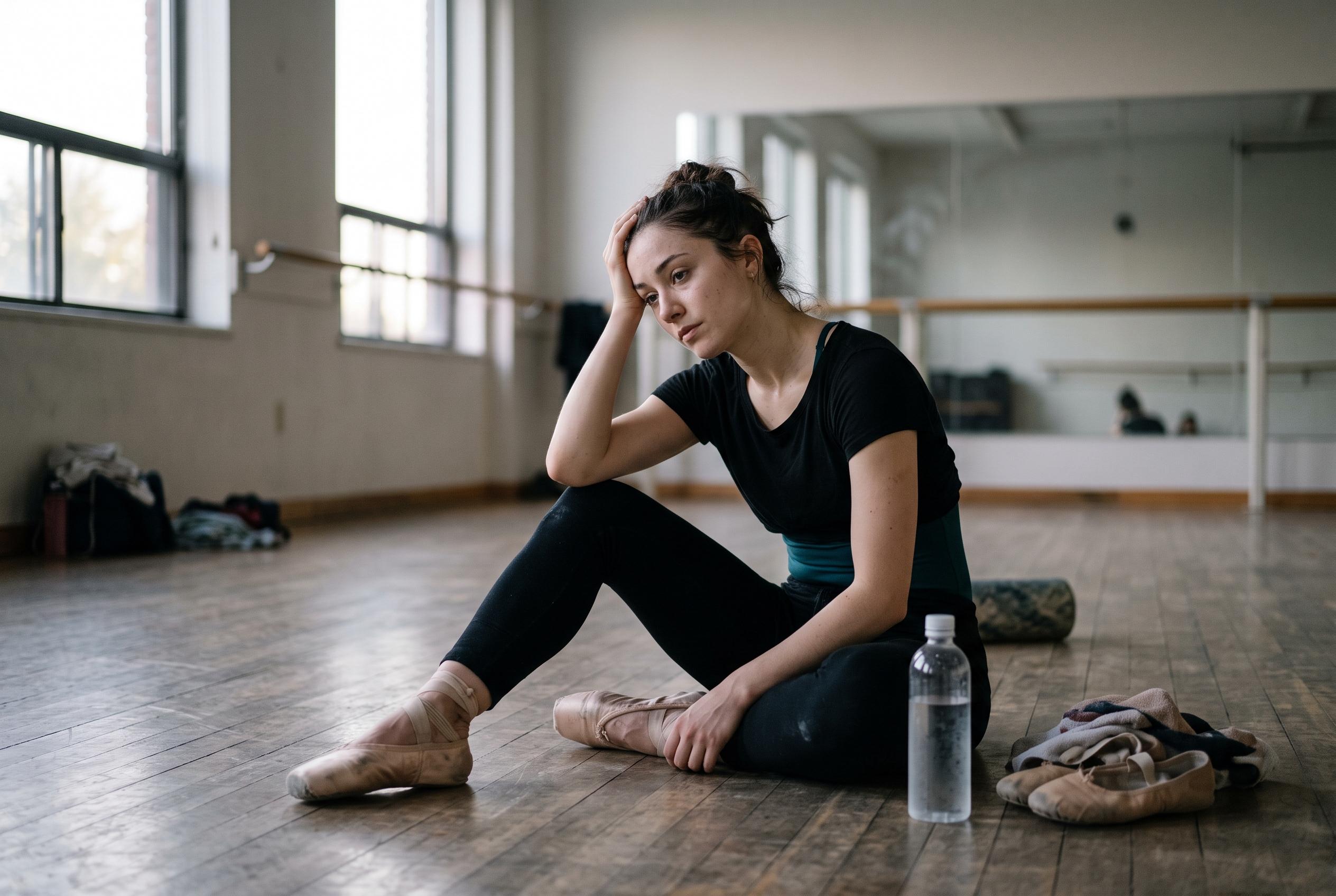

Heavy schedules, insufficient food and prolonged stress can leave dancers fatigued, unfocused and at greater risk of injury. Experts say rest, regular meals and proper medical support are part of training, not signs of weakness.
Dancers are often told to push through. Between class, rehearsal, performances, schoolwork, auditions and the pressure to improve, it can become normal to live in a state of constant alertness. That pattern can take a toll. Research on dancers has linked heavy training loads and packed performance calendars with persistent fatigue, psychological strain, poorer performance and a higher risk of injury, underscoring that tiredness is not always a sign of weakness, but sometimes a warning that recovery is falling behind demands.
Stress is the body’s response to perceived demands, and in dance those demands are both physical and emotional. The body releases hormones such as adrenaline and cortisol to help meet the challenge, but when pressure is prolonged and rest is limited, the same systems that help in the short term can start to disrupt sleep, digestion, appetite, mood and concentration. Studies of professional dancers have found that negative mood can rise across a season while energy and perceived recovery decline, which helps explain why dancers may feel increasingly flat, irritable or mentally foggy even when they are still training hard.
That overlap makes it difficult to tell whether a dancer is simply tired, emotionally overwhelmed, under-fuelled or heading towards burnout. Common signs include persistent exhaustion, digestive upset, reduced appetite or frequent cravings, trouble sleeping, concentration problems, repeated illness and a growing sense that ordinary tasks feel harder than they should. In dance research, these kinds of stress responses are part of a broader “training distress process”, in which intense physical work, limited recovery and psychological pressure combine to affect both health and performance.
One reason the problem is so easy to miss is that dancers are often used to doing more. Cross-training can be useful, but adding extra sessions on top of rehearsals and classes can leave little room for the body to adapt. The same goes for schedules that stack late performances, early classes and back-to-back commitments. Sleep, rest days and adequate meals are not luxuries; they are part of training. A study on emotional demands in dance students found that emotional strain was linked with poorer mood and concentration difficulties, while emotional detachment during free time was associated with better well-being, suggesting that what happens away from the studio matters almost as much as what happens in it.
Nutrition is another central piece of the picture. If a dancer is not eating enough for the amount of work being done, fatigue can deepen, recovery can slow and food preoccupation can increase. Stress can also blunt hunger or, for some people, drive more frequent eating. Neither response is a character flaw. It is often a sign that the body and mind are under pressure. In practical terms, regular meals, satisfying snacks and enough carbohydrate-containing foods matter because dance relies heavily on readily available energy. Hydration also matters, particularly during long rehearsals or in warm studios.
The article’s warning about so-called adrenal fatigue is also important. While the term is often used online to describe tiredness, brain fog and poor sleep, it is not a recognised medical diagnosis, and the evidence does not support the idea that chronic stress simply exhausts the adrenal glands. That does not mean symptoms should be ignored. Ongoing fatigue can have many causes, including low energy intake, sleep disruption, iron deficiency, thyroid problems and mood disorders. Dancers who feel persistently unwell should seek proper medical assessment rather than relying on restrictive diets or supplements marketed as quick fixes.
Support often starts with making recovery more deliberate. The most useful steps are usually simple: protect sleep, keep meals regular, take rest days seriously, reduce unnecessary extra workouts, and notice whether social media or perfectionistic expectations are adding pressure. Dancers can also benefit from short-term strategies such as journalling, breathing exercises or brief breaks from the studio when stress feels unmanageable. Recent work on dancers’ health has also led to the development of quick monitoring tools for fatigue and recovery, reflecting a broader shift towards checking in on dancers early rather than waiting for burnout, injury or a full collapse in performance.
Perhaps the most important message is that rest is not the opposite of commitment. It is part of it. For dancers who feel exhausted, overwhelmed or increasingly disconnected from their bodies, the answer is not always more discipline. Sometimes it is less pressure, more food, more sleep and more support. A registered dietitian, healthcare provider or mental health professional can help identify what is driving the fatigue and build a plan that supports both performance and well-being.
Disclaimer: This content is for informational purposes only and is not intended to be a substitute for professional medical judgment, advice, diagnosis, or treatment.



