

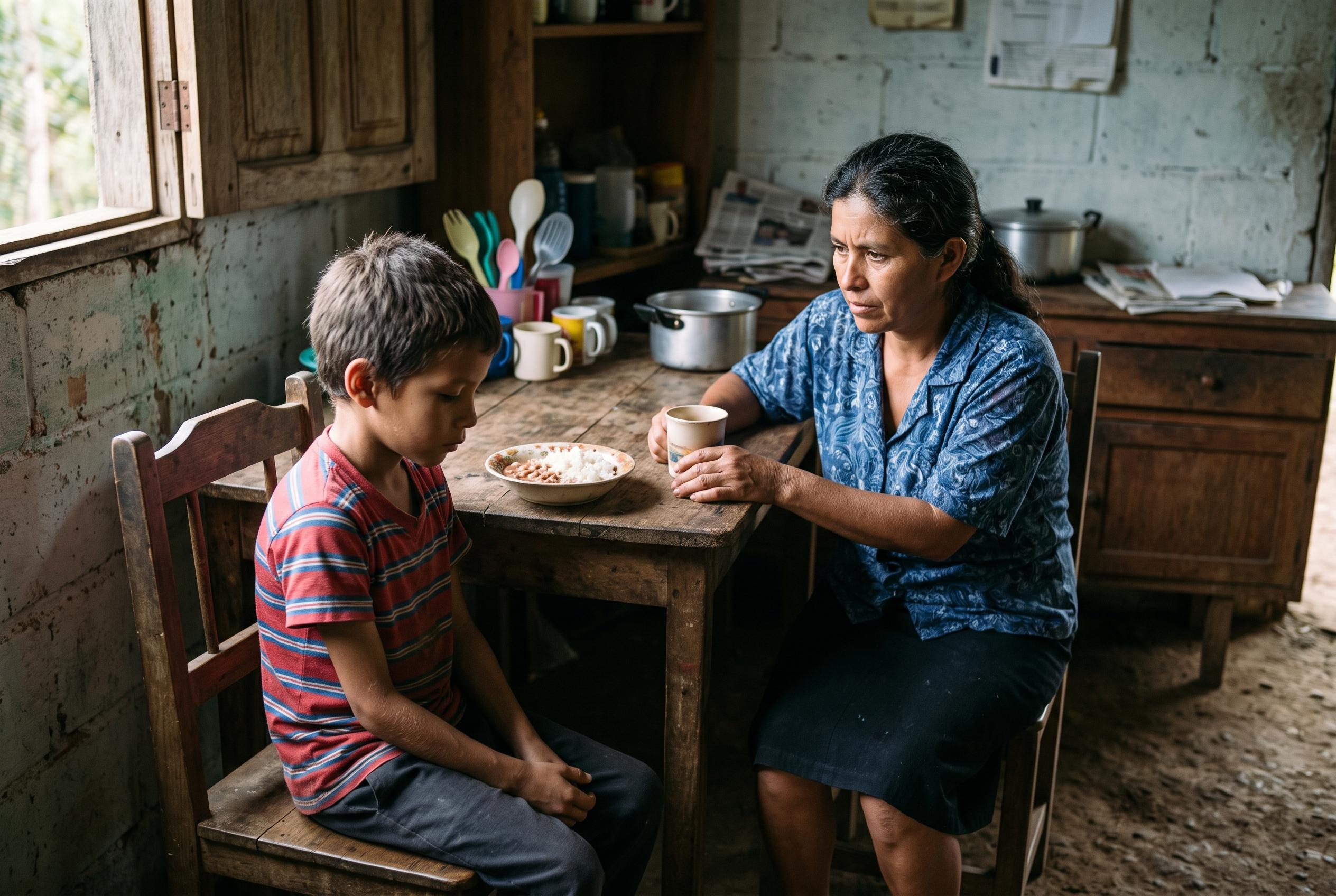

Chronic malnutrition has exposed 5.2 million Colombians to lasting effects on development, education and earnings, according to ABACO, which is calling for a dedicated national policy.
Hunger in Colombia is not only a symptom of poverty; it is also a public health problem that can shape a country’s future. New findings from the Association of Food Banks of Colombia, known as ABACO, and a sectoral review by the comptroller general point to chronic child malnutrition as a persistent burden that reaches far beyond childhood and into the economy, education system and labour market. According to ABACO, the issue is not confined to short stature or poor growth, but reflects prolonged nutritional deprivation that can affect physical, immune and brain development.
The organisation says 15.9% of Colombians, or about 5.2 million people, belong to generations exposed to chronic malnutrition in early childhood. Its analysis estimates that affected children may lose as much as 14.6 IQ points, complete up to five fewer years of schooling and earn substantially less as adults. ABACO argues that these effects should be seen as a drag on long-term productivity rather than only as a humanitarian crisis.
The economic cost, in ABACO’s view, is considerable. The group says businesses in Colombia forgo about $4.2 billion a year in sales, while the workforce loses roughly two trillion pesos a month in income. The organisation also warns that Colombia still lacks a dedicated public policy designed specifically to prevent, monitor and reduce chronic malnutrition. That gap, it says, leaves the country without a clear national strategy for tackling a problem that has both social and fiscal consequences.
ABACO’s observatory has published several reports on the issue, including a 2026 sectoral study and a separate demographic analysis that measures the historical burden of exposed cohorts. The group has also taken its case to Congress with a bill aimed at preventing chronic child malnutrition. Its research aligns with wider evidence that food insecurity remains deeply rooted in Colombia: El País reported this month that one in five families struggles with uncertainty over their next meal, with the problem especially acute in rural areas. Together, the findings suggest that chronic malnutrition is not only a child health challenge but also a test of the state’s capacity to protect human capital and future growth.
Disclaimer: This content is for informational purposes only and is not intended to be a substitute for professional medical judgment, advice, diagnosis, or treatment.



