

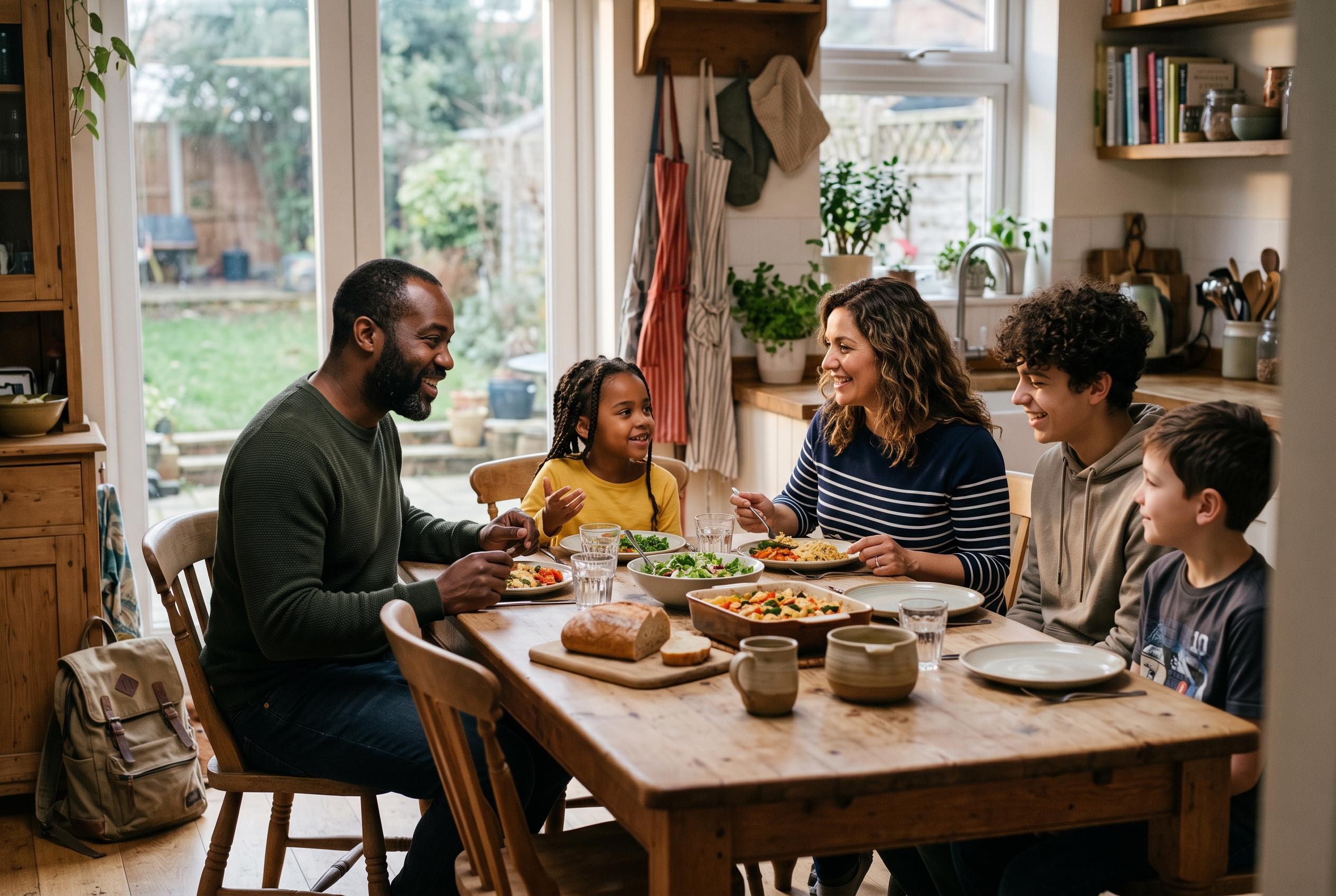

Research links regular shared meals with better diet, wellbeing and school outcomes for children, while the Philippines’ annual observance highlights the everyday value of talking and eating together.
Around the family table, everyday conversation can do more than fill a mealtime gap. It can help shape a child’s habits, confidence and sense of belonging, according to research cited in a 2023 review of studies on family meals. The review found that more frequent shared meals were linked with better diet quality and with positive outcomes in children’s health, behaviour, well-being and school life, while also suggesting possible protection against obesity, risky behaviour and poorer mental health. Researchers have also cautioned that much of the evidence is observational, meaning it shows association rather than proof of cause.
That idea sits at the heart of Kainang Pamilya Mahalaga Day, a Filipino observance held each year on the last Monday of September and promoted as a reminder that eating together is about more than nutrition. Public advisories from local governments, including Mexico, Pampanga and Lingayen in Pangasinan, marked the 2026 observance by suspending some government work from 1 p.m. and urging families to spend time together. In Manila, authorities had taken a similar approach in 2024, underscoring how the day has become a recurring part of the national calendar.
The evidence behind the observance is broader than a single study. An umbrella review published in the journal Nutrients examined 41 studies and reached broadly the same conclusion: families who share meals more often tend to see better diet quality and stronger outcomes across children’s health, conduct and school performance. The same review also noted that programmes designed to increase family meals have shown mixed results, suggesting that the benefits may depend on the wider home environment rather than on the meal alone.
For parents, the practical message is straightforward. A family meal does not need to be elaborate or perfectly orderly to matter. What counts is the chance to talk, listen and build routine. Mealtimes can also become an informal lesson in food literacy, giving children a chance to ask where ingredients come from, how food is prepared and what makes up the products they eat. That kind of curiosity can help them develop a more mindful relationship with food and the choices they will eventually make on their own.
The article also highlights traceability, the process of following food through sourcing and production, as a way for parents to understand what is behind the products they bring home. In that context, FEIHE says its dairy process is built around milk sourcing and production transparency, and that its Fresh Milk Formula begins with fresh milk as the first ingredient. As a brand claim, that sits within a broader consumer focus on ingredient awareness, rather than replacing the larger point made by the research: the real value of family meals often lies in the small, repeated moments of connection they create.
Disclaimer: This content is for informational purposes only and is not intended to be a substitute for professional medical judgment, advice, diagnosis, or treatment.



