


Building, coding and unstructured play can nurture curiosity, problem-solving and resilience, but experts warn against trying to engineer a child’s future career.
A child stacking coloured blocks and watching the tower topple may seem to be doing little more than passing the time. Yet, as El País reports, that kind of play can quietly train the mind to observe, test ideas and try again. The paper’s central question is not whether a toy can predetermine a career, but how early experiences can shape the habits that later support learning, confidence and curiosity.
Nerea Riveiro, a psychopedagogue at VTech, argues that scientific and technological interests do not suddenly appear in the teenage years, when study choices become urgent. They begin much earlier, through the questions children ask and the chances they have to explore. VTech’s study on toys and their evolution in Spain, carried out in June, found that almost eight in 10 Spanish adults believe play influences children’s interests, abilities and future callings, although that perception does not prove that any particular toy leads to a specific profession. Riveiro says children do not need to decide what they want to be at a very young age, but they do need space to discover what attracts them and what they can do.
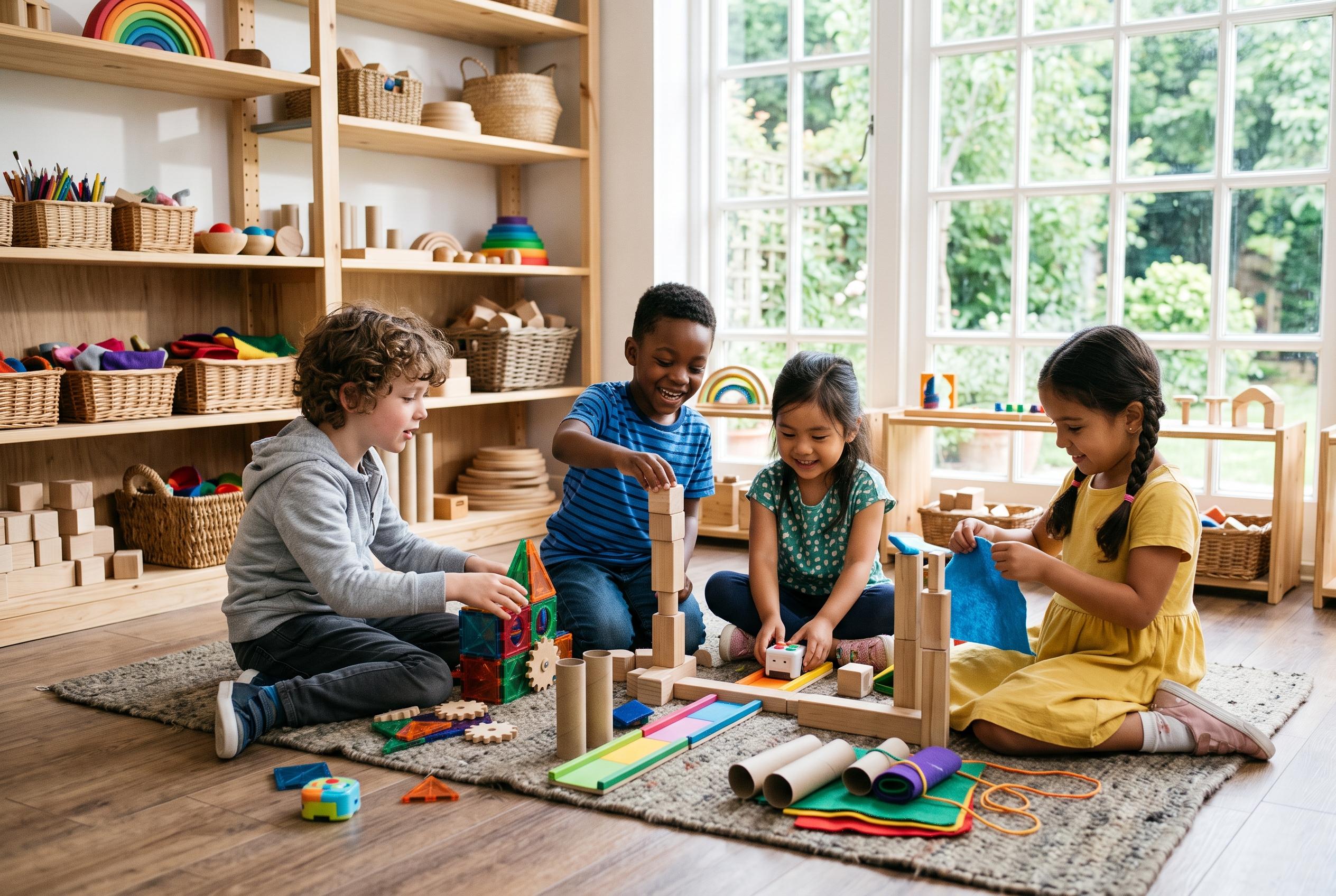
That is why different kinds of play can matter in different ways. Building games can introduce ideas such as balance, planning and problem-solving when a structure collapses and a child has to rethink the design. Early coding games can strengthen logic and anticipation by asking children to sequence instructions so a character reaches a goal. The American Academy of Pediatrics has also stressed that play supports cognitive, physical, social and emotional development, while unstructured play helps build resilience, cooperation and executive function, the mental skills used to plan, focus and control behaviour.
Still, experts warn against turning every toy into a career test. Riveiro says a toy on its own does not guarantee meaningful learning; children need to make decisions, try different approaches and be allowed to make mistakes. She also cautions parents not to crowd childhood with constant structured activities in the hope of producing a future professional. Free play, movement, reading, social contact and even boredom all have a role. Scientific American has likewise argued that unstructured play is vital to healthy development, helping children become better adjusted and less stressed.
Josef Brocki, founder and chief executive of Evolve, a Spanish technology training company focused on artificial intelligence, data and cybersecurity, offers another reminder that interests often emerge later in life. He says many adults encounter technology well after choosing a different career path, often because they need to solve a practical problem, such as automating repetitive work or understanding a cyberattack. His view reinforces the article’s broader point: the aim is not to engineer a child’s profession in advance, but to help them grow into someone who can learn, adapt and think independently in a world that will keep changing.
Disclaimer: This content is for informational purposes only and is not intended to be a substitute for professional medical judgment, advice, diagnosis, or treatment.



