

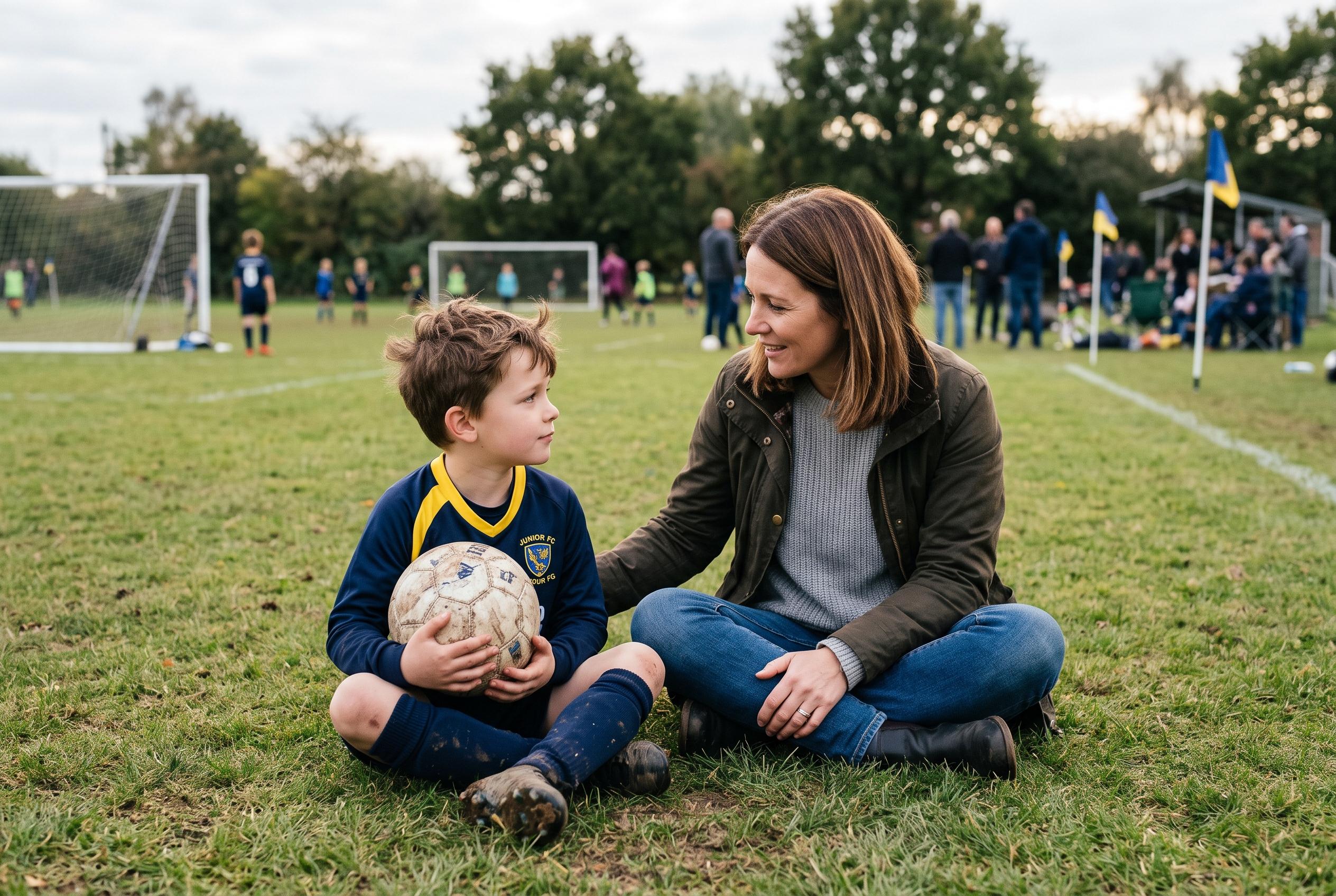

Experts advise parents to put away the tactical debrief after a children’s football match and first make space for how the player actually feels.
After a youth soccer game, the most useful thing a parent can say is often the simplest: something that reconnects with the child before it turns into a review. SoCal Youth Sports advises parents to start by acknowledging the moment, whether the child wants to celebrate, grumble, sit quietly or talk later. The point is not to turn the final score into the only measure of the afternoon, but to remember that the child’s experience may look different from what adults saw from the touchline.
That approach is echoed by Soccer Parenting, which recommends letting children set the tone on the drive home rather than launching straight into analysis. Their guidance stresses a light, calm atmosphere, active listening and a willingness to hear what mattered to the player before offering opinions. For many children, the ride home can either extend the pressure of the match or become a space where they feel comfortable enough to share what they noticed, enjoyed or found difficult.
The same theme runs through advice from AYSO Region 13, which says parents help most when they create a positive atmosphere before, during and after the game. Simple phrases such as “Have fun out there” and “I love watching you play” set a better tone than anxious instructions or constant correction. That matters because young players rarely need a full tactical debrief in the car; they need to know that their effort, enjoyment and presence are valued regardless of the result.
For children coming off a frustrating performance, Gioca Soccer Academy says the best response is usually to recognise the emotion before trying to fix it. A missed pass, a difficult loss or a poor touch may feel enormous to a child, and parents do better by acknowledging that the game mattered to them. The academy also argues for praising effort and decision-making rather than reducing every mistake to a lesson, because that helps children treat setbacks as part of learning rather than as evidence that they have failed.
Boystown Hospital makes a similar case for parents to focus on development, resilience and love of the game rather than the final score alone. Its guidance encourages adults to support effort, celebrate learning and respect the coach’s role, especially when children are still building confidence. The broader lesson is that young athletes benefit from adults who model composure and patience, particularly when a match has not gone as hoped.
Level Up Soccer and Sports Steps both advise parents to avoid turning into a second coach from the sideline or during the drive home. Their advice is to hold back from immediate technical criticism, wait before raising detailed development points and keep the message centred on support. In practice, that can mean asking whether the child wants to talk, offering a brief word of encouragement and leaving more detailed feedback for another time, if at all. The child may remember the game differently from the parent, and that difference is often worth respecting.
Disclaimer: This content is for informational purposes only and is not intended to be a substitute for professional medical judgment, advice, diagnosis, or treatment.



