

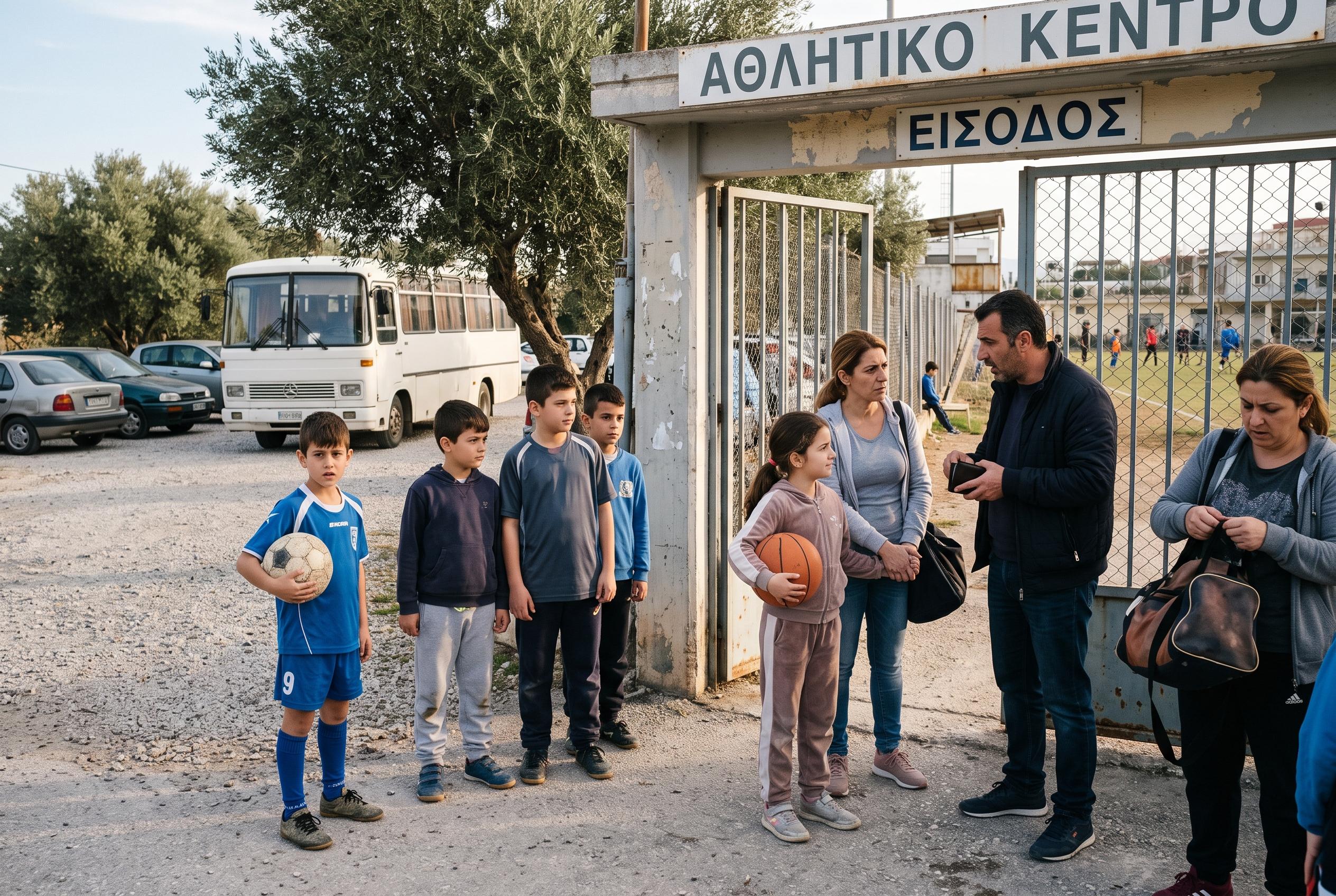

Club fees, equipment, travel and tournament costs can push annual spending above €1,000 per child, raising concerns that organised sport is becoming a privilege rather than an everyday activity.
For many families, youth sport in Greece is becoming a significant household expense rather than a low-cost pastime. In football and basketball, two of the country’s most popular options for children, parents are often covering almost everything: club fees, kit, boots, travel and tournament costs. The result is that the question is no longer simply whether children can play, but whether organised sport remains affordable for ordinary households.
A survey of several football and basketball academies suggests monthly fees typically range from €25 to €60, depending on the club, facilities, age group and training frequency. Over a season of nine or ten months, that alone can add up to roughly €225 to €600 for one child. Once equipment, transport and competition entries are included, the annual bill can climb above €800 and, in some cases, exceed €1,000.
The pressure rises sharply when more than one child in a family takes part in sport. For parents already balancing rent, utilities and other basic costs, two children in organised training can mean a near-doubling of the sports budget. Some academies try to ease the burden with sibling discounts or flexible payment arrangements for families facing hardship, but these measures do not remove the wider financial strain.
That strain sits alongside the costs borne by clubs themselves. As reported by CNN Greece and other Greek outlets, academies must pay coaches, rent and maintain facilities, buy training equipment and cover entry into competitions. Broader support for grassroots sport is also emerging elsewhere: the OPAP Sports Academies programme supports 200 football and basketball academies across Greece, while the Hellenic Olympic Committee has approved funding for equipment purchases by four federations. Even so, the basic reality remains that parents are still carrying much of the cost. For many families, the debate is now about more than sport. It is about access, fairness and whether children’s physical activity is quietly turning into a privilege.
Disclaimer: This content is for informational purposes only and is not intended to be a substitute for professional medical judgment, advice, diagnosis, or treatment.



