


Guidance for families has expanded beyond time limits to include content, timing and co-viewing, but researchers say the flood of conflicting advice may be creating guilt rather than clarity.
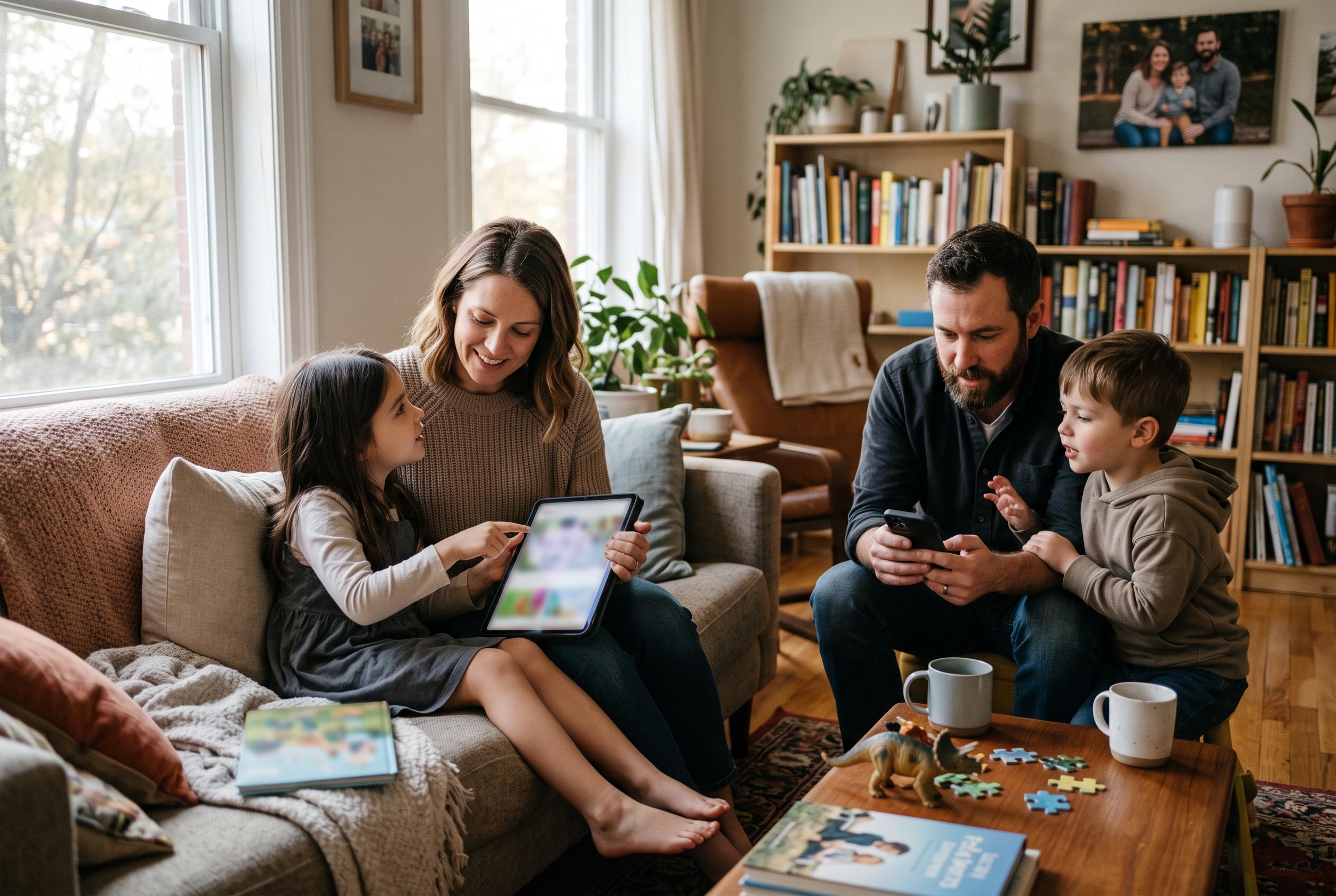
Parents looking for clear rules on children’s screen use may find themselves with more questions than answers, according to a new analysis republished by Phys.org from The Conversation. The discussion has moved far beyond the old advice that screen time should be delayed until the age of two and then tightly limited. Instead, families are now being told to think about when screens are used, what kind of content children watch and whether adults should be involved alongside them.
Swati Mestri, whose research was published through The Conversation, examined public discussion of screens and children from birth to age eight, drawing on official guidance, social media content, news coverage, online articles and marketing material, as well as interviews with 34 parents. Her findings suggest that advice has become more detailed and more demanding. Parents are no longer simply asked to limit minutes on a clock; they are being told to avoid screens at mealtimes and before bed, keep them out of the background during other activities and favour slow-moving, predictable content.
The guidance has also shifted from warning only about harm to promoting supposed benefits. Parents are increasingly encouraged to choose educational material, favour active rather than passive viewing and sit with children to talk through what they are seeing. Mestri said that many of these recommendations come from governments and health bodies, but are also repeated across traditional media, online commentary and social platforms, creating a constant stream of often inconsistent advice.
That, she argues, is part of the problem. Some messages suggest limited screen use can be acceptable or even useful, while others warn that any exposure can damage brain development or motor skills. Even advice that appears balanced can be hard to apply in practice, especially when families are expected to judge whether a programme is “high stimulation” or “low stimulation”. Mestri’s research found that such language can leave parents feeling guilty, exhausted and under pressure to monitor not just how long children watch, but what they watch, when they watch and how they react.
Her conclusion is that there is no single right formula for every family. In interviews, she found that parents with children of a similar age sometimes used opposite rules and still arrived at routines that worked for them. For some households, a bit of solo viewing was a practical necessity; for others, it was not. Her advice is to focus less on universal rules and more on whether screen use is fitting in with a child’s wider life, leaving room for play, growth and enjoyment both with screens and away from them.
Disclaimer: This content is for informational purposes only and is not intended to be a substitute for professional medical judgment, advice, diagnosis, or treatment.



