

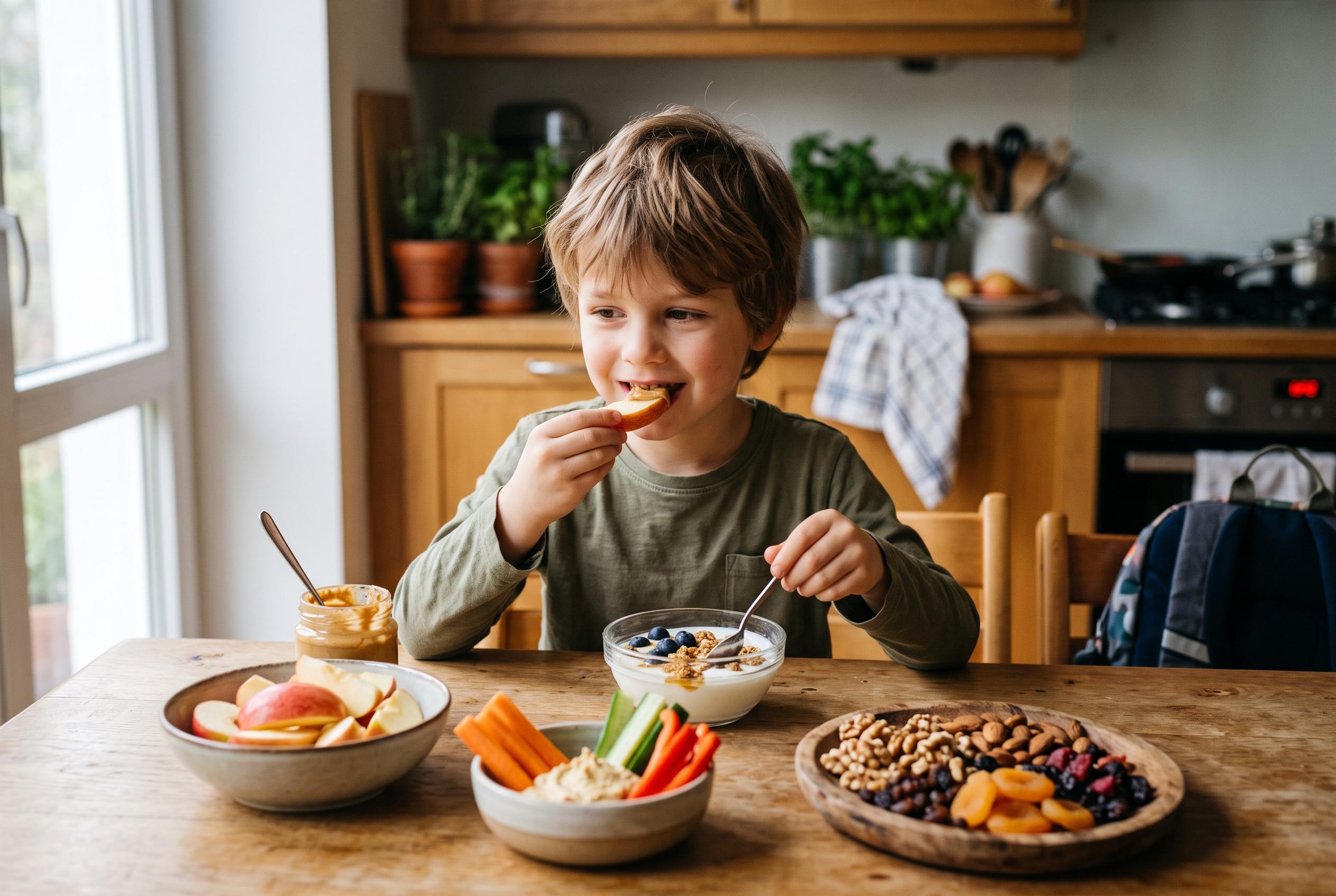

From apple and peanut butter to hummus, yoghurt and homemade snack plates, simple combinations can deliver lasting energy without costing a fortune.
After-school snacking can be a fraught moment for parents: children are hungry, everyone is tired, and the easiest option is often the one that is fastest, not the one that keeps them going until dinner. Yet a well-chosen snack can do more than take the edge off hunger. It can provide fibre, protein, healthy fats and important micronutrients that help children stay full, steady their energy and avoid arriving at the evening meal ravenous.
One of the simplest combinations remains apple slices with peanut butter. Healthline says the pairing brings together fruit fibre and vitamins with the protein and unsaturated fats found in peanut butter, which can help with satiety. Plain yoghurt is another reliable base for a quick snack. Healthline and WebMD both note that yoghurt offers calcium and protein, while its probiotics can support digestive health. For families looking for something a little more filling, a parfait made with unsweetened yoghurt, fruit and a modest amount of granola can be both practical and nutritious, although Healthline advises keeping an eye on sugary toppings.
Vegetables also become much more appealing when they are served with a dip. Carrot sticks, celery and peppers with hummus are an easy example, and the same principle works with crackers, cheese or a homemade tzatziki. Wholegrain toast with avocado, rice cakes topped with nut butter and banana, or celery filled with peanut butter are all cheap options that combine texture and flavour with lasting energy. Popcorn, too, can be a sensible choice when it is air-popped and lightly seasoned, since it is a whole grain and a useful source of fibre.
For children who prefer something more substantial, boiled eggs, cottage cheese with pineapple, mini pitta pockets, cheese quesadillas and snack plates assembled from fruit, vegetables, nuts and crackers can all work well. The advantage of these options is flexibility: parents can adapt them to what is already in the kitchen and to what their children actually like eating. Home-made trail mix, oatmeal energy bites and granola bars can also be made in batches, which helps cut costs and saves time on busy weekdays.
The more playful ideas can be just as useful. Frozen banana bites, yoghurt bark, fruit kebabs, sweet potato chips and cucumber roll-ups may look like treats, but they still give parents a way to include fruit and vegetables in the afternoon routine. The same is true of smoothies, which can be built from yoghurt and fruit and, if desired, blended with spinach or flaxseed for an extra nutritional lift. The key is not to chase perfection, but to make healthy food easy enough that it becomes the default.
Planning ahead makes the biggest difference. Parents who prepare a few ingredients in advance, buy seasonal produce and keep pantry staples on hand are far more likely to avoid expensive, ultra-processed snacks at the last minute. Involving children in choosing and assembling their own snack can help too, especially when it turns eating into a small routine rather than a battle. In that sense, the best after-school snack is often the one that is simple, affordable and easy to repeat.
Disclaimer: This content is for informational purposes only and is not intended to be a substitute for professional medical judgment, advice, diagnosis, or treatment.



