

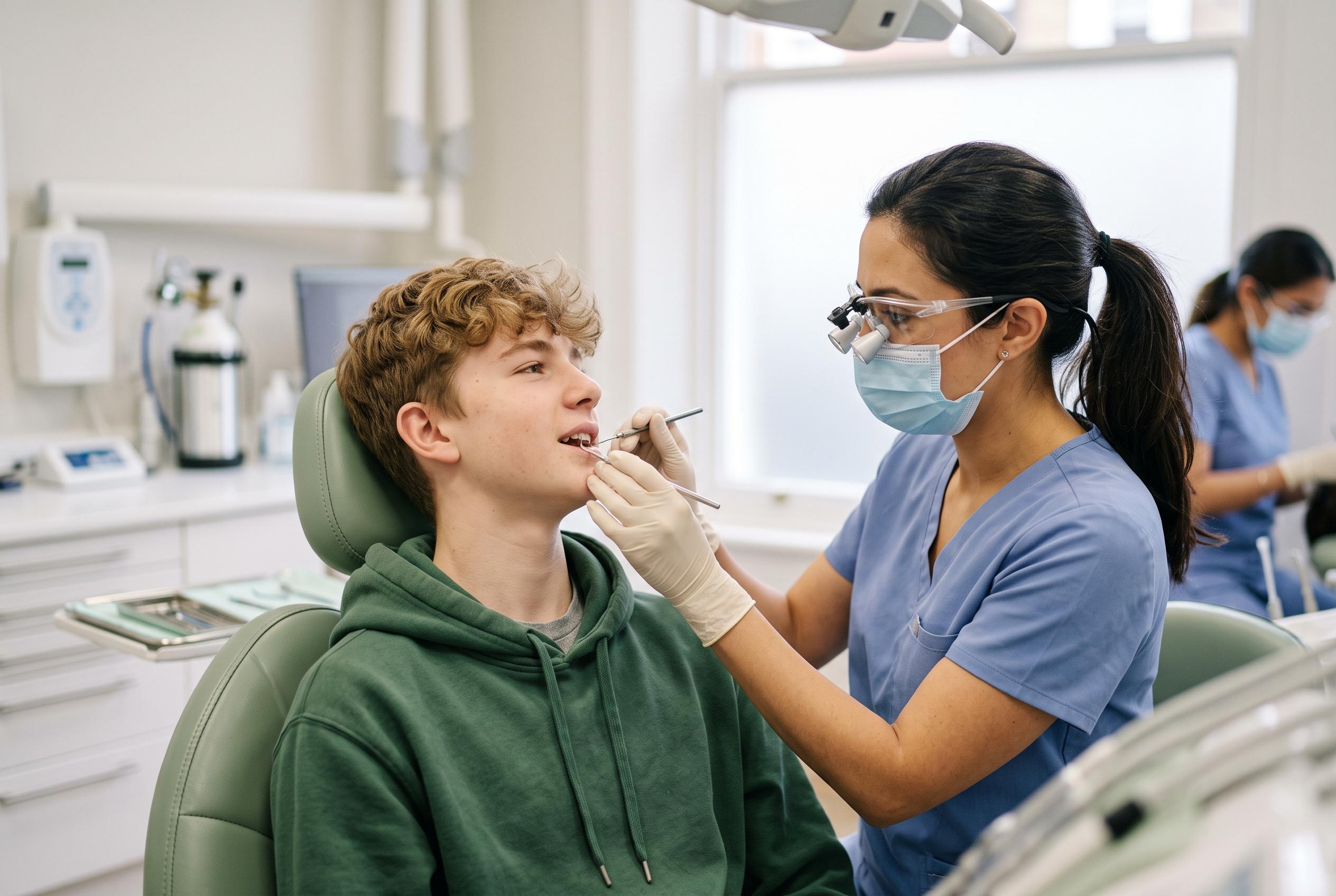

A new American Academy of Pediatrics report urges closer links between dental and medical care, warning that routine mouth examinations can reveal hidden health problems and unmet care needs.
The mouth can reveal far more than whether a teenager has brushed properly, according to a new American Academy of Pediatrics report that says dentists and paediatricians may spot wider health problems during routine checks. The report argues that oral examinations can sometimes flag eating disorders, tobacco use, substance use and sexually transmitted infections, while also offering a chance to reinforce injury prevention for sports and other high-risk activities.
The academy says adolescents with bulimia face a sharply higher risk of enamel erosion because stomach acid repeatedly reaches the teeth. It also links cannabis, ecstasy and methamphetamine use with tooth decay, partly because these drugs can cause dry mouth. Smoking, meanwhile, can inflame the gums and raise the risk of oral cancers. The report adds that sexually transmitted infections may show up as throat redness, mouth ulcers or unusual growths, and that crashes involving skateboards or e-bikes can leave teens with broken or missing teeth if they are not wearing mouthguards.
Researchers say the teenage years are a crucial period for building habits that can last into adulthood. The National Institute of Dental and Craniofacial Research has described adolescence as a pivotal stage for oral-health behaviour, shaped not only by family influence but also by peers, diet and wider social conditions. Similar research has found that oral health gains seen in younger children have not always carried through to adolescents, who still face substantial rates of untreated decay and other dental problems.
The report also highlights a more practical obstacle: many teenagers do not get the dental care they need at all. That is especially true for young people who are homeless, in foster care, in juvenile detention or newly arrived as immigrants or refugees. The academy says better coordination between medical and dental services could help close those gaps, allowing paediatricians to spot warning signs earlier and guide families towards regular preventive care, including a proper dental home.
Disclaimer: This content is for informational purposes only and is not intended to be a substitute for professional medical judgment, advice, diagnosis, or treatment.



