

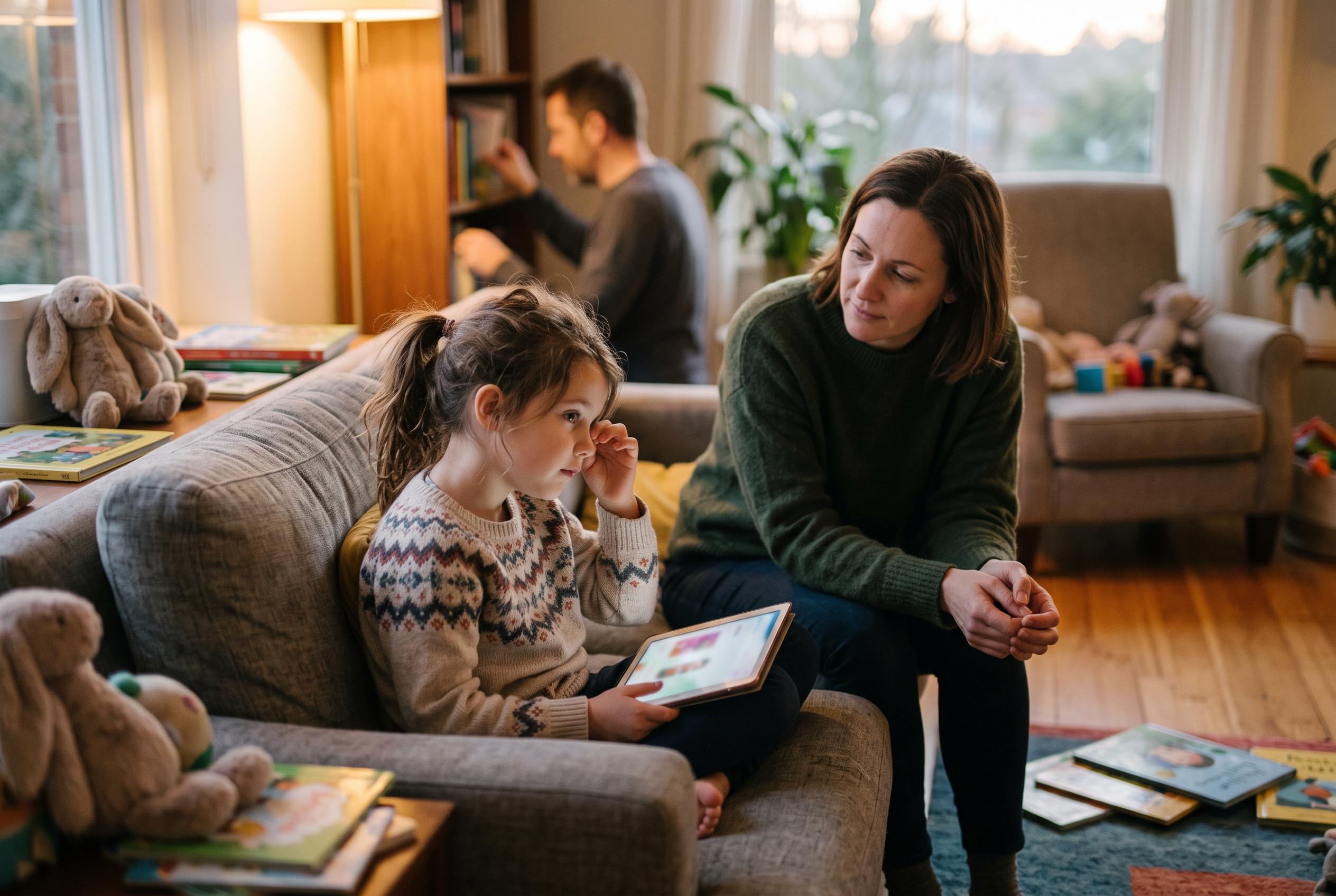

Doctors are urging parents to limit children’s recreational screen time after data linked prolonged use with disrupted sleep, weaker attention and behavioural outbursts.
Health specialists in the UAE are warning that heavy use of phones, tablets and other screens is taking a growing toll on children’s sleep, attention and behaviour. Paediatric doctor Sudha Rao of Al Jaddaf Aster Clinic said late-night device use can disrupt normal sleep rhythms, leave children tired the next day and contribute to problems such as blurred vision and short-sightedness. She also described the outbursts that can follow when screens are switched off as “digital tantrums”.
The concern goes beyond bedtime routines. Educational and medical findings approved by the Dubai Health Authority suggest that children who use screens for entertainment for less than two hours a day do better in tests of attention and memory than those who spend more than four hours online. The same data found that among children aged six to 12 who used screens for more than four hours daily, 66.7 per cent had trouble falling asleep, compared with 9.5 per cent of those who used screens for less than an hour. The report also said 33.7 per cent of students with vision problems had poor sleep patterns.
Experts say school rules on phones are helpful but not enough on their own. They argue that parents must set the tone at home by making sure screens do not push out sleep, exercise, outdoor play and other activities that support healthy development. The advice is to keep devices out of bedrooms, charge them in a shared space and avoid screen use during meals.
Parents are also being urged to make limits clear before screen time ends, rather than waiting for conflict to start. Timers can help with the transition, and children should be encouraged to move on to other activities once their allotted time is over. The broader message from doctors is simple: technology has a place in education and entertainment, but it should not dominate a child’s day or night.
Disclaimer: This content is for informational purposes only and is not intended to be a substitute for professional medical judgment, advice, diagnosis, or treatment.



