

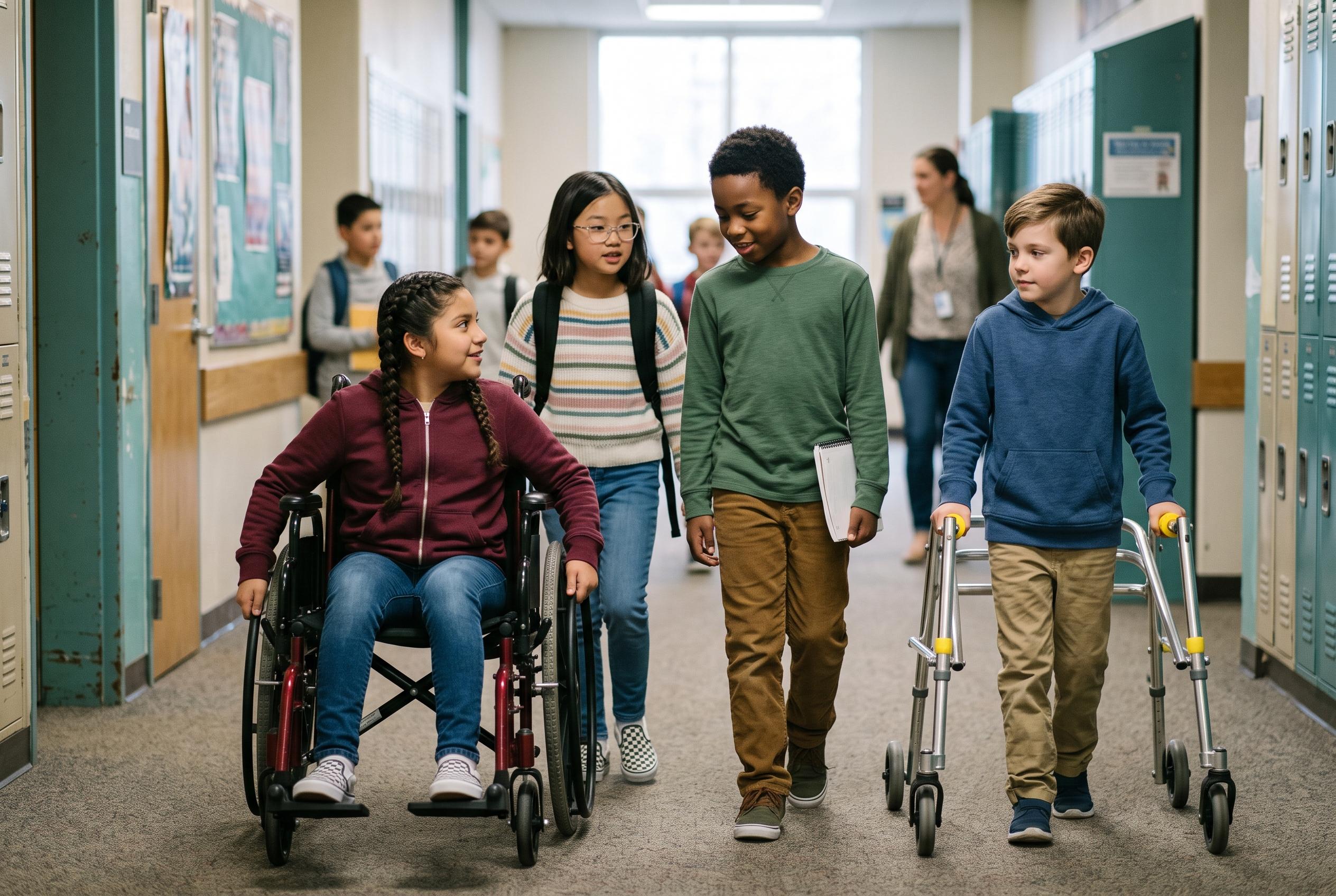

Disabled pupils now make up 19% of enrolment in America’s public schools, yet legal findings, inaccessible buildings and disproportionate discipline show that recognition is still not translating into inclusion.
More disabled students are being identified in America’s public schools, and on the surface that can look like progress. New federal data show that disabled pupils now account for 19% of the nearly 50 million children enrolled in public schools, up from 17% last year. About 15% are served under the Individuals with Disabilities Education Act, with another 4% receiving support through Section 504 of the Rehabilitation Act. Those labels can unlock accommodations, specialist teaching and legal protections that were once out of reach for many children.
For families, that matters. The National Center for Education Statistics says 7.5 million students aged 3 to 21 received special education and related services under IDEA in the 2022-23 school year, and specific learning disabilities remained the largest category. Federal civil rights data are designed to track access, enrolment and services across public schools, including disability status. But the numbers also show a system still struggling to turn recognition into meaningful support.
That tension is sharpest when the discussion shifts from paperwork to treatment. In March, the U.S. Department of Education’s Office for Civil Rights found that District of Columbia Public Schools had violated federal law by denying students with disabilities a free appropriate public education. The federal review cited delays in evaluations, weak individualised services and unreliable transport, all of which affected learning and development. In June, Education Secretary Linda McMahon marked the 50th anniversary of IDEA with a letter to parents of children with disabilities, praising the gains made since the law was passed while also acknowledging the continuing difficulty many families face in obtaining proper services.
The wider landscape suggests that access remains uneven long after a child is identified. A 2020 Government Accountability Office report found that 63% of public school districts had at least a quarter of their buildings inaccessible to students with disabilities, with problems ranging from steep ramps to inaccessible toilets and playgrounds. More recent research from Brown University’s Annenberg Institute also found striking differences by family income: 25% of students in the lowest income bracket received special education services, compared with less than 7% in the highest, raising questions about whether identification is consistent or equally available across communities.
The result is a complicated picture. It is possible to feel grateful that more disabled children are finally being counted and supported on paper, while also recognising that the school experience for many remains shaped by exclusion, discipline and physical barriers. Students with individual education plans make up about 15% of all public school students, yet they account for a disproportionate share of seclusion, restraint, suspensions and expulsions. For disabled children, the goal is not simply to be enrolled. It is to be safe, included and able to learn in schools that truly belong to them.
Disclaimer: This content is for informational purposes only and is not intended to be a substitute for professional medical judgment, advice, diagnosis, or treatment.



