

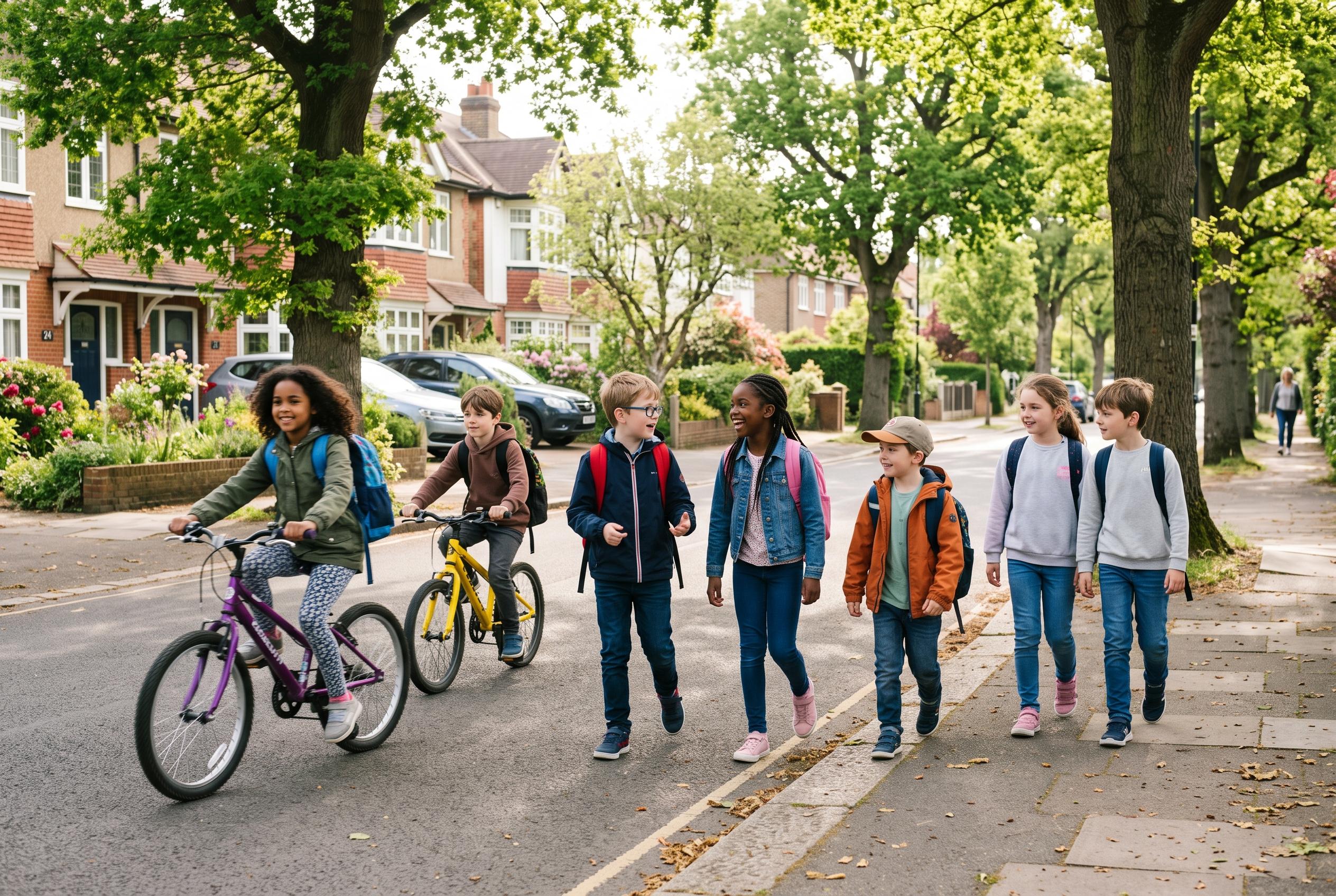

Research suggests that walking or cycling to school may improve children’s attention, memory and self-control, as well as supporting their physical health.
Children do not need a special occasion to move more on the way to school. A growing body of research suggests that a regular bike ride or walk can do more than stretch their legs: it may also help sharpen the brain. The case for active travel is not just about fitness or convenience. It is increasingly tied to how children think, remember and learn.
Health guidance from the Centres for Disease Control and Prevention says physical activity in children is linked with better attention and memory, along with stronger bones, healthier blood sugar levels and lower depression risk. That broad view is supported by research in children showing that movement helps the brain work more efficiently, in part by improving oxygen delivery and supporting the chemical processes that underpin focus and learning. A narrative review published on PubMed says both one-off and regular exercise can improve executive functions, including inhibitory control, working memory and cognitive flexibility.
The science also points to specific brain changes. According to Nature Index, moderate to vigorous activity in childhood can influence key areas such as the prefrontal cortex and hippocampus, which are central to attention, memory and self-control. A systematic review and meta-analysis in Developmental Cognitive Neuroscience found that longer-term physical activity has beneficial effects on neurophysiological functioning in children, reinforcing the idea that exercise is not only good for the body but also for developing brains.
That evidence gives extra weight to efforts such as Walk and Roll to School Day, which are often treated as symbolic events rather than habits worth keeping. Studies reviewed in Preventing Chronic Disease and in the book “Educating the Student Body” suggest that aerobic activity can support cognition, academic performance and psychosocial development. For families, the practical lesson is simple: where conditions allow, letting children walk or cycle more often may be one of the easiest ways to support both their health and their learning.
Disclaimer: This content is for informational purposes only and is not intended to be a substitute for professional medical judgment, advice, diagnosis, or treatment.



