

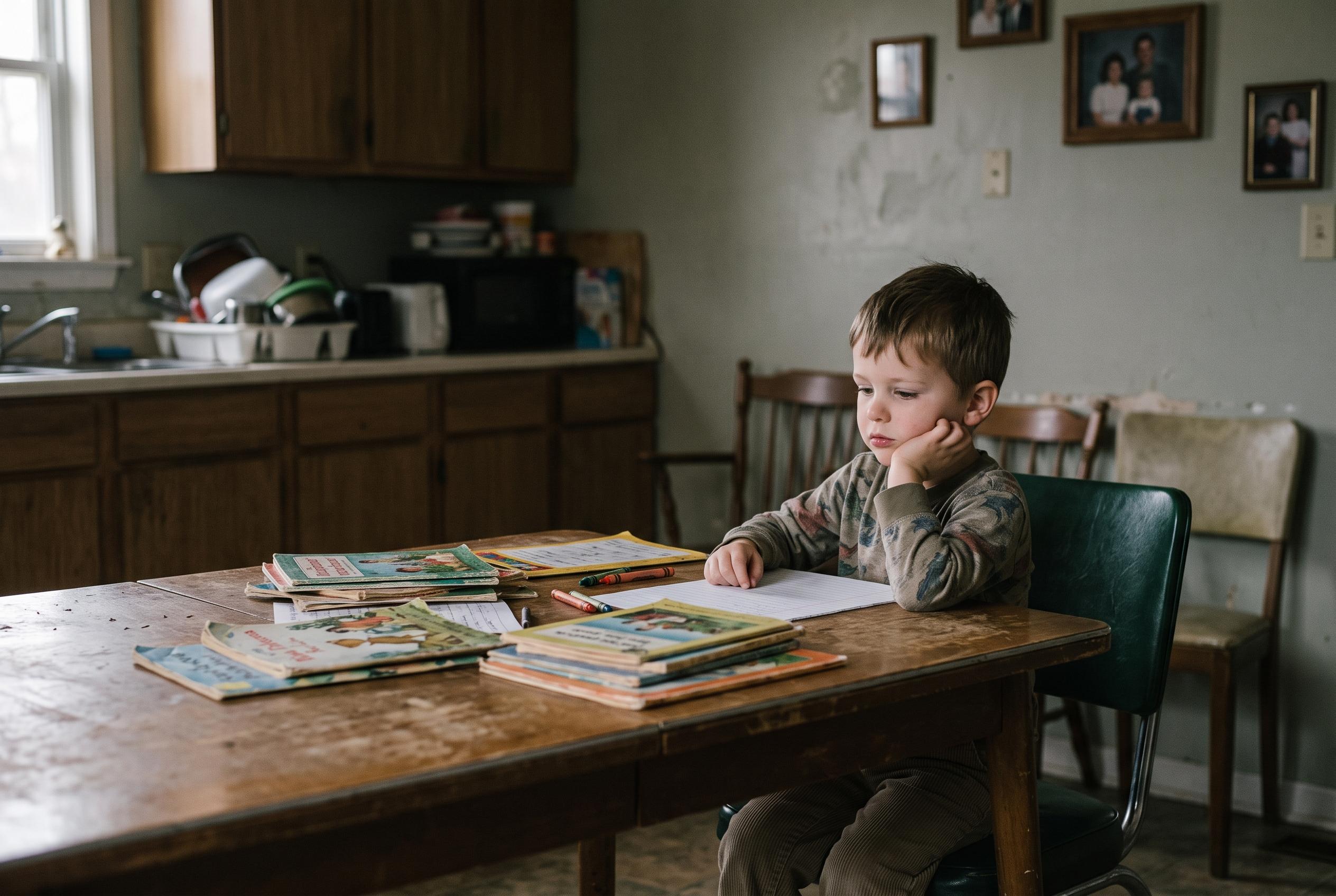

Children who experience repeated poverty are more likely to have weaker reading skills, dislike school and expect to achieve less, with limited access to books and activities deepening the disadvantage.
The Economic and Social Research Institute has found that prolonged exposure to poverty does more than depress children’s test scores in Ireland: it can also shape how they feel about school, how far they expect to go in education and how much support they receive at home.
The report, funded by the Department of Children, Disability and Equality and based on data from the Growing Up in Ireland programme, says children who spend longer periods in poverty are more likely to have weaker reading skills and lower verbal fluency. It also finds that each extra spell in poverty is associated with a drop in reading performance, underlining how repeated disadvantage can accumulate over time. The research builds on earlier work showing a wider rise in child poverty in Ireland, with about 200,000 children living in households below the poverty line and the number rising further once housing costs are included.
According to the ESRI, about half of Irish children experience poverty at some stage before their 13th birthday, while one in five goes through three or more periods of poverty before reaching the teenage years. The institute says a lack of access to books is one of the key reasons poorer children fall behind, alongside less frequent parent-child reading in the early years and reduced participation in cultural and sports activities. Those activities, the report says, play an important part in softening the educational impact of poverty, particularly in primary school.
The social effects are equally striking. Children who have been poor for much of their lives are more than twice as likely to say they dislike school as those who have never been poor, according to the report. Among nine-year-olds, 9 per cent of persistently poor children said they “never like school”, compared with 4 per cent of those who had not experienced poverty. Similar gaps appear among 13-year-olds, alongside a sharp difference in ambition: while nearly four in five children of that age expect to earn a degree, the figure falls to 62 per cent among those facing persistent poverty.
Emer Smyth, one of the report’s authors, said the findings point to the value of wider access to extracurricular opportunities and more reading between parents and children. She also highlighted the importance of stronger relationships between teachers and pupils, saying that better classroom relationships can improve engagement, raise expectations and support cognitive development. The report argues that school climate matters increasingly as children grow older, because home influences matter less and the quality of the school environment becomes more important.
The conclusions will add pressure on policymakers to tackle child poverty not only through income supports, but also through measures that improve children’s everyday experience of learning. The report calls for subsidies that would allow children from all backgrounds to take part in sports, arts and other cultural activities, and for schools to create more positive environments that help offset the burden of poverty. Minister for Children Norma Foley said the findings show why tackling child poverty matters for education and later life chances, and said support at home and school, together with access to after-school sport, drama, art and music, are all part of giving children the best possible start.
Disclaimer: This content is for informational purposes only and is not intended to be a substitute for professional medical judgment, advice, diagnosis, or treatment.



