


For young children, meaningful learning is often hidden in play, persistence and problem-solving rather than in polished worksheets or memorised letters and numbers.
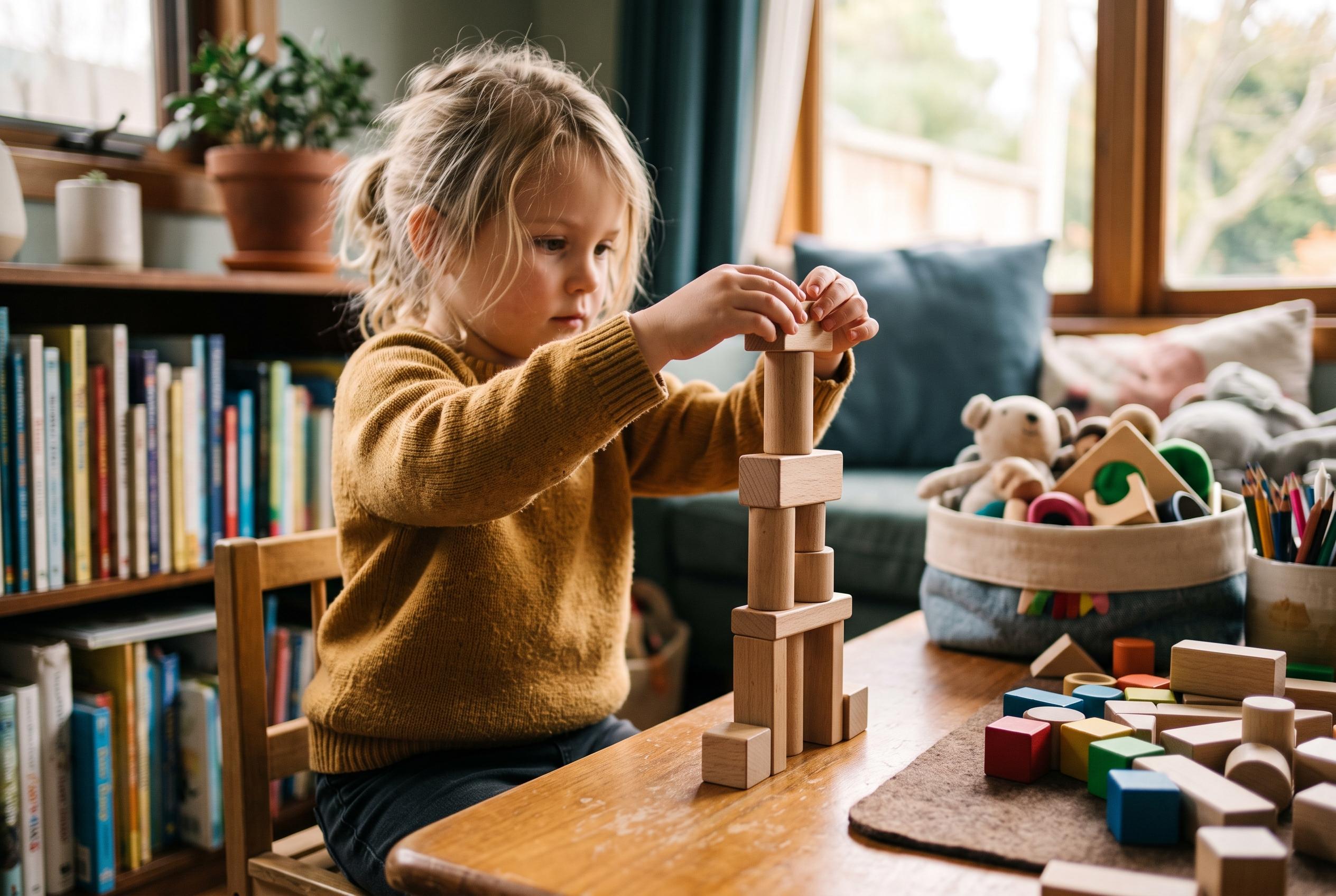
A child who can chant the alphabet or complete a worksheet can look strikingly advanced for age. For many parents, those visible achievements offer reassurance that a four-year-old is moving in the right direction. But as Ursula Assis, managing director of Dibber International Preschools South Africa, argues, the most meaningful learning at this stage is often the least obvious: the effort behind a wobbly block tower, the negotiation over shared pretend food, or the moment a child changes approach after the first attempt fails.
That distinction matters because early learning is not meant to resemble miniature schooling. South Africa’s National Curriculum Framework for children from birth to four places language and mathematics within early education, but it also treats play and hands-on exploration as essential. According to HeadStart.gov, play supports healthy brain development and helps young children build relationships, while the University of Minnesota’s Centre for Early Education and Development says play contributes to physical, cognitive and social-emotional growth.
The issue is not whether children should learn letters, numbers or early literacy. It is whether adults mistake performance for understanding. A child may recite the alphabet fluently without grasping that letters represent sounds, just as counting aloud does not always mean a child understands what those numbers stand for in the world around them. The University of Delaware says play helps children learn scientific ideas, mathematical concepts and literacy skills in practical ways, while also strengthening confidence and social skills.
That is why a classroom that looks busy, noisy or slightly chaotic is not necessarily a weaker one. One child may be building, another pouring sand, and two more may be sorting out a disagreement over a toy saucepan. The work may not look tidy, but it can involve problem-solving, memory, language and self-control. Research cited by the American Academy of Paediatrics and studies referenced by the Institute of Education Sciences support the idea that guided play can help children develop communication, collaboration and critical thinking, although it does not replace all forms of direct teaching.
For parents and caregivers, the practical takeaway is simple: readiness is broader than reading a few letters or counting to 20. Children also need to learn how to join a group, cope with frustration, persist when something is difficult and make sense of ideas through play. As Assis puts it, adults should not judge learning only by what a child can produce on command. The real task is to notice the thinking taking place when children are exploring, experimenting and learning in ways that fit their age.
Disclaimer: This content is for informational purposes only and is not intended to be a substitute for professional medical judgment, advice, diagnosis, or treatment.



