

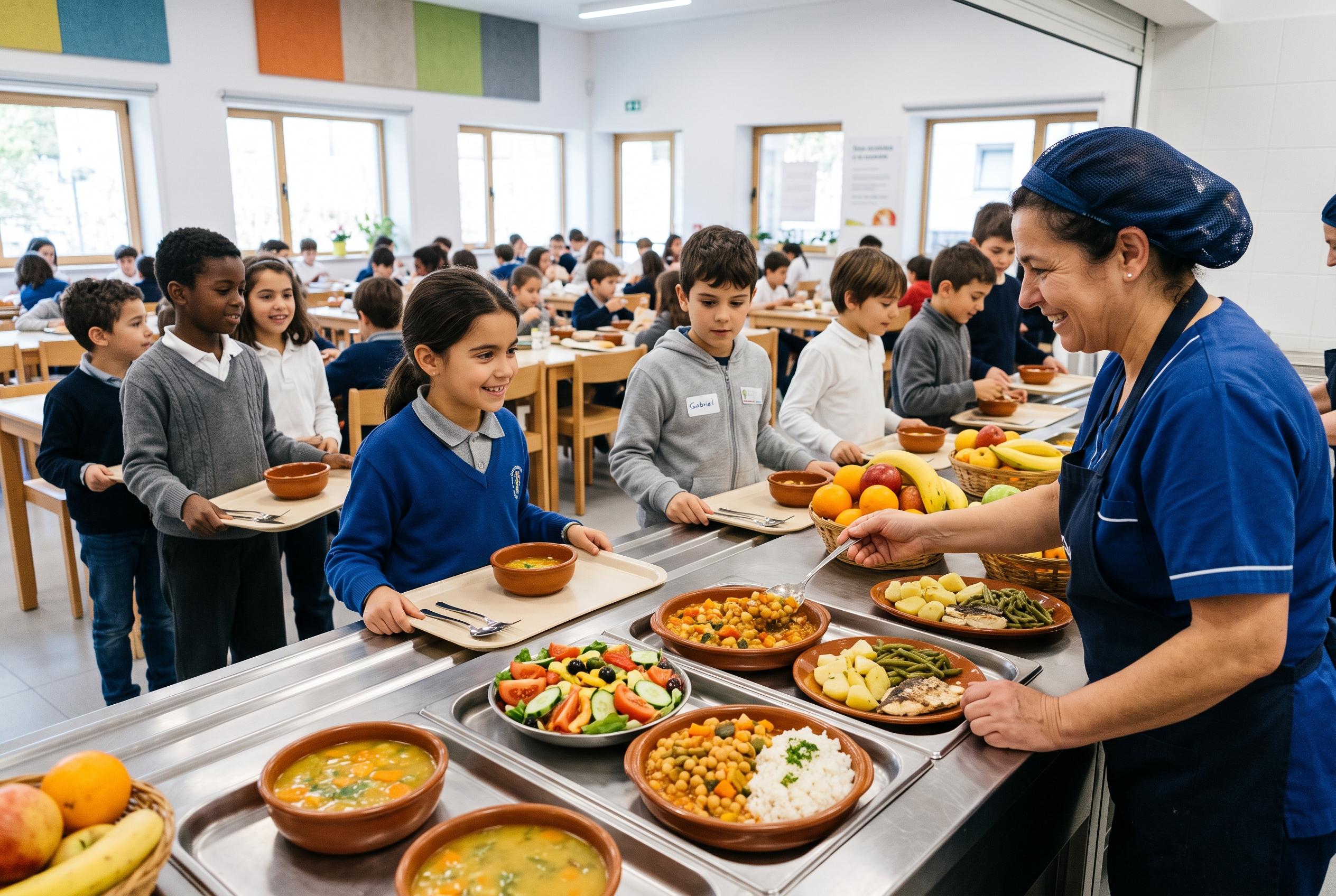

New cafeteria rules prioritise vegetables, fruit, legumes and traditional dishes, while restricting fried snacks, sugary desserts and processed meat and fish products.
Portugal’s schools are set for a sharper break with fried snacks and processed foods as the education ministry tightens rules for cafeteria menus in line with the Mediterranean diet. Under the new guidance, school kitchens are being pushed towards vegetable-rich dishes, fresh fruit, water only, and more traditional home-style cooking such as stews, casseroles and soups, according to CM Jornal.
The updated rules would keep items such as nuggets, rissóis and croquettes off school plates, while also excluding fish fingers, crab sticks and similar ultra-processed products. Sweet desserts are to be rationed much more strictly, with just one monthly serving of items such as milk ice cream, dairy desserts or jelly. Fresh fruit becomes the default dessert, and schools are expected to offer three varieties. Water is now the only drink permitted in school dining rooms, as the ministry seeks to reduce sugar and encourage healthier habits.
The changes come against a worrying backdrop. Data released by Portugal’s Directorate-General of Health show that 31.9% of children aged six to eight were above a healthy weight in the 2021/2022 survey round, including 13.5% who were classified as obese. That was higher than in 2019, when 29.7% of children in the same age group had excess weight and 11.9% were obese. The health authority has repeatedly warned that poor diet and inactivity are driving childhood obesity, with consequences that can extend into adulthood.
The new framework also narrows how often schools may serve eggs as the main animal protein, limiting that to once a week, while vegetarian meals must remain available every day. Plant-based substitutes such as tofu, seitan and tempeh are to be used only twice a month, with legumes taking priority instead. The overall message from the ministry is clear: school meals should look less like convenience food and more like the kind of balanced fare traditionally associated with the Portuguese table.
Disclaimer: This content is for informational purposes only and is not intended to be a substitute for professional medical judgment, advice, diagnosis, or treatment.



