

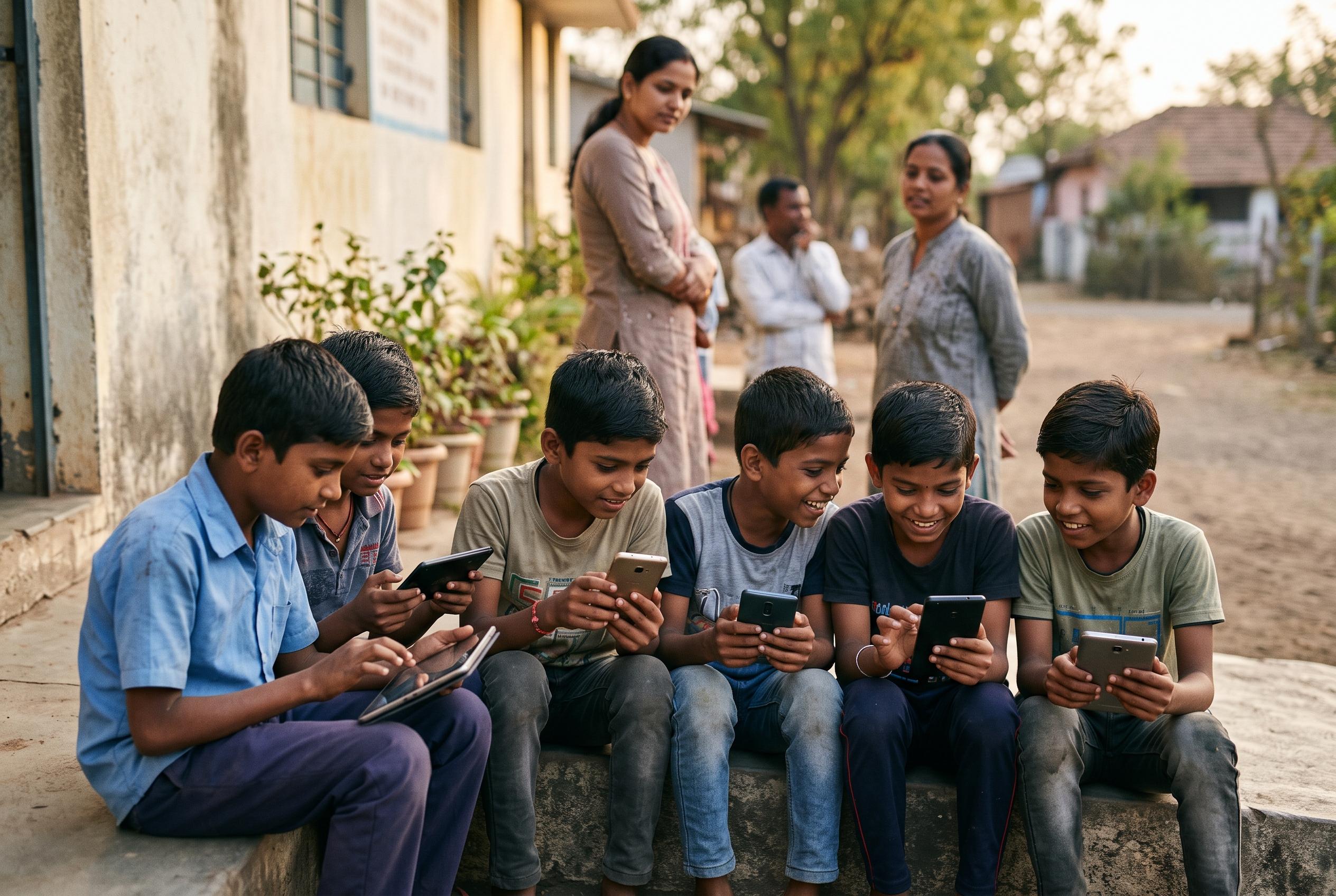

Research involving more than 2,000 Indian children found widespread smartphone use, online risks and signs of compulsive behaviour, prompting calls for stronger guidance from schools and parents.
A study of Internet use among schoolchildren in India has warned that heavy screen exposure is increasingly affecting young users’ emotional and physical health, with anxiety, sleep disruption and mood changes among the most commonly reported problems. The research, supported by the Indian Council of Social Science Research, calls for a coordinated framework involving schools, parents and children to improve digital literacy and help young people use technology more safely and critically.
The report, titled “Empowering Children in the Digital Age: Analysing Experiences and Vulnerabilities within the Framework of Vision Viksit Bharat and Sustainable Development Goals”, found that 97.6% of the children surveyed accessed the Internet at home, usually through smartphones. Moina Khan, a faculty member at Bennett University in Uttar Pradesh, which conducted the study, said most of the children were online for about 4.5 hours a day, with studying the main use, followed by gaming, watching videos and chatting with friends. The survey covered more than 2,000 children aged nine to 14 in Delhi and about 500 parents.
The findings suggest that while children and adults recognise clear benefits from digital tools, many young users lack the critical skills needed to navigate online risks. Khan said children were confident with digital platforms, but often did not understand issues such as algorithmic persuasion, manipulation and exploitation. The report said many children felt lonely when they were away from the Internet, became angry when they could not find what they wanted online and struggled to stop using it even when they wanted to, patterns that may point to compulsive use.
The study also highlighted safety concerns. It said 47% of the children had spoken to unknown people online in the previous six months, and many had played games with strangers or viewed material not suitable for their age. Cyberbullying and impersonation were reported by fewer children, but many said they did not tell parents or teachers about uncomfortable encounters, even though parents were often their preferred choice for reporting problems. The report also noted differences between boys and girls, saying boys tended to have freer access and greater exposure to risky content, while girls’ more limited access could leave them with weaker digital literacy and less ability to protect themselves.
Its conclusions align with earlier international research. A study published in the Journal of Health Economics found that higher internet use was linked to poorer psychological wellbeing among children in England, especially around self-perception, while related research in the same field has suggested that girls may be more affected than boys. Other reviews have connected problematic internet use and heavy screen time with anxiety, depression and broader socioemotional difficulties, reinforcing the case for early guidance, balanced screen habits and stronger adult oversight.
Disclaimer: This content is for informational purposes only and is not intended to be a substitute for professional medical judgment, advice, diagnosis, or treatment.



