

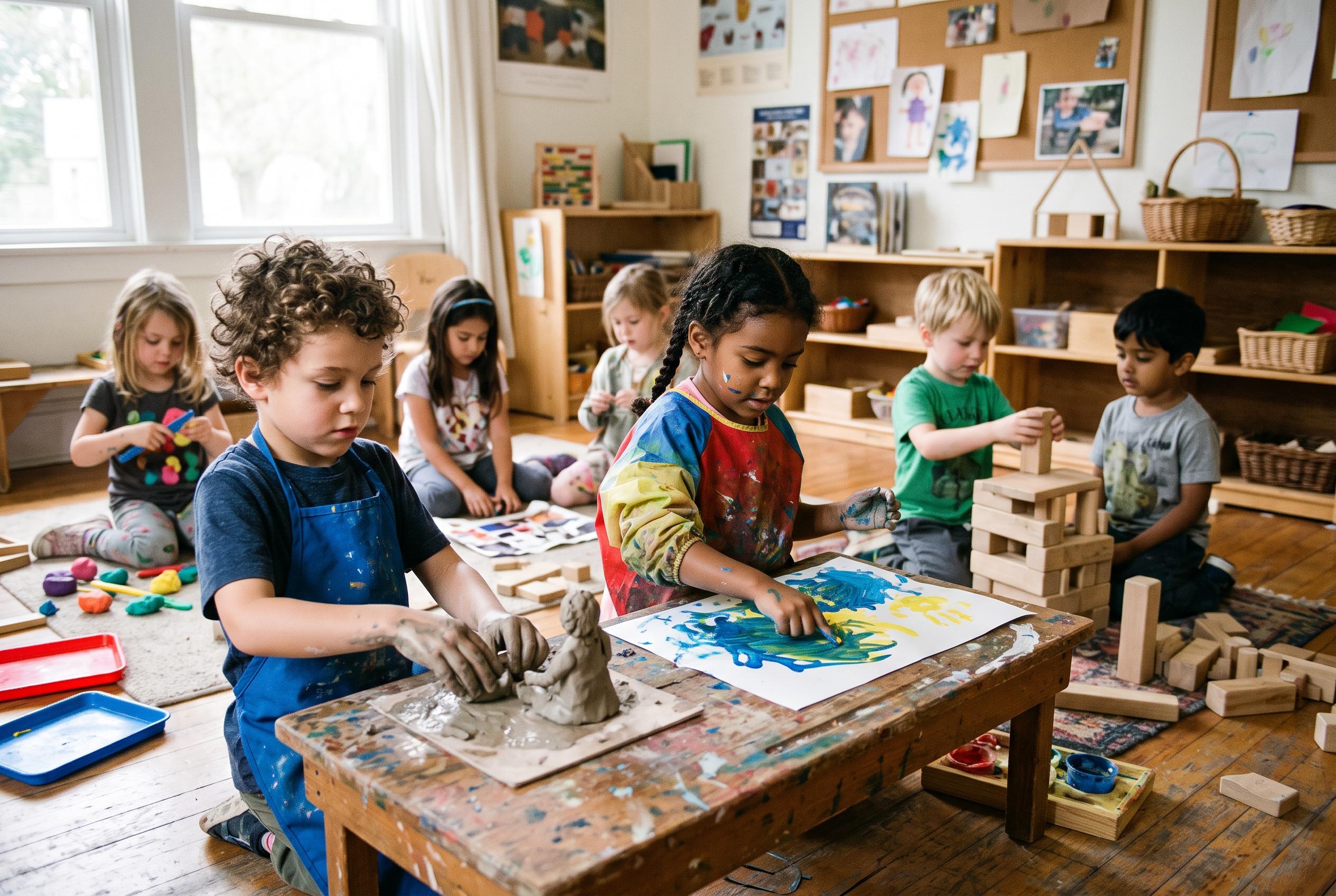

Experts say creativity is not limited to artistic talent: open-ended play can help children develop confidence, resilience, problem-solving skills and emotional expression.
Creativity is often treated as a talent reserved for children who love drawing, acting or telling stories, but child-development specialists say it is far broader than that. It can show up in small moments: a child testing an idea, adjusting it, then trying again. Theatre Train argues that creativity is as much about confidence and curiosity as it is about artistic flair, and that view is echoed by child-development guidance from NC State Extension, which describes creativity as a process rather than simply a finished product.
That matters because creative activity helps children build more than imagination. Children’s Health says unstructured play supports confidence, resilience and social-emotional growth, while PBS notes that creative play gives children a way to express feelings and work through them. In practice, that means a child inventing a game, building something from spare materials or making up a story is also practising problem-solving, self-expression and emotional regulation.
Experts also say creativity can support other areas of learning. PBS highlights the role of art in strengthening motor skills, language development and critical thinking, and Psych Central says parents and caregivers can nurture creativity by making room for open-ended play and imaginative thinking. The common thread across those sources is that creativity is not a luxury or an extra subject squeezed in after more academic work; it is part of how children learn to adapt, communicate and think independently.
For parents and carers, the message is simple: children do not need perfect materials or polished results to be creative. They need time, permission to experiment and adults who value ideas even when they are messy or unfinished. Drama Kids says imaginative play can help children prepare for later challenges by improving problem-solving, social skills and emotional expression. In other words, creativity is less about producing little artists and more about helping children become flexible, confident and resilient.
Disclaimer: This content is for informational purposes only and is not intended to be a substitute for professional medical judgment, advice, diagnosis, or treatment.



