

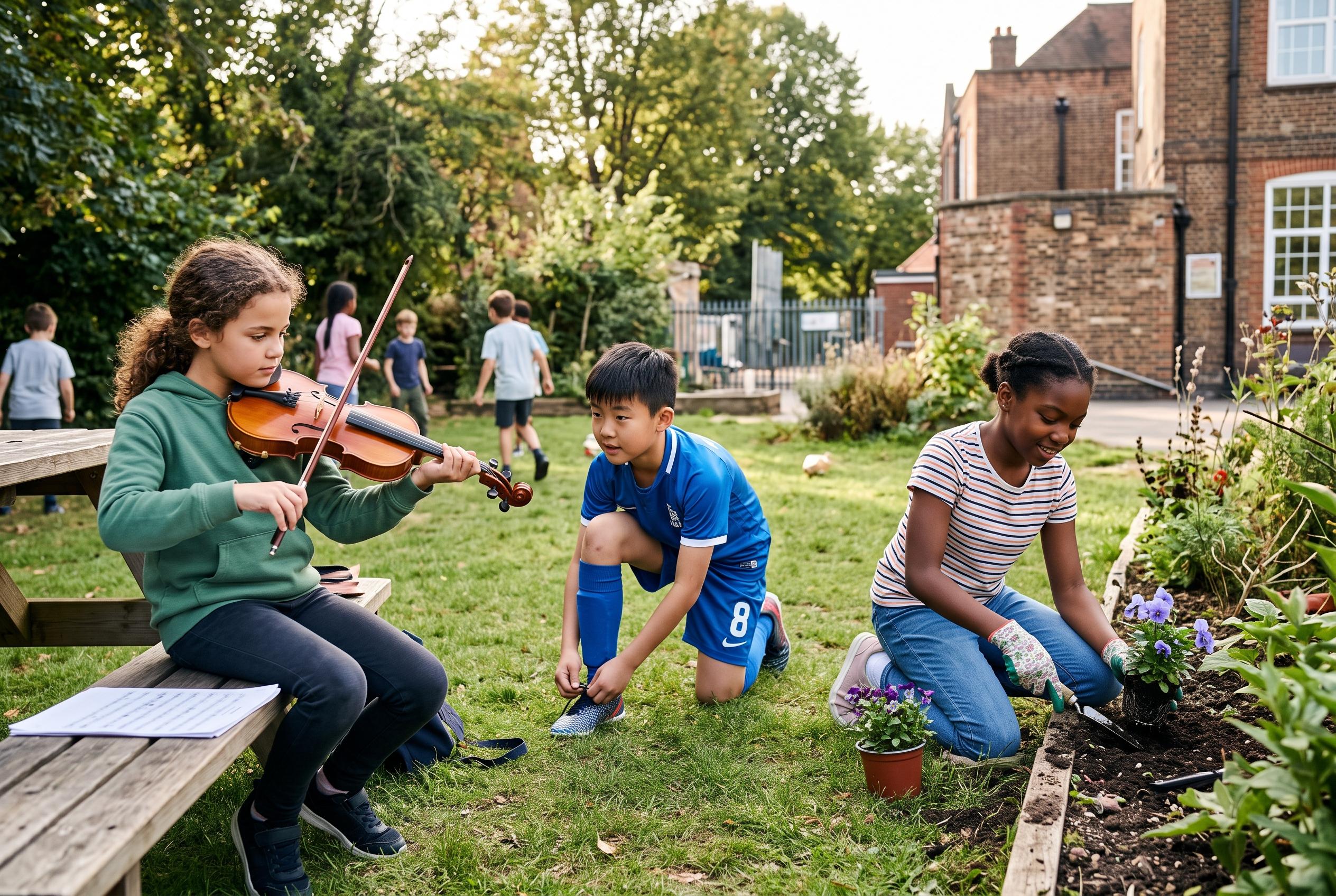

Clubs, sport, music and volunteering can strengthen confidence, belonging and academic engagement , but research suggests that too much involvement may undermine wellbeing.
As the school year gathers pace, extracurricular activities tend to fill family calendars almost as quickly as homework and tests. For many children and teenagers, clubs, sports, music, drama and volunteer work bring obvious rewards: companionship, confidence and a welcome break from classroom routines. They can also demand a real investment of time, energy and money, which is why experts say the balance matters. The University of Florida notes that one study of more than 13,000 tenth graders found that teenagers typically took part in two or three activities and spent about five hours a week on them, with moderate involvement linked to better academic performance. However, participation beyond roughly 14 hours a week was associated with weaker academic well-being.
The gains from that kind of involvement reach well beyond grades. According to research published in the Journal of Adolescence, participation in team sports, individual sports and arts activities was associated with positive academic, health and behavioural outcomes among adolescents aged 12 to 15. Separate work on campus-based events found that first-year college students who attended certain extracurricular programmes had stronger grade-point averages and were more likely to remain enrolled. Taken together, the research suggests that structured activities can support learning not by replacing schoolwork, but by reinforcing habits that help young people stay engaged.
One of the less obvious benefits is the chance to practise taking manageable risks. In a club, on a team or on stage, children can try something unfamiliar, make mistakes and recover without the consequences being as high-stakes as they might be elsewhere. The University of Florida also points to evidence that extracurricular involvement can shape civic habits later in life: a long-term study of 1,000 teenagers found that those who had taken part in activities were more likely as adults to vote, volunteer and remain psychologically healthy. Other research has linked extracurricular participation with social skills, leadership, perseverance and other so-called soft skills that employers and educators increasingly value.
These activities can also be especially valuable for children who need a different setting in which to thrive. A quiet pupil may become animated in a school play; a child known mainly for science may discover an aptitude for art or public speaking. That flexibility can help young people see themselves differently and, in some cases, stay connected to school at times when academic life feels difficult. Research discussed in the medical literature suggests that extracurricular involvement may be particularly helpful for students who are struggling, because it can strengthen school attachment, reduce the risk of disengagement and support better adjustment overall. For parents, the takeaway is straightforward: the right activity should not simply fill time, but help a child build confidence, curiosity and a sense of belonging.
Disclaimer: This content is for informational purposes only and is not intended to be a substitute for professional medical judgment, advice, diagnosis, or treatment.



