

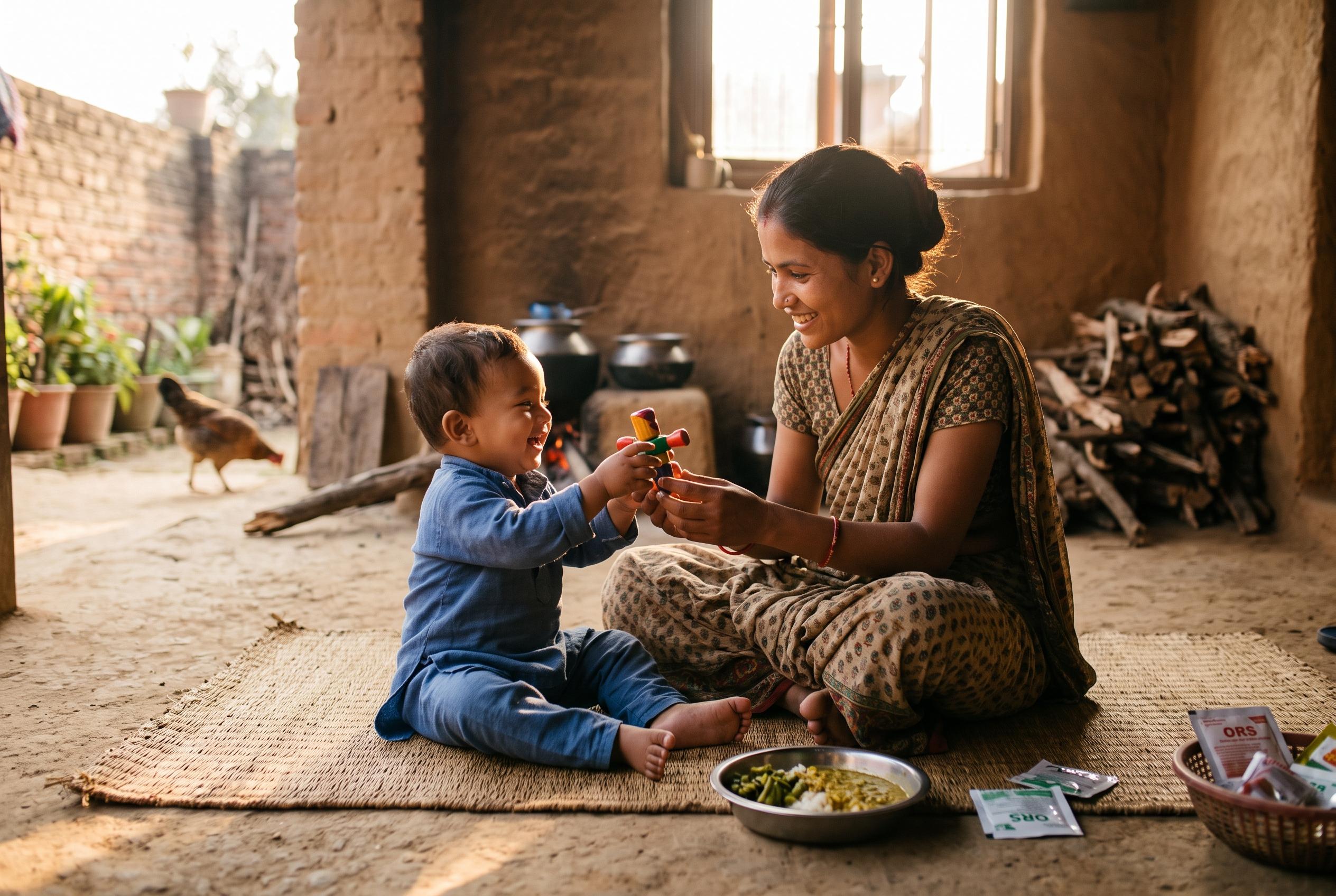

With stunting still affecting four in 10 under-fives, evidence from Pakistan’s cash-and-care programme suggests that tackling poverty alongside health services can deliver stronger nutrition gains.
For millions of Pakistani families, the daily question is not what counts as a balanced diet, but what food they can afford at all. Wheat, rice and sweet tea may keep hunger at bay, yet they do little to provide the protein, vitamins and minerals children need to grow properly, fight disease and develop fully. The National Nutrition Survey 2018, carried out by the Government of Pakistan and UNICEF, found that 40.2% of children under five were stunted and 17.7% were wasted, stark evidence that undernourishment remains widespread even where meals are served regularly.
Those figures matter because poor nutrition rarely stays confined to the dinner table. In low-income households, rising food prices usually force families to cut back on dietary quality first and portion sizes later, with women and girls often eating last and least. UNICEF’s reporting on the survey also noted that stunting had fallen only modestly from the previous national assessment, while wasting remained close to one in five children, pointing to a stubborn crisis rather than a passing one. The same survey found that overweight among children had also risen, underlining how Pakistan’s nutrition problem is not just about too little food, but the wrong mix of food.
The damage begins early and can last a lifetime. Chronic undernutrition weakens immunity, makes children more vulnerable to infection and reduces the body’s ability to absorb nutrients. That, in turn, can impair school performance, limit future earnings and help lock families into poverty across generations. The burden is especially heavy for adolescent girls and women, who are more likely to face anaemia and other deficiencies before pregnancy, raising the risk of complications for both mother and baby.
Pakistan has relied heavily on feeding schemes, breastfeeding promotion and treatment for malnourished children, all of which remain important, especially during the first 1,000 days of life. But the evidence suggests that nutrition programmes work best when they are tied to household income and wider social support. The Benazir Nashunuma Programme, run through the Benazir Income Support Programme, combines cash transfers with nutritious foods, maternal healthcare and counselling. According to the World Food Programme, an independent evaluation by Aga Khan University released in 2026 found an 18% lower relative risk of stunting among beneficiary children at 12 months than among non-beneficiaries.
A wider midline evaluation by the World Food Programme, WHO, UNICEF, the Government of Pakistan and Aga Khan University said the programme has reached more than 3.7 million women and children and has reduced stunting, improved child survival and lowered the number of children missing routine immunisations. That kind of evidence points to a broader lesson: cash support can improve nutrition, but it works best when combined with health services, counselling and practical help for mothers and young children. The long-term test is whether such gains can be sustained beyond the period of direct assistance.
International experience suggests that nutrition improves most durably when poverty itself begins to recede. A nationwide study in Brazil found that participation in Bolsa Família was linked with lower odds of stunting among children, while Bangladesh has cut child stunting dramatically over the past three decades as living standards, women’s education, sanitation and healthcare improved together. For Pakistan, the policy implication is clear: malnutrition should be treated not only as a health problem, but as a development emergency that demands better livelihoods, stronger women’s economic agency and more joined-up public services.
Disclaimer: This content is for informational purposes only and is not intended to be a substitute for professional medical judgment, advice, diagnosis, or treatment.



