

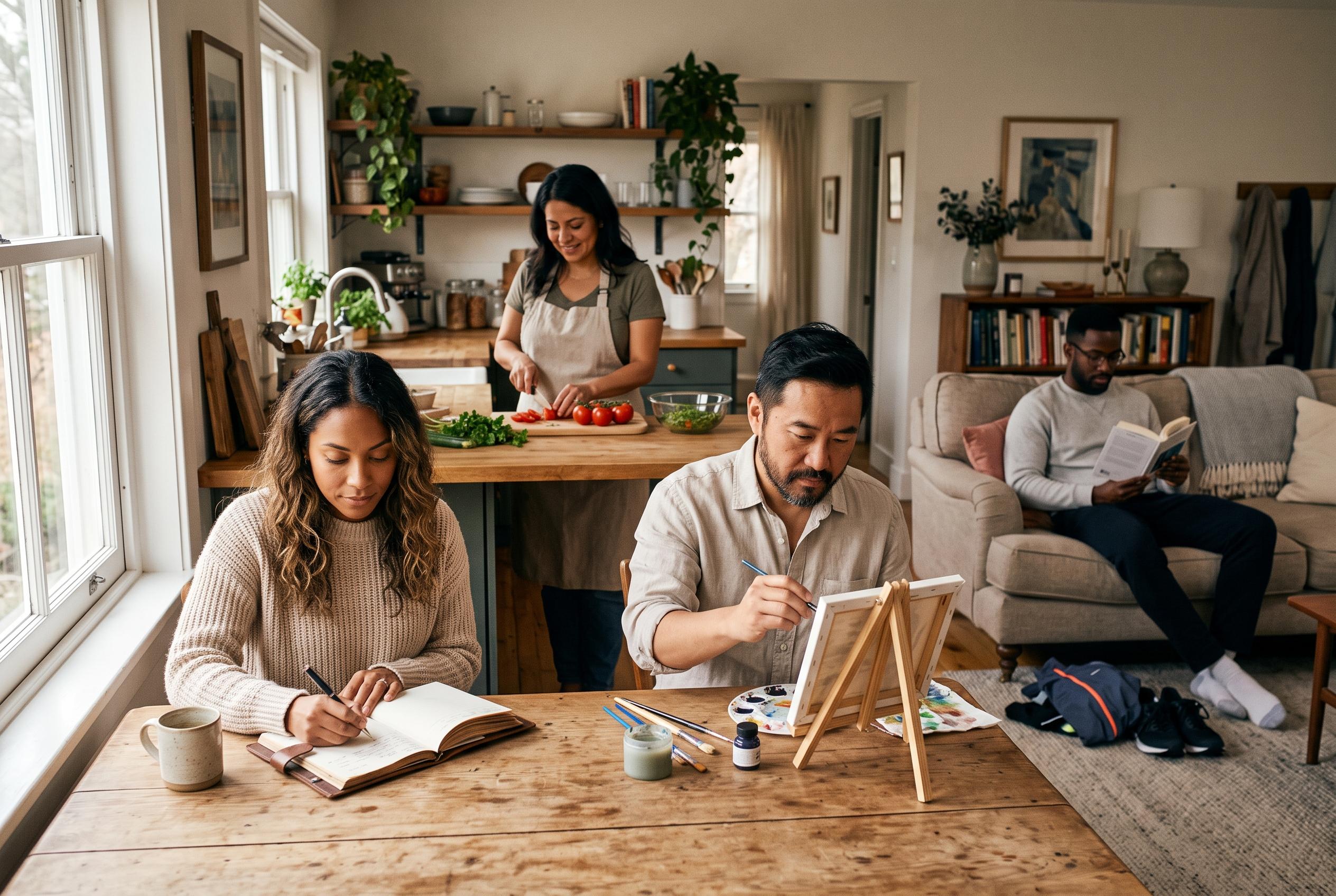

From journalling and painting to running, cooking and reading, enjoyable activities may help lower stress hormones and improve wellbeing.
Anxiety and stress are now woven into daily life for many Americans, and the health consequences can be serious. The Independent reports that three-quarters of adults experience physical or emotional symptoms linked to poor mental health, while persistent strain can worsen conditions such as heart disease and high blood pressure. It can also make it harder to get the recommended seven to nine hours of sleep, raising the risk of further problems over time.
One of the simplest ways to ease that pressure is to take up a hobby, because enjoyable activity can help lower cortisol, the hormone associated with stress. Researchers at Utah State University say the key is not whether the pursuit is artistic, athletic or academic, but whether it feels meaningful and satisfying. That broad definition leaves room for everything from painting and journalling to running, dancing or even gardening.
Creative hobbies appear especially helpful. A study from Drexel University found that a 45-minute art session was enough to reduce cortisol levels, and Mental Health America says making art can help people work through emotion and step out of repetitive negative thinking. Writing can also be effective: Michael Smith, an associate professor of psychology at Northumbria University, has said 20 minutes of writing a day can lower stress, while even two minutes may help. Harvard researchers have found journalling particularly useful because it gives shape to thoughts and emotions that can otherwise feel overwhelming.
Movement offers another route to relief. Johns Hopkins Medicine says running boosts endorphins, which lift mood and reduce pain, and a Japanese study cited by The Independent found that even a short 10-minute jog can ease stress and anxiety. Dancing may be similarly beneficial: a 2021 survey of 1,000 dancers found that 95% of people with a history of anxiety, stress or depression felt the activity had therapeutic value. Gardening, too, combines gentle physical work with attention to living things, while even indoor plants may improve well-being. At home, cooking, knitting and reading can all play a role as well. A 2022 study of 650 people who completed a seven-week cooking course found improved mental-health scores afterwards, and The Queen’s Reading Room reported in 2024 that just five minutes of reading can cut stress by nearly 20%.
Disclaimer: This content is for informational purposes only and is not intended to be a substitute for professional medical judgment, advice, diagnosis, or treatment.



