

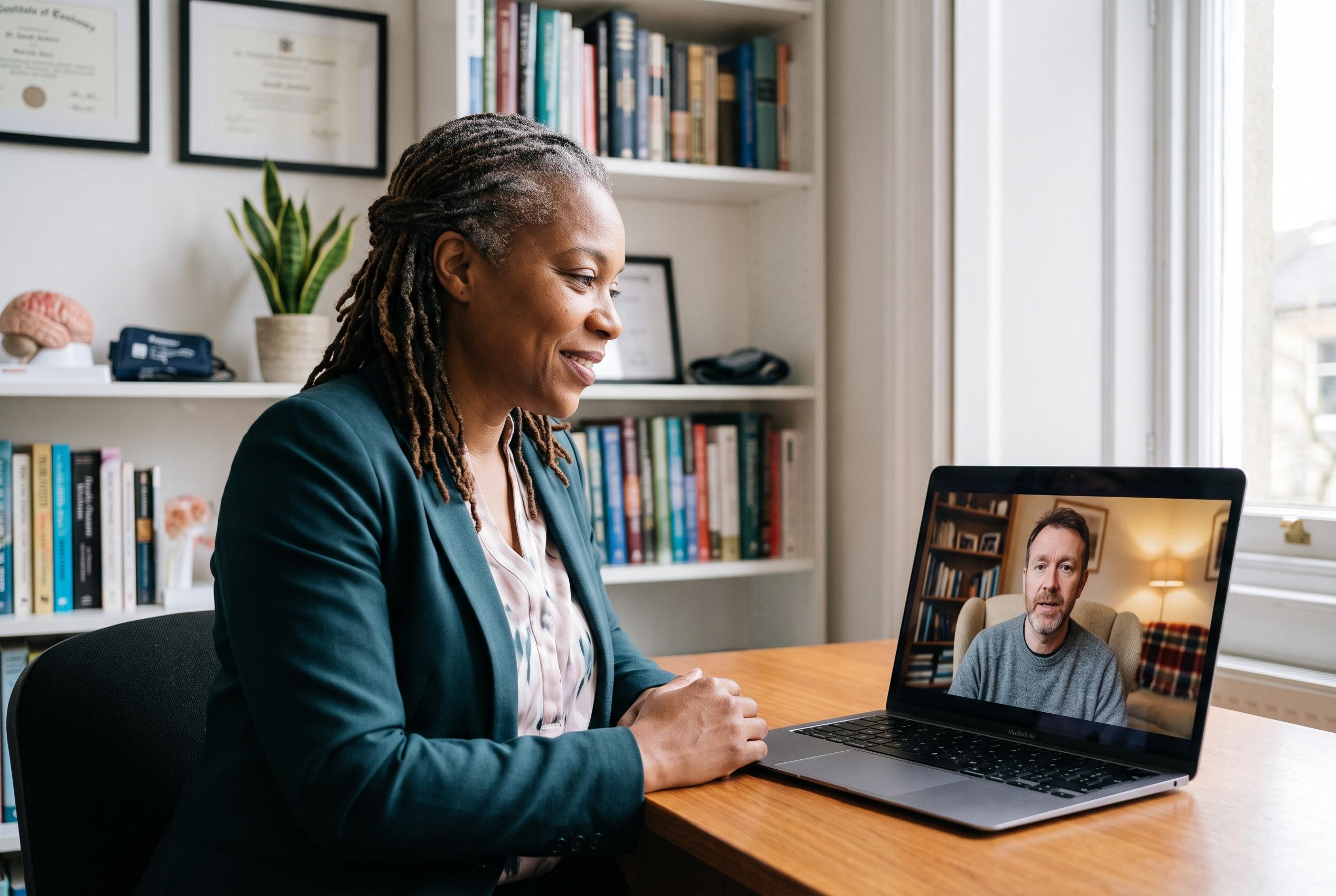

A 2025 review of 16 psychiatric disorders found that remote assessments can closely match face-to-face consultations, while widening access to diagnosis and treatment.
Online psychiatric assessment has moved from a novelty to a practical route into care, offering a structured clinical review through video or phone that can lead to diagnosis, treatment and follow-up without the delay and travel that often put people off seeking help. The model is designed to cover the same territory as an in-person appointment, from symptoms and medical history to family background and day-to-day functioning, and recent research suggests it can be highly dependable when carried out properly. According to a 2025 systematic review and meta-analysis published in Psychiatry and Clinical Neurosciences, telepsychiatry showed almost perfect agreement with face-to-face assessment across 16 psychiatric disorders.
That level of reliability matters because many people do not begin with a neat diagnosis in mind. They arrive feeling overwhelmed by anxiety, low mood, poor sleep, concentration problems or a general sense that something is wrong, and a careful remote evaluation helps sort through those overlapping symptoms. A 2024 review published in PubMed found that live telehealth assessments using phone or video were a reliable alternative to in-person psychiatric evaluations, particularly where conventional appointments are difficult to access.
The session itself is usually straightforward, but it is not superficial. A clinician will ask about the reason for the visit, past treatment, medication use, family history, mood, appetite, sleep, attention and any safety concerns, then use that information to decide whether therapy, medication, further testing or another referral is the best next step. That process is intended to mirror a standard psychiatric intake rather than replace it with a shorter checklist, and the point is not just to assign a label but to build a usable plan.
One reason telepsychiatry has gained ground is simple convenience. A 2024 systematic review and meta-analysis on tele-mental health acceptability found that users generally valued the format for its accessibility and convenience, suggesting that many patients are comfortable with care delivered remotely when the service is reliable and well organised. That is particularly important for people in rural areas, parents juggling childcare, those with mobility limits and anyone whose work schedule makes a traditional office visit difficult to manage.
The evidence also shows that telepsychiatry can work beyond adult outpatient care. A 2024 feasibility study in the Journal of Medical Internet Research found strong agreement between remote and in-person assessment for children being evaluated for attention-deficit hyperactivity disorder and autism spectrum disorder, indicating that virtual assessment can remain useful even in more complex developmental cases. That said, a separate systematic review of psychiatric diagnosis reliability has found that agreement between clinicians is only moderate to substantial in some settings, which underlines the value of standardised criteria, training and careful interviewing no matter where the appointment takes place.
There are still limits to what a screen can do. Cultural context, communication style and access to technology all shape how well a remote appointment works, and a 2022 scoping review on cultural safety in telepsychiatry argued that services need to adapt to different communities if they are to be equitable as well as efficient. A 2021 review of asynchronous telepsychiatry, which does not happen in real time, also found promise in the model but noted the need for clearer protocols and better solutions to technical barriers.
Even with those caveats, the direction of travel is clear. Remote psychiatric evaluation is no longer best understood as an emergency substitute for a missing appointment; for many patients it is now a standard, clinically serious entry point into care. The strongest case for it is not that it is easier than an office visit, but that it can deliver the same kind of structured assessment while removing barriers that have long kept people from getting help at all.
Disclaimer: This content is for informational purposes only and is not intended to be a substitute for professional medical judgment, advice, diagnosis, or treatment.



