

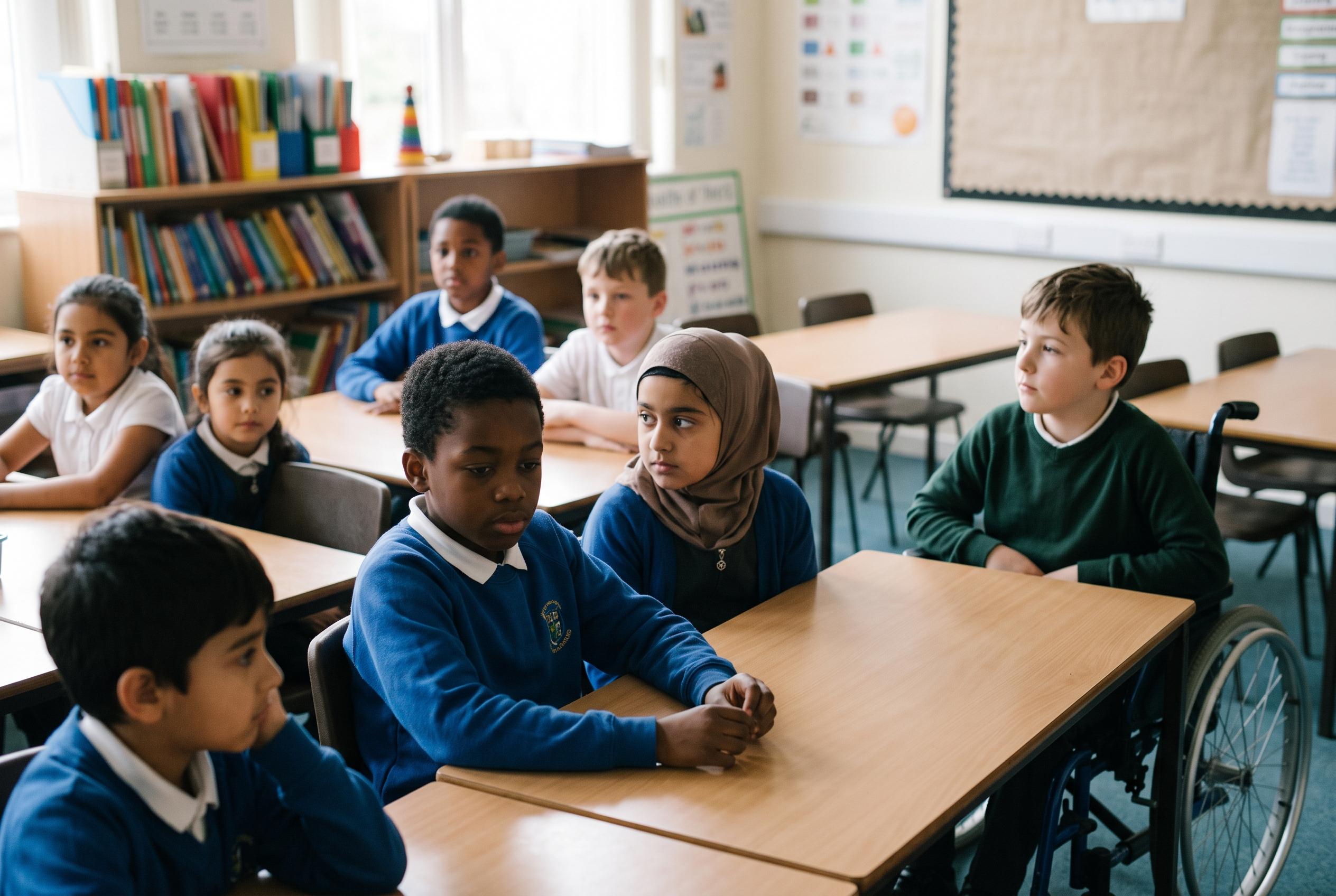

Federal data show that exclusionary and corporal punishment remain widespread, with Black students, boys and disabled pupils disproportionately affected , raising questions about whether harsh discipline improves behaviour or undermines learning.
A familiar Bible verse about discipline has long been used to justify harsh school punishments, but the data tell a more complicated story. Proverbs 13:24 is often read as a call for strict correction, yet its language is rooted in teaching, not retribution. In that sense, the real question for schools is not whether discipline matters, but whether the methods being used actually help children learn better behaviour or simply remove them from class. The U.S. Department of Education’s Civil Rights Data Collection, which has tracked school climate and discipline since 1968, shows that exclusionary punishment remains widespread across American public schools.
That federal data, as summarised by the Education Department and a 2018 Government Accountability Office review, points to persistent racial and disability-based disparities. Black students, boys and students with disabilities are disciplined at higher rates than their peers, and those gaps begin early, including in preschool. The Education Department says such disparities do not automatically prove discrimination, but they are serious enough to warrant scrutiny of how schools are handling behaviour, especially when the same patterns appear year after year.
The consequences can be self-defeating. Removing a child from class for relatively minor misbehaviour can mean lost instruction, falling behind and, in turn, more frustration and more discipline. That cycle helps explain why researchers and civil rights advocates have criticised the so-called school-to-prison pipeline, in which suspension, police referrals and other punitive responses can push students further from learning. The CRDC exists precisely because discipline is one of the clearest indicators of how schools are treating students, and its long-running data have made those patterns harder to ignore.
The issue is not limited to exclusion from school. Corporal punishment remains permitted in some public schools, and a 2020 study in the Journal of Disability Policy Studies found that Black, Hispanic and disabled students were disproportionately likely to receive it. The American Academy of Pediatrics has argued against the practice, warning that it does not improve long-term behaviour and can cause harm. The controversy is especially stark because there is still no federal ban, leaving policy to a patchwork of state rules.
At the same time, the most punitive schools are often the ones least equipped to deal with the reasons children struggle in the first place. Under-resourced campuses may have more security staff than counsellors, fewer mental health supports and less time for restorative work that addresses conflict without pushing students out. That leaves schools relying on the cheapest and quickest option: send the child away. Read generously, the biblical language of discipline is about guidance, patience and care. The evidence suggests that when schools lose sight of that, they may preserve order in the short term while weakening learning, trust and safety in the long run.
Disclaimer: This content is for informational purposes only and is not intended to be a substitute for professional medical judgment, advice, diagnosis, or treatment.



