

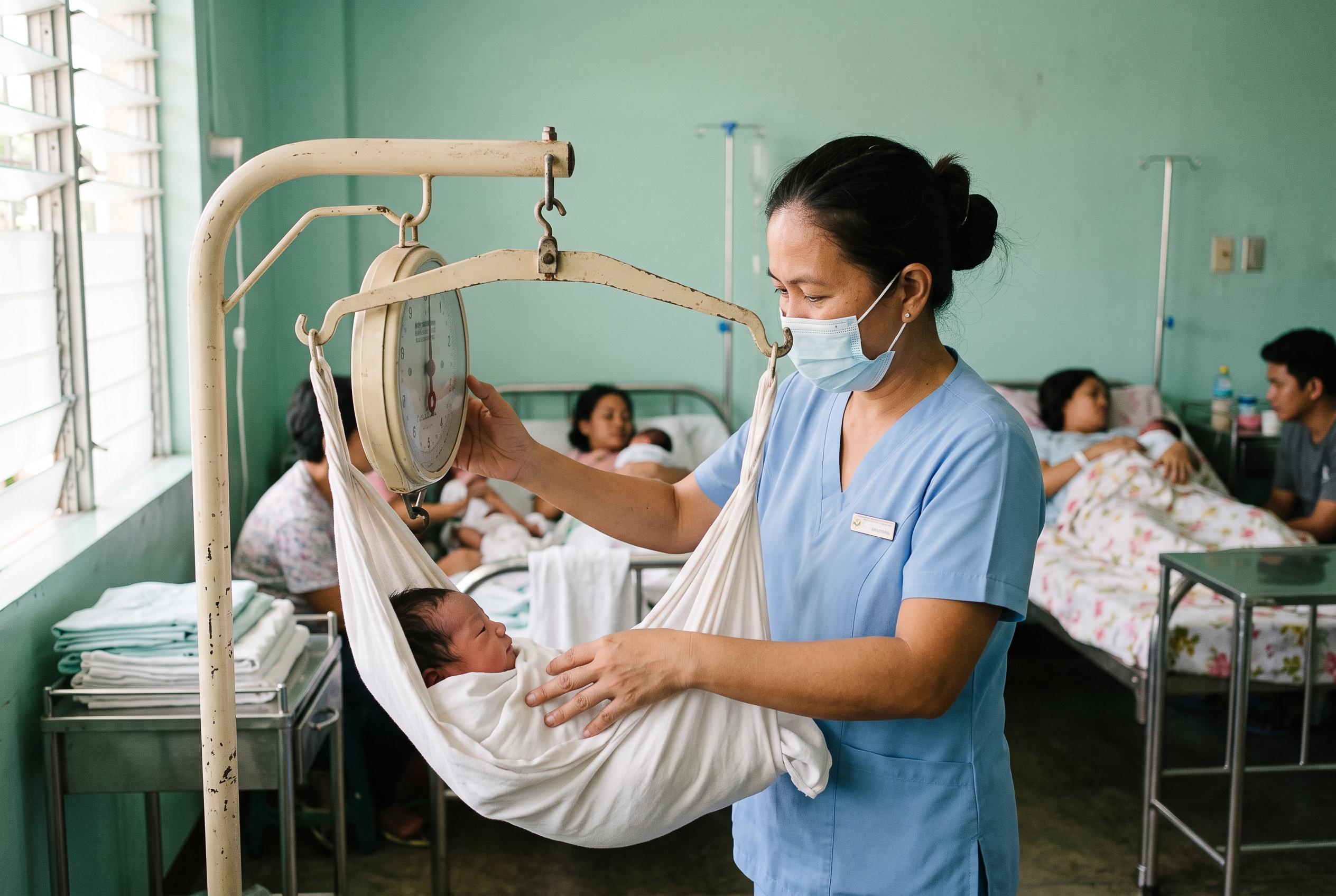

Nearly one in five Filipino babies with a recorded birth weight was born below 2.5kg, as the rate climbed to 18.6 per cent in the latest national survey.
The share of Filipino babies born underweight has risen to its highest level in more than a decade, according to the Philippine Statistics Authority’s latest National Demographic and Health Survey.
The PSA said 18.6 per cent of infants with a reported birth weight were born weighing less than 2.5 kilogrammes. That is up from 15.4 per cent in the 2022 survey and 14 per cent in 2017, reversing the gains seen in the late 2010s. The agency said the new figure is the highest since 2013, when the rate stood at 20.5 per cent, although it remains below the 20.7 per cent peak recorded in 2008.
Low birth weight is widely used as a marker of poor foetal growth, and the PSA said it closely reflects a mother’s nutritional status during pregnancy. The survey covered infants born in the two years before the 2025 NDHS, with birth weight reported for 93.2 per cent of them. Of those records, 41.5 per cent came from written documentation and 51.6 per cent from mothers’ recall.
The survey also examined how married women aged 15 to 49 make decisions about sexual relations, contraceptive use and reproductive health care. Women with some college education were most likely to report informed decision-making, at 86.2 per cent, compared with 71.5 per cent among women with no schooling. The pattern also rose with household wealth, from 76.1 per cent in the poorest fifth of households to 88.7 per cent in the richest.
Employment status was another dividing line. The PSA said 85.2 per cent of women employed for cash reported informed decision-making, compared with 80.7 per cent of those not employed and 79.8 per cent of those employed but not for cash. The statistical tables released alongside the report are intended to help policymakers and programme managers design and assess health interventions, and regional PSA offices have also begun publishing local findings from the same survey.
Disclaimer: This content is for informational purposes only and is not intended to be a substitute for professional medical judgment, advice, diagnosis, or treatment.



