

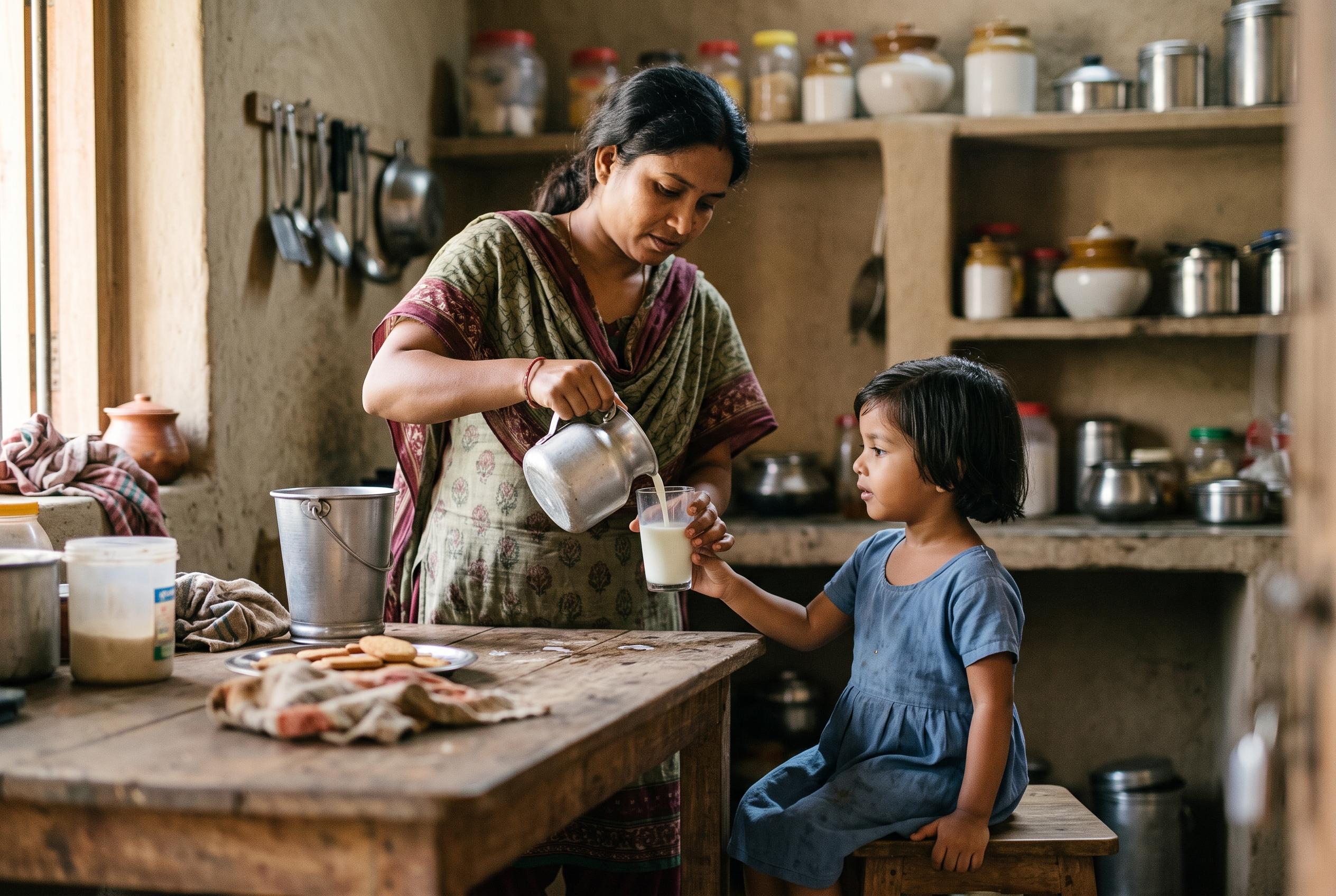

A review warns that contaminated feed, weak supply-chain controls and conflicting safety limits may be allowing aflatoxin to pass into Bangladesh’s milk supply, with infants and young children facing particular concern.
Aflatoxin contamination in Bangladesh’s dairy sector is not just a feed problem but a potential public health issue that reaches into the milk supply and, ultimately, the diets of infants and young children. A review and meta-analysis published in Veterinary Medicine and Science argues that the country’s climate, its fragmented dairy and feed chains and uneven regulation together create conditions in which exposure can persist at several points in the food system.
The study places aflatoxins in their wider toxicological context. Aflatoxin B1, produced mainly by Aspergillus flavus and Aspergillus parasiticus, is regarded as one of the most dangerous naturally occurring carcinogens. The International Agency for Research on Cancer classifies it as a Group 1 human carcinogen, and the US National Cancer Institute says exposure often occurs through contaminated foods, including dairy products from animals that have eaten tainted feed. When dairy cattle ingest contaminated rations, the toxin can be metabolised into aflatoxin M1 and passed into milk, where it survives pasteurisation and ultra-high-temperature processing.
Bangladesh presents a particularly high-risk setting. The paper says its warm, humid climate favours fungal growth during crop production and storage, while dairy and poultry systems remain heavily reliant on smallholders and informal channels with weak cold storage and limited quality control. Maize, which is especially vulnerable to aflatoxin contamination, has become a central ingredient in compound feed, and rice contamination can add to population exposure beyond dairy products. Earlier Bangladeshi surveys have already detected aflatoxin B1 in feed ingredients and animal rations, while biomonitoring studies in adults, mill workers and pregnant women have shown that exposure is widespread.
The review also highlights the importance of the benchmark used to judge contamination. The European Union’s current limit for aflatoxin M1 in milk is 0.05 micrograms per kilogram, with a stricter level for infant formula, while Codex and Bangladesh’s own standards are set at 0.5 micrograms per kilogram. That means a milk sample can fall within the national threshold yet still be considered unsafe under European rules for the youngest consumers. The authors note that this difference matters because the same sample may be treated as acceptable in one regulatory setting and unacceptable in another.
Against that background, the literature reviewed in the paper shows a troubling pattern. Bangladeshi studies have reported aflatoxin M1 in between 43% and 79% of milk samples, with raw milk sometimes carrying levels far above European limits and, in some cases, above the more lenient Codex threshold as well. A 2021 study indexed in PubMed found aflatoxin M1 in 78.6% of milk and milk-product samples in Bangladesh, with more than a third exceeding the European maximum. Another study published in 2020 found contamination in 53% of samples and said most contaminated products were above European limits.
The new assessment is careful, however, not to overstate what the evidence can prove. It combines separate bodies of published work on feed and milk rather than tracking the same animals from feed trough to milk tank, so it cannot establish a direct causal link from one farm-level sample set. Even so, the authors argue that the numbers are broadly consistent with one another and point to a clear pattern: the feed supply is contaminated, milk carries the residue forward and current controls do not appear strong enough to stop that transfer. They say the main gap is no longer whether contamination exists, but how much dietary risk it poses to consumers in Bangladesh, especially children, and how that risk should be measured using local consumption patterns rather than assumptions borrowed from other dairy systems.
Disclaimer: This content is for informational purposes only and is not intended to be a substitute for professional medical judgment, advice, diagnosis, or treatment.



