

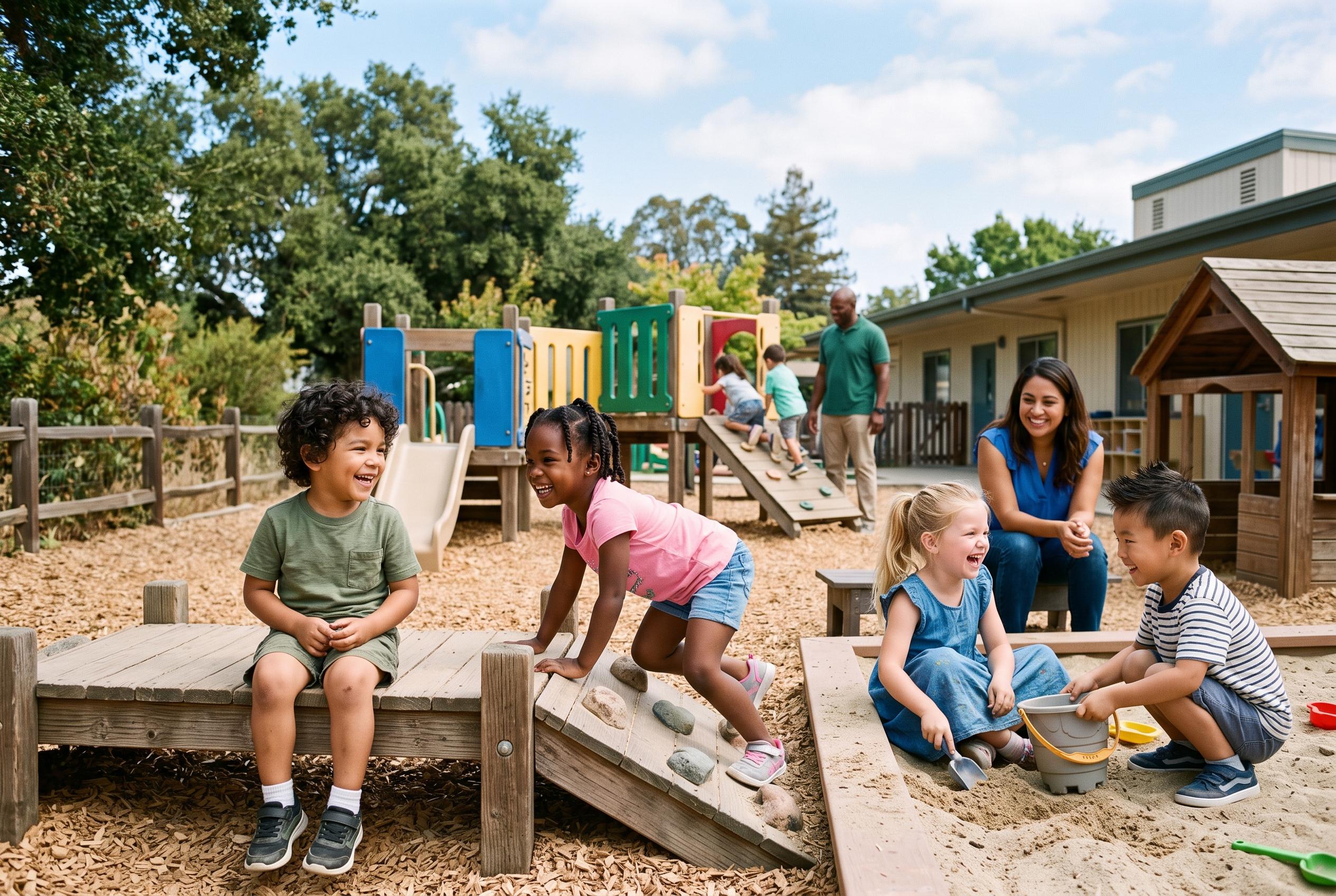

Expanded eligibility and lower co-payments have sharply reduced subsidised childcare costs, while California’s universal transitional kindergarten programme now offers every eligible four-year-old a free first school year.
California families are paying far less for subsidised child care than they did in 2019-20, according to the governor’s office, with the biggest savings now flowing to households that fall within the state’s revised income rules. For some families, the drop has been dramatic: a household of three earning $60,000 a year has gone from paying about $7,000 to nothing under the 2025-26 system, based on inflation-adjusted state comparisons.
The changes reflect a broader shift in how California structures support for early childhood care. The Public Policy Institute of California says the state expanded eligibility thresholds and lowered required co-payments after suspending family fees during the pandemic. Before those changes, families earning between 40% and 85% of the state median income could face charges of up to 10% of household income, while lower-income households paid nothing. When fees were brought back in October 2023, families below 75% of the state median income were exempt, those between 75% and 85% faced co-payments capped at 1%, and eligibility was lengthened from 12 months to 24 months.
Even so, the savings do not mean all child care is free. The Public Policy Institute of California researchers Caroline Danielson, Laura Hill and Tomas Lopez said providers can still ask for additional contributions to bridge the gap between public reimbursement rates and the cost of private places. Those extra charges can come in the form of cash, nappies, snacks, or payments for trips and activities, meaning some out-of-pocket costs may remain even for families receiving subsidies.
Separate from subsidised care, California’s universal transitional kindergarten programme gives four-year-olds a free first year of school, regardless of family income. The California Department of Education says the state completed the phase-in for the 2025-26 school year, making transitional kindergarten available to every eligible four-year-old. The department’s guidance says the class is designed as the first year of a two-year kindergarten experience and uses a modified curriculum tailored to young children.
State officials say the programme had 213,313 pupils enrolled in 2025-26, after more than $12.5 billion in investment since 2019. The broader childcare push has also added roughly 149,000 subsidised care places and 3,800 grants to help providers improve facilities and expand capacity. California has also widened other family supports, including a programme offering before-school, after-school and summer activities for children from transitional kindergarten through sixth grade, as well as two free school meals a day for public school pupils.
Disclaimer: This content is for informational purposes only and is not intended to be a substitute for professional medical judgment, advice, diagnosis, or treatment.



