

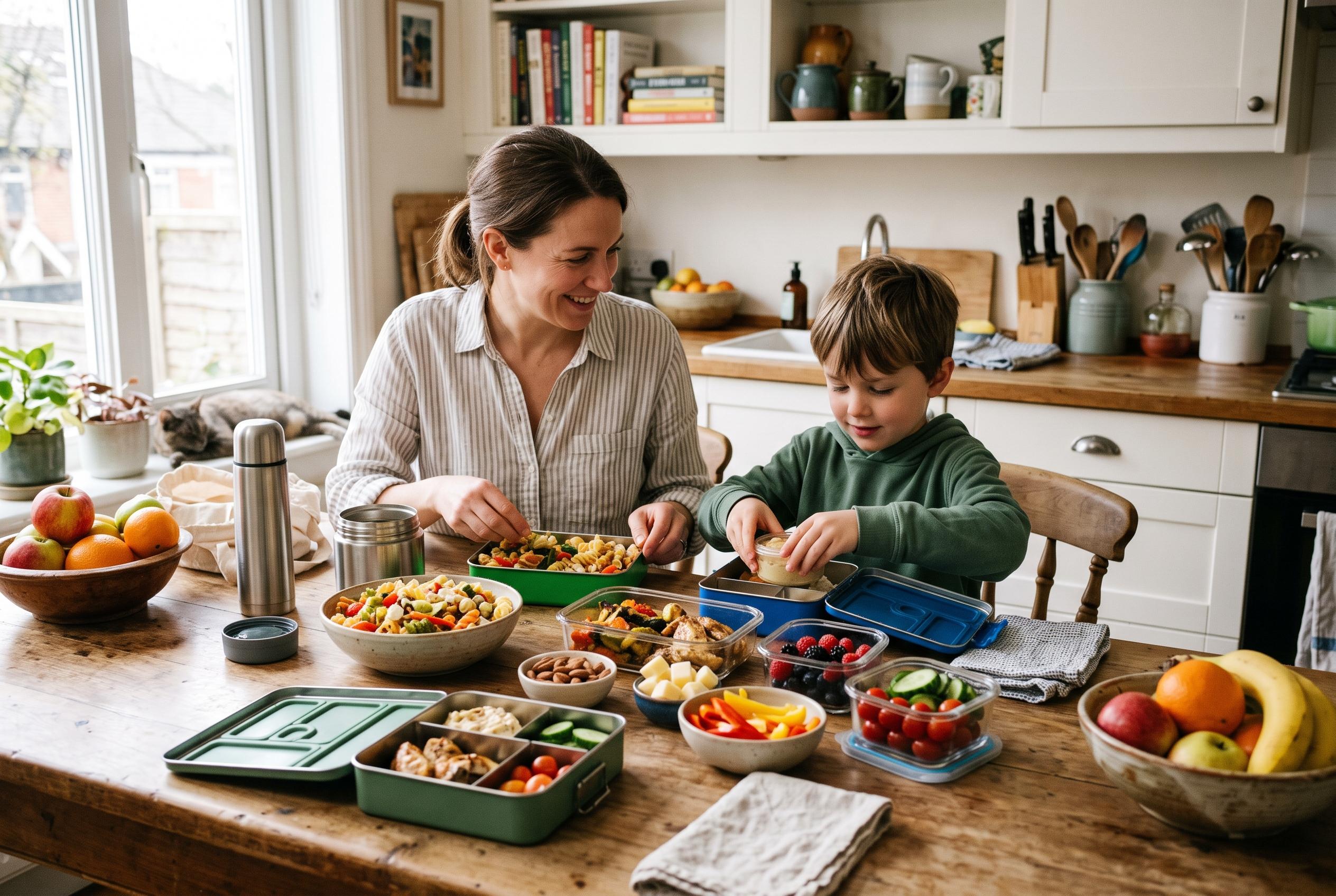

Pasta, leftovers, snack plates and warm meals offer an easier way to build balanced school lunches without relying on sandwiches.
Packing a school lunch without a sandwich does not have to mean extra stress or a fussy menu. Susan, a mother of three who has spent years testing what her children will actually eat, says the most successful lunchboxes are usually the simplest ones: pasta, rice, eggs, leftovers, snack-style boxes and warm dishes that can be made ahead. Her experience reflects a wider pattern seen in other lunchbox guides, which favour flexible meals built from familiar parts rather than elaborate recipes.
A useful way to think about a packed lunch is as a mix of parts rather than a single plated meal. Nutrition advice in the article points towards including a grain or starchy food, a source of protein, fruit or vegetables, and, where useful, a familiar extra such as yogurt, cheese or dip. Other lunchbox round-ups make the same case, describing bento-style boxes and snack plates as an easy way to give children variety without overwhelming them. The point is not perfection, but balance and familiarity.
Several of Susan’s strongest ideas revolve around leftovers and simple assembly. Cold pasta with chicken and vegetables, rice and bean bowls, hummus with crackers and vegetables, lentil and rice combinations, and snack plates with cheese, fruit and cooked chicken all appear on her list because they are practical for busy mornings. Similar approaches show up in the related pieces, which highlight pasta salad, rice-based lunches and DIY lunch trays as dependable non-sandwich options that travel well and can be adapted to suit different appetites.
Warm lunches also have a place, particularly in colder months or where children dislike cold food. Susan suggests using insulated containers for dishes such as macaroni and cheese, soup, chilli and fried rice. Other lunchbox guides point to the same solution, recommending thermos-style containers for hot meals and freezer-friendly bakes such as egg muffins or savoury muffins. These choices work best when the food is cooked thoroughly, packed safely and easy for a child to manage without adult help at school.
For parents of picky eaters, the article argues against turning lunch into a daily battle. Susan recommends starting with foods children already know, then adding tiny portions of something new beside them rather than replacing the whole lunch at once. That advice matches broader guidance from child-health experts, who stress repeated exposure without pressure. It also matters to think about age and safety: whole grapes, nuts, hard vegetables and other firm foods may need to be cut down or softened for younger children, and schools often have their own rules on allergens and container use.
The bigger message is that variety does not have to mean complexity. Susan’s list works because it gives parents a repeatable system: choose a base, add a protein, include fruit or vegetables, and decide whether the lunch should be cold, warm or snack-style. Other sources reinforce that idea, suggesting parents rotate a few trusted meal types rather than inventing a new lunch every day. For families tired of sandwiches, that may be the most useful lesson of all.
Disclaimer: This content is for informational purposes only and is not intended to be a substitute for professional medical judgment, advice, diagnosis, or treatment.



