

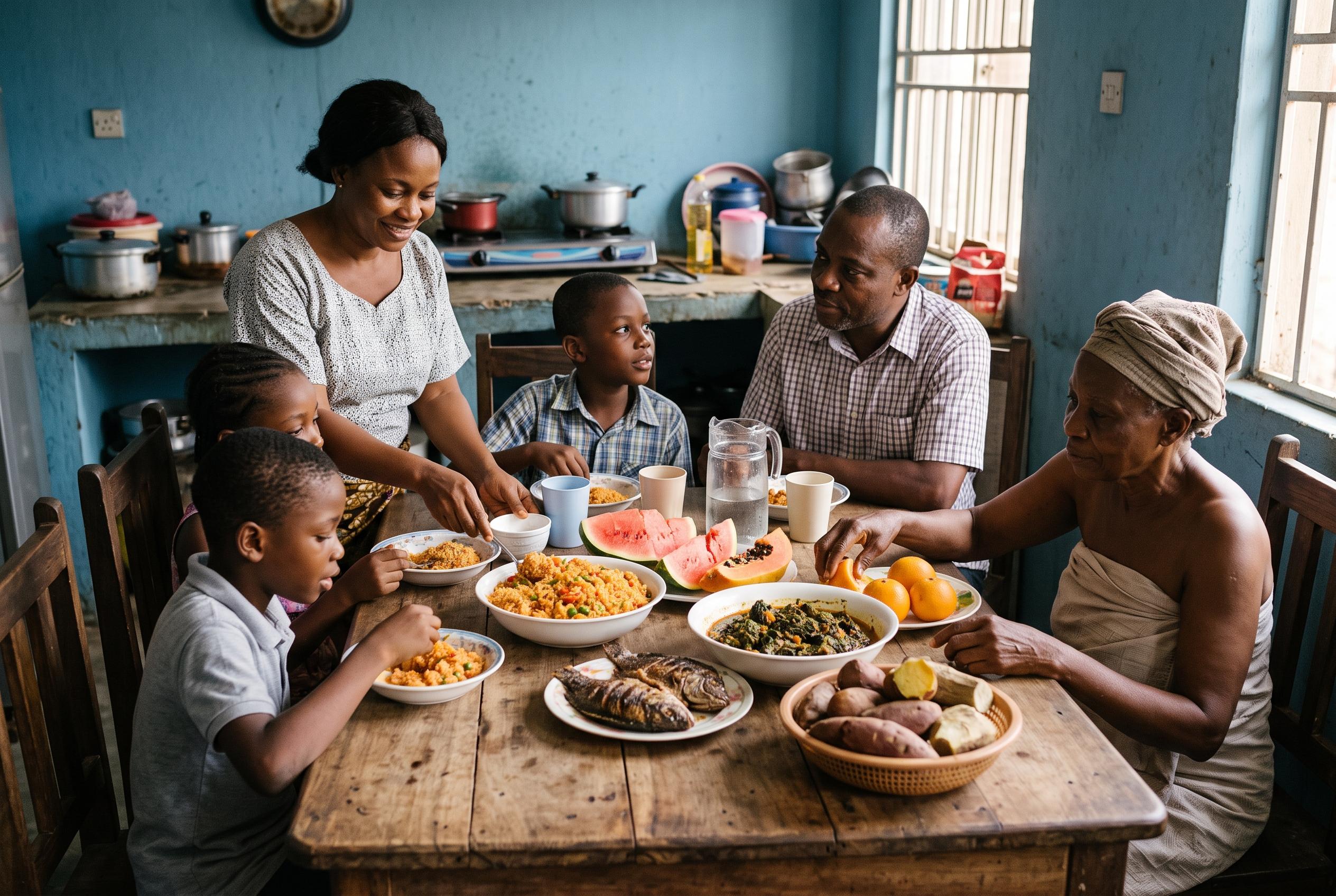

Corporate Accountability and Public Participation Africa is urging the government to measure food security by whether households can afford safe, nutritious diets, while tightening controls on unhealthy food marketing.
Corporate Accountability and Public Participation Africa has urged the federal government to rethink how it defines food security, saying Nigeria must place nutrition, affordability and consumer protection at the centre of policy. In a World Food Day statement carried by several outlets, the group argued that a country can increase harvests and still leave millions hungry if families cannot afford safe, healthy meals or if poor distribution keeps food out of reach. Nigeria has become a major producer of cassava, yam and sorghum, but CAPPA said that achievement has not prevented persistent hunger, undernutrition and rising food insecurity.
The organisation pointed to post-harvest losses, insecurity in farming areas and weak transport and supply chains as major reasons food availability has not translated into better diets. It said the government should judge progress not simply by how much food is produced or sold in markets, but by whether ordinary households can obtain food that is nutritious, affordable and safe. CAPPA also linked the problem to the rising cost of healthy diets, saying aggressive marketing by the ultra-processed food industry is steering consumers away from better options.
CAPPA warned that widening food production without improving nutritional quality could deepen public-health problems. It said high intakes of sugar, sodium and unhealthy fats are associated with obesity, hypertension, cardiovascular disease and type 2 diabetes, and argued that hunger, malnutrition and diet-related disease should be addressed together rather than in isolation. The group has made similar arguments in other recent campaigns, including calls for tougher controls on junk-food marketing and stronger warning labels on packaged products.
The group also pressed the government to move ahead with a stronger policy framework, noting the ongoing review of the National Policy on Food and Nutrition and plans for a National Food and Nutrition Bill. It said the food industry should not be trusted to solve a crisis that affects its own profits, and called for clearer rules on sugar-sweetened beverages, front-of-pack warning labels, sodium-reduction targets, restrictions on marketing unhealthy foods to children and the removal of industrially produced trans fats. CAPPA has separately urged lawmakers to pass the SSB Tax Bill, saying it would curb excessive consumption of sugary drinks and provide revenue that could help strengthen the health system.
Beyond regulation, CAPPA said Nigeria needs to invest more heavily in the parts of the food system that support healthy diets, including smallholder farmers, storage, processing and distribution networks. It argued that better support for local production and agroecological farming could reduce losses after harvest while making fruits, vegetables, legumes and whole grains more available. The organisation also called for open policymaking, safeguards against conflicts of interest and more public participation, saying food policy should be judged by whether it improves lives rather than whether it satisfies commercial interests.
Disclaimer: This content is for informational purposes only and is not intended to be a substitute for professional medical judgment, advice, diagnosis, or treatment.



