

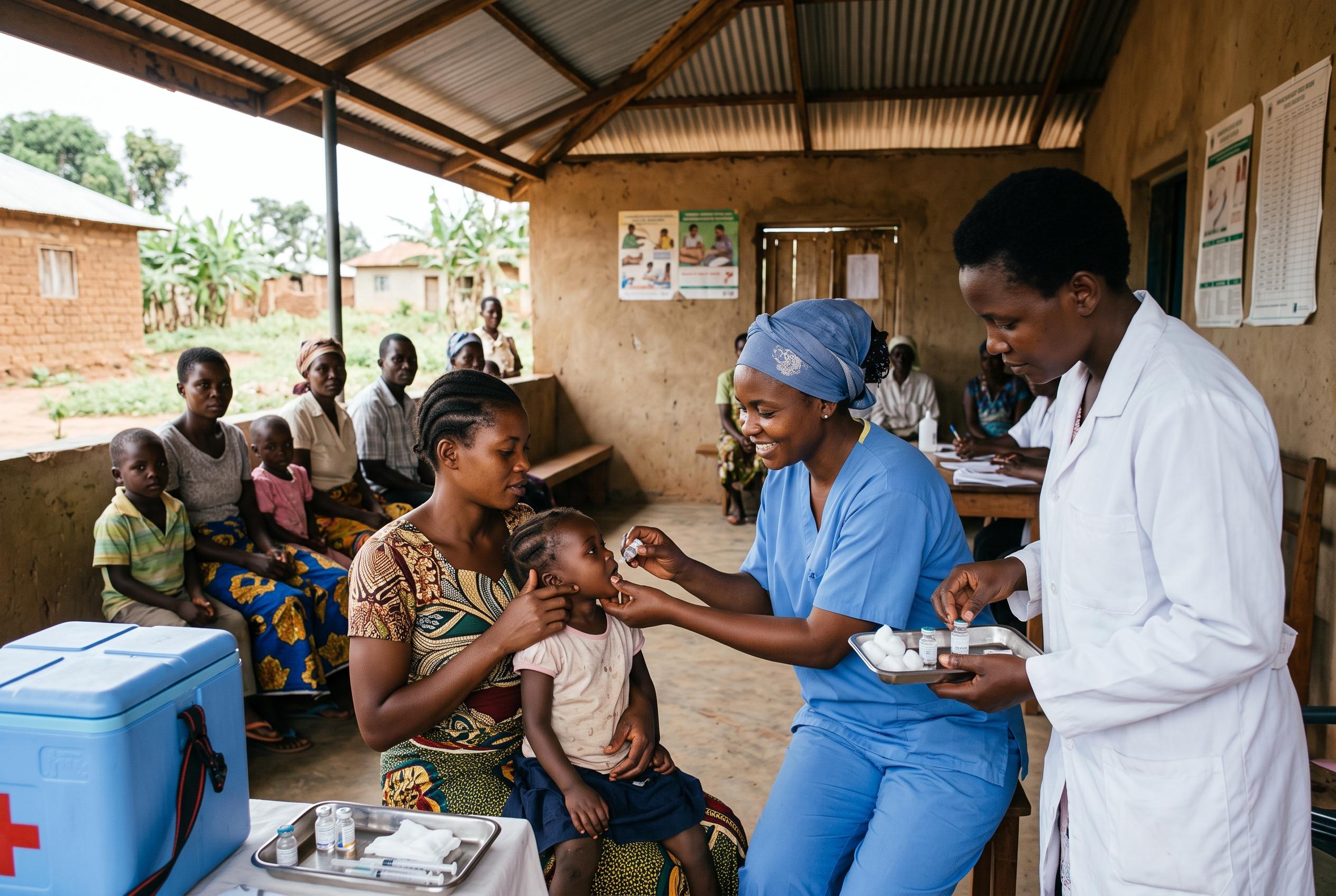

Pakistan has reported a sharp fall in polio cases, but officials say uninterrupted funding, vaccination campaigns and international co-operation remain essential to prevent a resurgence.
At the World Health Summit in Berlin, Pakistan renewed its call for long-term international backing to push polio to eradication, with Ayesha Raza Farooq telling global health leaders that the final stretch of the campaign will depend on sustained money, closer co-ordination and firm political will. Farooq, Prime Minister Shehbaz Sharif’s focal person for polio eradication, spoke during a Global Health Lab session on October 12 that brought together senior figures including Omar Abdi, Jamal Ahmed, Kathleen Neuzil and Birgit Pickel to discuss how to keep immunisation efforts on track.
The appeal came as the World Health Organization’s Polio IHR Emergency Committee, meeting in August 2026, said wild poliovirus type 1 still remains endemic in Pakistan and Afghanistan and warned that vaccination coverage and surveillance must stay strong if the virus is to be stopped from spreading further. That warning fits the message from Berlin: even after major gains, eradication cannot be achieved without uninterrupted campaigns, dependable financing and the kind of international co-operation that has underpinned the programme for years.
Pakistan has cut reported cases sharply in 2026, with one case recorded at the time of Farooq’s remarks, down from 31 in 2025 and about 74 in 2024, but health officials say the virus is still circulating in pockets that require constant attention. A July visit by the Global Polio Eradication Initiative’s Polio Oversight Board said the next six months would be critical and noted that the virus is largely confined to southern Khyber Pakhtunkhwa, while also praising tighter oversight of the campaign.
Farooq also highlighted the work of frontline vaccinators, including the many women who go door to door to win trust and make sure children are reached in every household. That emphasis is backed by recent campaign data: in January, Rotary International provided a US$9.9 million grant to the World Health Organization in Pakistan to help vaccinate 27 million children in high-risk districts, while a nationwide campaign in April mobilised more than 400,000 trained workers and reached 45 million children. WHO and Pakistan’s polio programme continue to lean on those networks, alongside provincial and federal authorities and partners such as UNICEF and the Global Polio Eradication Initiative, as they try to protect routine immunisation and keep the disease from resurging.
Disclaimer: This content is for informational purposes only and is not intended to be a substitute for professional medical judgment, advice, diagnosis, or treatment.



