

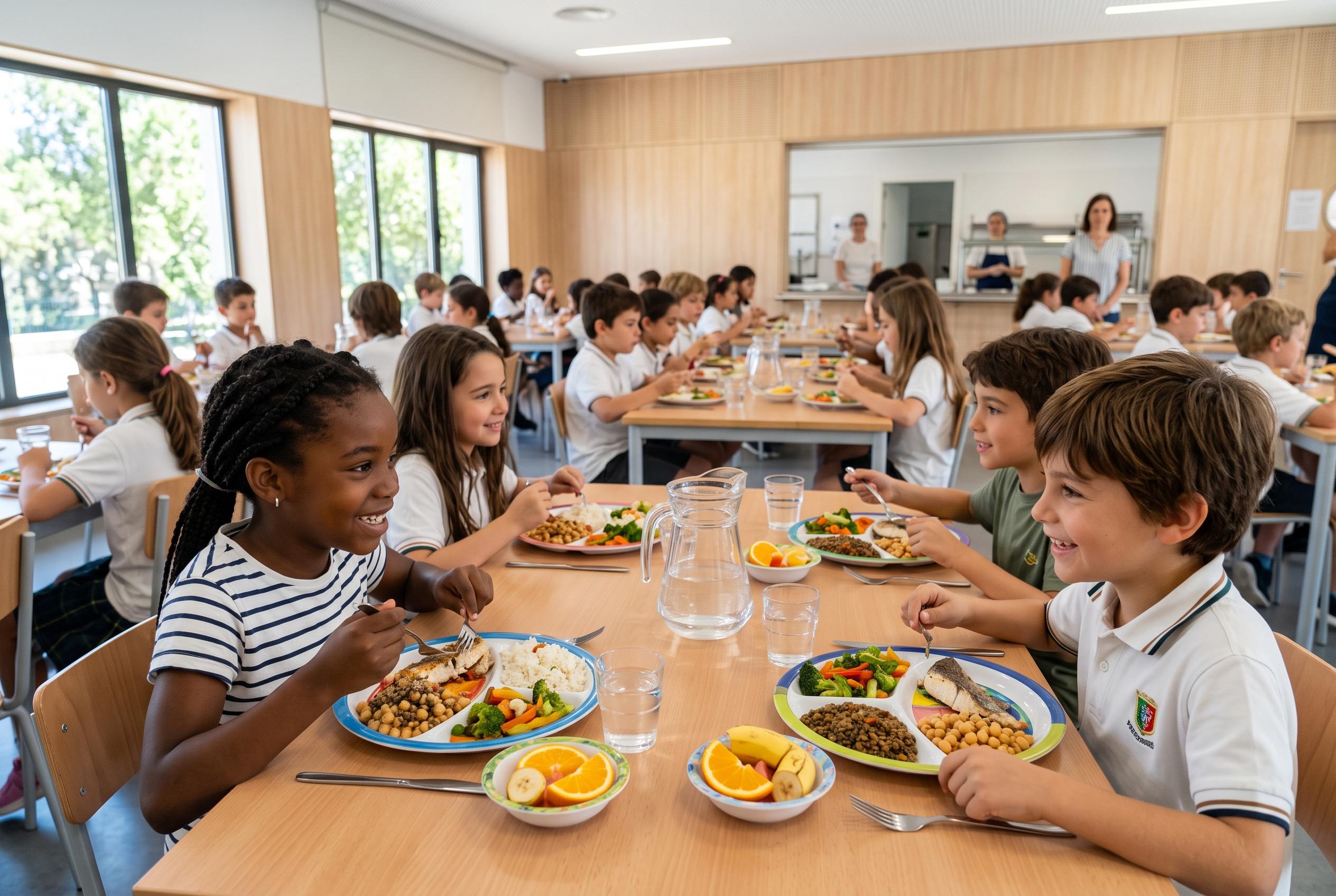

New guidance for Portugal’s state schools limits sweets, red meat and processed foods while requiring daily pulses and vegetables, more fish and fruit, and water as the only canteen drink.
Portugal’s state schools are set to overhaul canteen menus under new guidance aimed at bringing school meals closer to the Mediterranean diet, with fewer processed foods, less red meat and more fish, fruit, vegetables and pulses.
The new rules, published on World Food Day by the education ministry’s services and drawn up by the Institute for Education, Quality and Innovation with the health directorate-general, place tighter limits on sugar, salt and fried foods while also setting clearer standards for what can and cannot be served to children and teenagers. Sweet desserts, including ice cream, dairy desserts and jelly, are to be offered no more than once a month, with fresh fruit becoming the default dessert and three varieties available in schools. Water will be the only drink allowed in canteens.
The guidance also bans certain ultra-processed fish and meat products with more than 40% less animal protein, including fish fingers, nuggets and similar items, as well as savoury pastries such as rissoles, cod cakes and croquettes. Processed meats such as sausages and ham are to be used only sparingly and mainly to add flavour. Schools are being told to serve at least as many fish meals as meat dishes, cap red meat at four meals a month and rely more heavily on white meat. Eggs should be offered as the only animal protein no more than once a week.
The document goes further in pushing plant-based foods into the centre of the menu. Pulses are to appear daily, whether in soup or as a main dish, and vegetables are also to be served every day. Vegetarian meals remain compulsory, but tofu, seitan, tempeh and similar products are to be limited to twice a month, with officials encouraging schools to lean instead on beans, lentils and chickpeas.
The guidance also calls for more whole grains, less salt and fewer fried dishes, with iodised salt required and herbs recommended as a way to cut back on sodium. Frying will be limited to twice a month. Schools are being urged to use local, seasonal produce and traditional Portuguese recipes that fit the Mediterranean model, while also paying more attention to reducing food waste.
Meal times must last at least 30 minutes, not including the time children spend in the queue, which should be kept to no more than 10 to 15 minutes. Vegetables should be presented first in the serving line, and fruit should be displayed in a way that is visible and appealing. The guidance also says portions should be reviewed by age group and that school meals should offer stronger protection for children and young people by limiting fish species with higher levels of methylmercury.
The education institute said school meals play an important role in promoting healthy eating and fairness, giving all pupils access to nutritionally balanced food regardless of family income. The changes, it said, are intended to make the canteen not just a place to eat, but a place where healthy habits are built.
Disclaimer: This content is for informational purposes only and is not intended to be a substitute for professional medical judgment, advice, diagnosis, or treatment.



