

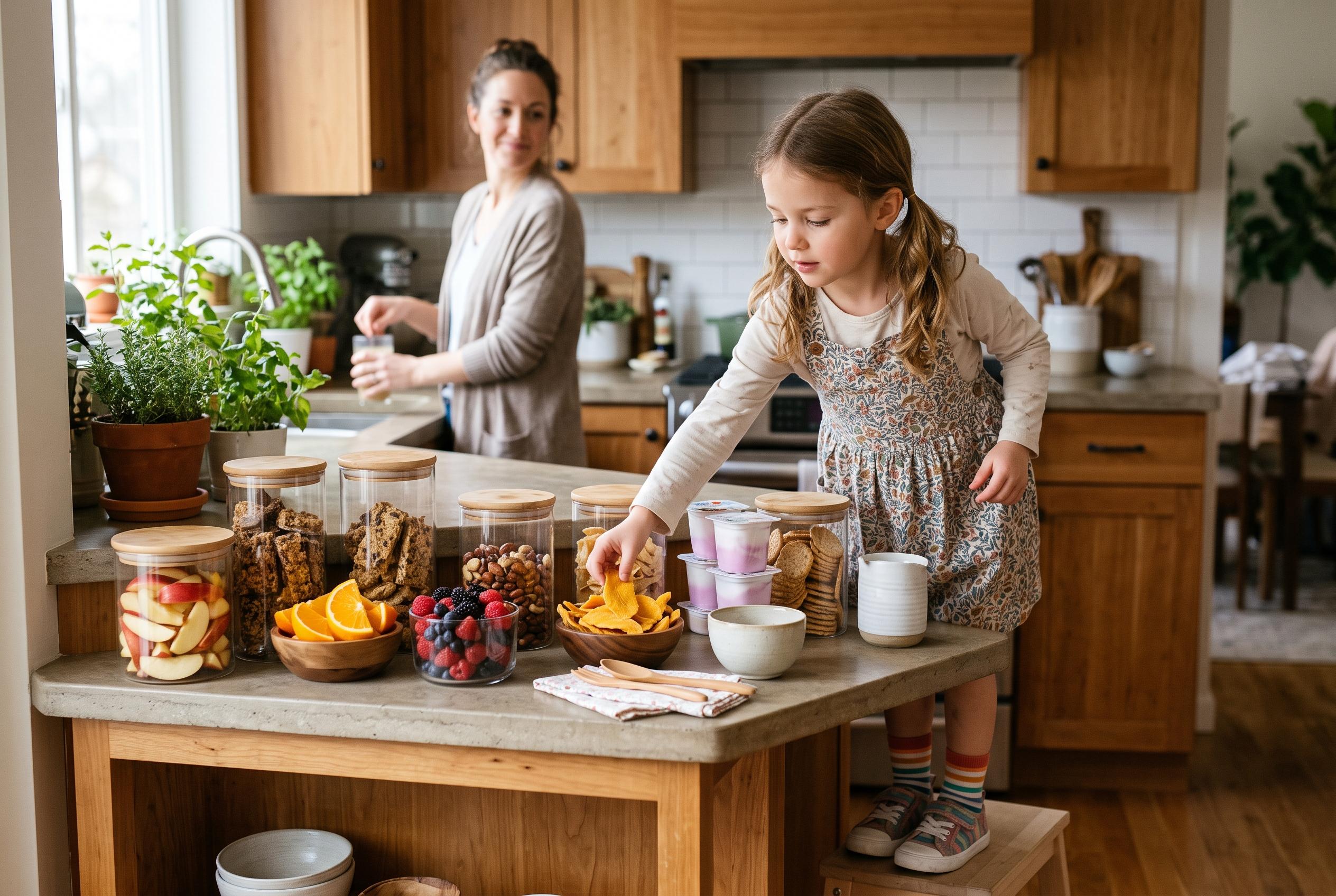

A simple, clearly organised snack station can reduce after-school pressure, help children make sensible choices and encourage them to tidy up independently.
An after-school snack station can take the pressure off the moment children walk through the door. Instead of repeating the same question over and over, parents can give children one clearly defined place to look, with options that fit the household’s rules and routine. The point is not to build a flawless pantry display. It is to make the sensible choice the easiest one to see, reach and clear away.
Many parents find it works best to start small. A single low shelf, drawer, basket or section of counter is usually enough, provided it is easy for children to access without climbing or shifting furniture. Ralphs and other parenting guides both suggest that the most effective set-ups are the simplest ones: a designated spot with snacks grouped in a way that children can understand quickly. Some families also keep shelf-stable snacks separate from a fridge bin for items that need to stay cold, so the system stays orderly and easy to maintain.
What goes into the station matters less than how the choices are organised. A common approach is to combine a filling item with a fruit, vegetable or other lighter option. Ralphs recommends easy-to-grab foods such as fresh fruit, dried fruit, cheese sticks, yoghurt, vegetable sticks with dip, whole-grain crackers and granola bars, while Hey Modern Mom and Kitchen Fun both point to mix-and-match snacks such as popcorn, pretzels, trail mix, applesauce pouches, toast, pita, cereal, muffins and mini pancakes paired with cheese, hummus, hard-cooked eggs, milk or nut butter. The best mix will depend on allergies, age and family preferences.
Clear rules help the station stay useful rather than becoming an all-day free-for-all. Families can keep the instruction short and visible, such as choosing one item from the shelf and one from the fridge, or taking two items and putting wrappers straight in the bin. Younger children may do better with pictures or colour cues instead of written instructions. Many guides also recommend keeping napkins, cups and a nearby trash or compost bin within reach so children can tidy up without needing constant reminders.
Portioning can make the system even smoother, but it does not have to become another chore. Some families use small containers to turn larger packs into ready-to-grab servings, while others simply keep snacks in the original packaging and add a scoop, clip or serving note. Love Great Finds suggests setting up three zones , shelf-stable, refrigerated and pre-cut grab-and-go items , while Little Lunches advises keeping heavier or breakable foods out of reach and using non-slip liners to stop containers sliding around. If repacking feels like one task too many, the simpler option is usually the better one.
A quick reset keeps the station from falling apart. A five-minute tidy after dinner, during lunch packing or when groceries are put away is often enough to remove empty packets, return stray containers, move older food into the eat-first bin and restock only what is needed for the next day or two. That also makes shortages easier to spot before the next hungry rush. Over time, the station can change with the children using it: younger children may need very limited choices, while older ones may be ready for ingredients to assemble a more substantial snack on their own. The most successful version is not the fullest one; it is the one the family can keep using.
Disclaimer: This content is for informational purposes only and is not intended to be a substitute for professional medical judgment, advice, diagnosis, or treatment.



