

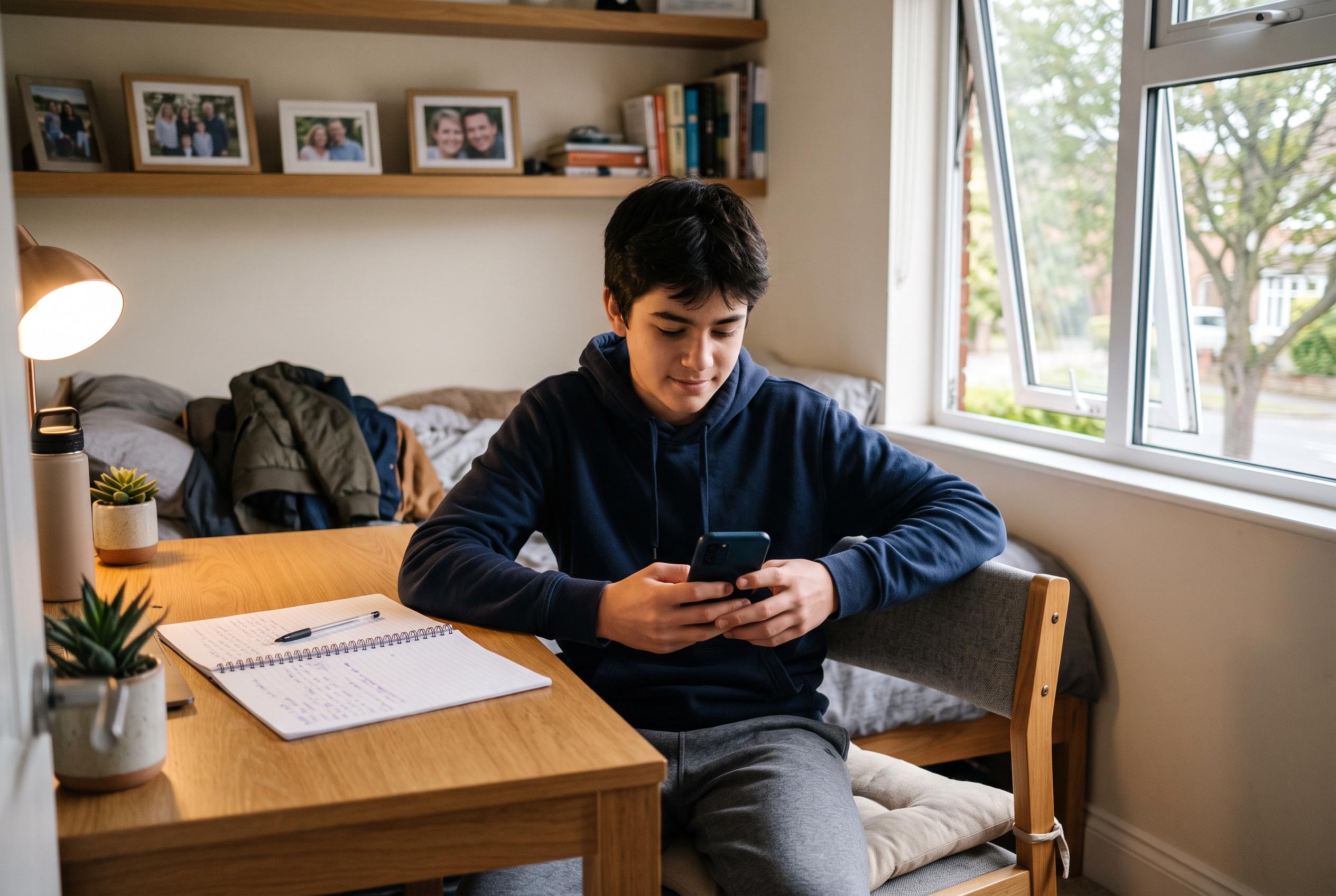

Experts say parents should focus less on the minutes teens spend online and more on what they see, who they interact with and whether digital life is affecting their wellbeing.
Parents who check a teen’s daily screen-time total may be missing the bigger picture of what that time actually means. A growing body of research, highlighted in reporting by the Miami Herald, suggests that the content teens consume, the people they interact with and the emotional effect of those experiences can matter as much as the number of minutes on a device.
That distinction matters because a screen-time counter treats very different activities as if they were the same. Texting a close friend, looking up information for school, posting to a group chat or endlessly scrolling through posts that trigger comparison can all look identical on a dashboard. Hannah Schacter, a psychology professor at Wayne State University, has argued that what teens encounter online can matter more than how long they are online. The American Academy of Pediatrics says families should pay attention to what teens are seeing, how it affects them and whether media use is getting in the way of sleep, school or other responsibilities.
Research on how teens use social media also complicates the familiar debate over active and passive use. A 2024 meta-analysis of 141 studies found that most links between those habits and well-being were negligible, which challenges the idea that one style of use is automatically healthy and the other is inherently harmful. The study also suggested that age and the type of platform or feed can shape the outcome, meaning a broad ban on scrolling may miss the way a particular teenager uses a particular app.
The American Academy of Pediatrics has tried to give families a more practical lens through its 5 Cs of Media Use: Child, Content, Calm, Crowding Out and Communication. The framework asks parents to look beyond clocks and timers and instead consider whether online activity supports connection, fuels stress, disrupts sleep or displaces other important parts of a young person’s life. For teachers, counsellors and paediatricians, that language can make conversations with families more specific and less judgmental.
Schacter advises parents to approach the subject with curiosity rather than accusation. Asking teens what they enjoy online, what feels meaningful and what leaves them feeling worse can open a more honest conversation than a lecture about limits. The AAP similarly encourages parents to involve older teens in setting media rules and to protect device-free time, especially at bedtime and during family meals. The goal, experts say, is not necessarily to eliminate screens, but to help families understand when digital life is supporting a teen’s wellbeing and when it is crowding out everything else.
Disclaimer: This content is for informational purposes only and is not intended to be a substitute for professional medical judgment, advice, diagnosis, or treatment.



