

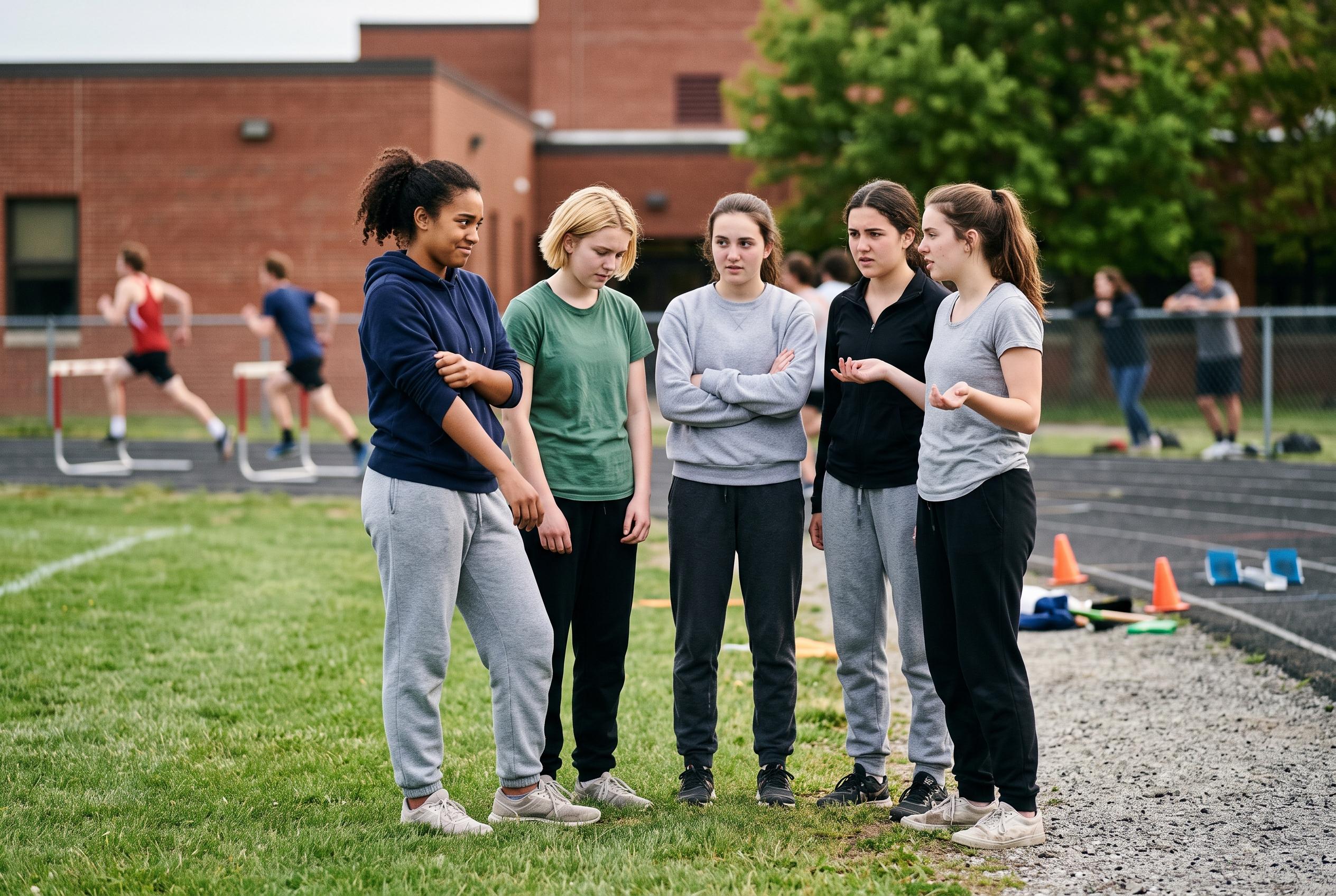

Half of 15-year-old girls avoid school sport because they fear they will not be good enough, as the Centre for Social Justice calls for a new right to sport.
Teenage girls are increasingly turning away from school sport, with a new Centre for Social Justice analysis suggesting that fear of failure is one of the biggest barriers. The think tank says half of 15-year-old girls avoid taking part in school sport because they worry they will not be good enough, while one in five says her school does not offer an activity she actually enjoys.
The findings come as the CSJ warns that too many teenagers are spending more time alone in their bedrooms and less time with friends in person. Its polling suggests a fifth of girls now spend no evenings out with friends, a sharp rise from 2002, and that the proportion of boys who do the same is lower. The report also says girls are kept indoors for longer than boys, with respondents saying they are not allowed to go out alone until a slightly older age on average.
Cost and safety concerns also appear to be limiting social lives outside school. More than half of the girls surveyed said money was a barrier to spending more time with friends, around a third said there was nowhere nearby they wanted to go, and almost one in four cited feeling unsafe. One Year 8 pupil quoted by the CSJ said her new phone had made her more withdrawn, less energetic and more distracted.
The report, entitled “Inactive Nation: Getting England’s Teenagers Moving”, argues that phones and other screens have filled the space once occupied by hobbies, play and face-to-face friendship. It says three-quarters of 15-year-olds often use phones or screens because they have nothing else to do, while nearly half say they spend more time in their bedroom than they would like. The CSJ estimates there are now nearly 100,000 more completely inactive 11 to 16-year-olds than in 2018.
The charity says sport could help reverse that trend by improving health, building resilience and creating friendships and role models. Tabby Fitzgerald, a senior researcher at the CSJ, said too many teenage girls were retreating from the outside world and that restricting social media would not be enough on its own. She said sport and physical activity were “good for our health, our resilience and for the friends we make along the way”.
The CSJ is now pressing for a new “right to sport” for all secondary school pupils, under which children would receive two hours of physical education and two more hours of extracurricular sport or activity each week. The proposal is meant to narrow the gap between state and private schools and follows wider campaigning from the think tank on school sport and youth activity. It has also won backing from Olympic figures including Lord Seb Coe and Dame Kelly Holmes, who have urged the government to move faster on school sport as ministers consider changes to PE provision.
Disclaimer: This content is for informational purposes only and is not intended to be a substitute for professional medical judgment, advice, diagnosis, or treatment.



