

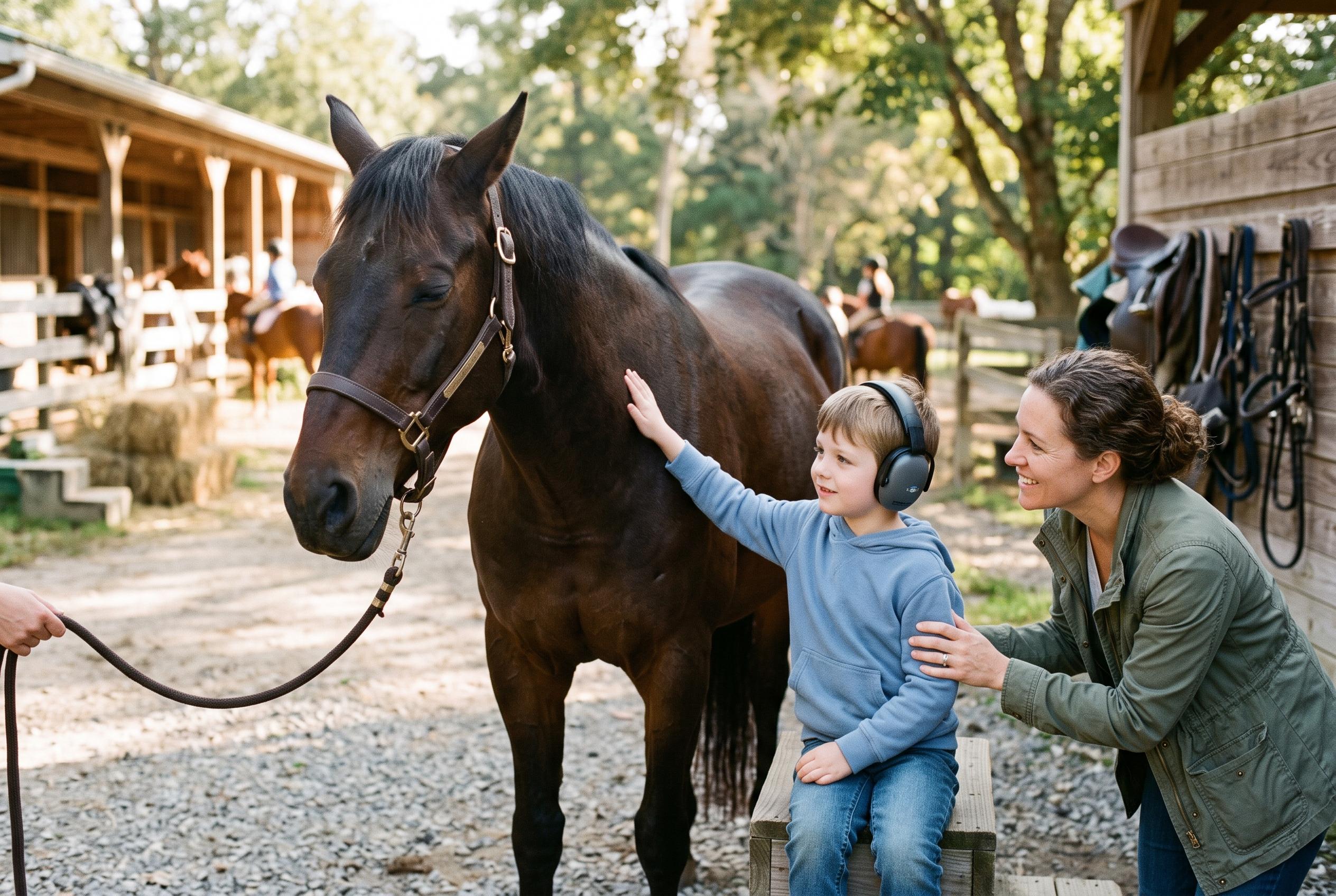

A study of 236 children and teenagers suggests that riding and horse-related barn activities may improve behaviour, emotional regulation and social interaction.
A new study suggests that horseback riding may do more than offer children with autism a chance to be outdoors and active: it may also help ease irritability, curb hyperactivity and strengthen social behaviour. Researchers at the University of Colorado Anschutz found benefits not only for children who rode horses, but also for some who simply spent time in a barn setting around them, according to findings published in Pediatrics.
The trial involved 236 children and teenagers aged six to 16 who had autism and additional psychiatric conditions. Participants were placed into one of three groups: weekly therapeutic riding sessions for 10 weeks, barn-based activities that allowed them to observe horses without riding, or a waiting period before they moved into barn activities and then riding. Both the riding and barn groups showed meaningful reductions in irritability and hyperactivity, along with improvements in emotional regulation and social behaviour. The strongest effect on hyperactivity appeared in the riding group, which suggests that the physical and sensory experience of riding may add something beyond simply being near horses.
Robin Gabriels, who led the study, told reporters that there appears to be something especially helpful about the act of riding itself for children who struggle with overactivity. Gabriels said the findings do not mean horseback riding is the right fit for every child with autism, but argued that it may be a useful addition to existing therapies because it combines activity, social interaction and engagement in a way that can be difficult to recreate in a clinic.
The new results fit into a broader but mixed body of research on equine-assisted therapy. A 2009 study in the Journal of Autism and Developmental Disorders reported improvements in social motivation and reduced distractibility among children who took part in therapeutic riding, while a 2015 randomised controlled trial in the Journal of the American Academy of Child and Adolescent Psychiatry found gains in irritability, hyperactivity, social cognition, social communication and language. Other studies have been less conclusive, including a 2013 trial in Research in Autism Spectrum Disorders that found no systematic changes across several behavioural measures. More recently, a 2019 study in Annals of Rehabilitation Medicine reported improvements in receptive and expressive language and cognition when therapeutic riding was added to conventional therapy. Taken together, the research suggests that horses may offer a promising supplement to standard care, even if the benefits vary from child to child.
Disclaimer: This content is for informational purposes only and is not intended to be a substitute for professional medical judgment, advice, diagnosis, or treatment.



