

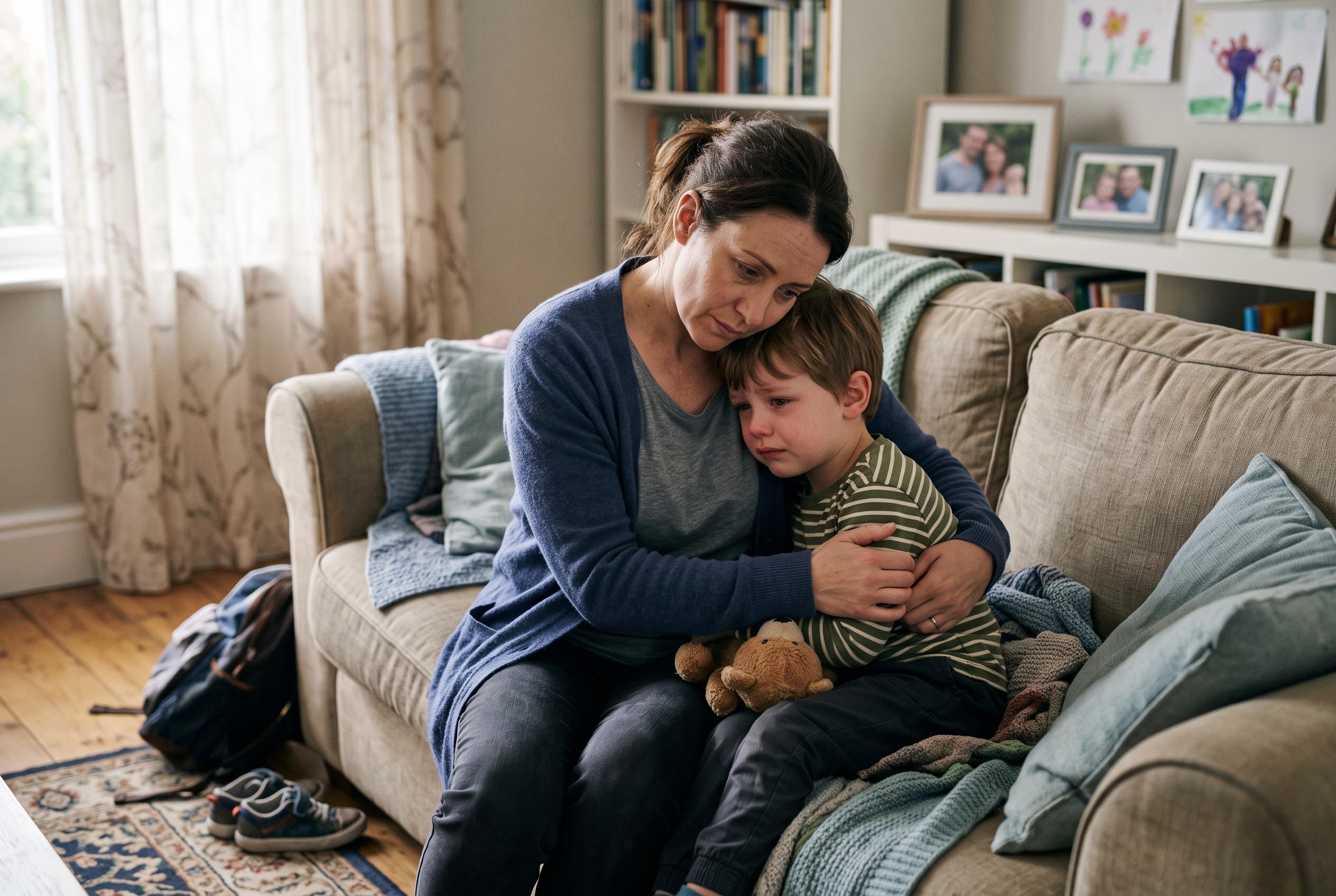

Children who seem capable and cooperative at school may unravel at home because they are releasing the strain of managing rules, routines and emotions all day.
Children often seem like two different people depending on where they are. At school, a child may appear capable, cooperative and eager to help, yet at home the same child may resist simple requests, burst into tears over a small disappointment or seem to forget every routine they know. The pattern can feel baffling, but child development specialists say it is usually a sign that children respond to settings, expectations and relationships in different ways, not that one version of them is fake. According to the Child Mind Institute, children may spend the day managing themselves in structured environments and then release that pressure once they are back with the people they trust most.
That contrast is often sharpened by the way school and home are organised. Montessori educators note that a classroom designed for children can make independence much easier: materials are within reach, routines are predictable, and adults show tasks step by step before expecting children to practise them alone. In that sort of environment, many children can put on a coat, clear a table or choose their work with little prompting. Home, by contrast, is usually built around adult convenience, with less time, more interruptions and far fewer opportunities for a child to practise doing things on their own.
Experts interviewed by the Child Mind Institute and other child-focused guides also point out that children commonly hold themselves together during the school day because they are concentrating hard on rules, social expectations and self-control. By the time they get home, they may be tired, hungry or simply overwhelmed. What looks like defiance can be something closer to a release of pent-up emotion. For many families, the familiar after-school crash is a reminder that a child’s most difficult moments often happen when the day’s demands finally let up.
That does not mean parents should ignore the behaviour. Instead, specialists recommend looking first at what the child may need. A snack, a quiet break, a chance to move around or a few minutes of connection before the evening routine can make a real difference. The Gardner School says some children are comfortable and settled at preschool or school but need extra support at home because transitions feel harder there. In other words, the child is not being inconsistent so much as responding to a different level of emotional safety and exhaustion.
The gap between school and home can also reveal hidden stress. Insight Pathway Therapy notes that children may keep worries under wraps in class, then let them spill out once they are back in the family setting. A child who seems calm all day may be struggling with sleep, friendship problems, anxiety about schoolwork or changes at home such as a new sibling, a move or an illness in the family. Parents and teachers each see only part of the picture, which is why communication matters so much.
Montessori educators encourage parents to ask practical questions about what the classroom does differently. How are routines organised? Where are coats, shoes and books kept? How are new skills introduced? What happens when a child asks for help with something they can already do? The answers often suggest small changes at home, such as a low hook by the door, a basket for shoes, a child-sized cup or a tidier system for toys. RaisingGuide and KidConnect both note that changing the environment is often more effective than repeated reminders.
Still, there are times when the difference between home and school deserves closer attention. The Child Mind Institute and The Gardner School both suggest looking more closely if a child is regularly distressed after school, refuses to go in the morning, sleeps poorly or shows a lasting change in mood or behaviour. In those cases, the question is not whether the parent or teacher is right. It is what might be getting in the way of the child’s wellbeing, learning or sense of security. Families may need to explore peer difficulties, unrealistic expectations, emotional strain or possible developmental and learning needs with a paediatrician or another professional.
What does not help is direct comparison. Telling a child they should behave at home the way they do at school, or reminding them that a teacher says they are wonderful, can leave them feeling misunderstood or ashamed. A better approach is to focus on the task in front of you: start the shoes, take a break, have a snack, get ready in ten minutes. That keeps the conversation practical while still showing confidence in the child’s growing abilities. As the Montessori article argues, the goal is not to make children act exactly the same everywhere, but to help them become more capable, secure and self-aware in each setting.
Disclaimer: This content is for informational purposes only and is not intended to be a substitute for professional medical judgment, advice, diagnosis, or treatment.



